
Skip to content
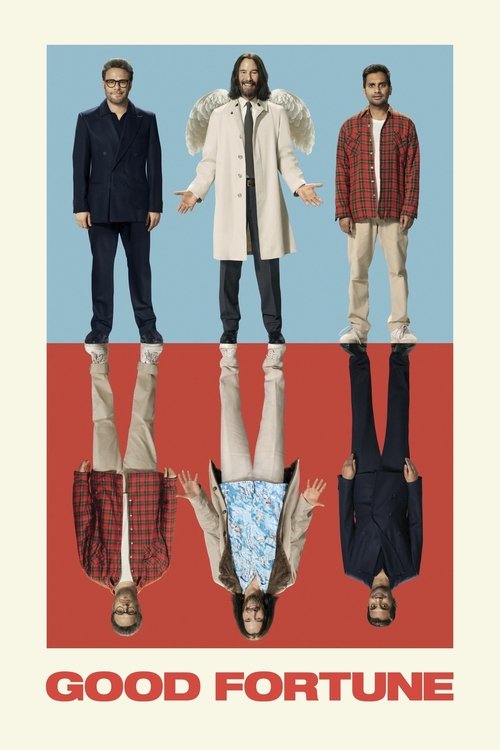
Good Fortune
A luminous, bittersweet supernatural satire that balances celestial absurdity with grounded urban grit, illuminating the desperate hustle of modern survival like neon headlights reflecting off a rain-slicked windshield.
Good Fortune
Good Fortune

"Need a miracle?"

14 October 2025 United States of America 97 min 6.8 (774)

Director: Aziz Ansari

Cast: Keanu Reeves, Aziz Ansari, Seth Rogen, Keke Palmer, Sandra Oh

Fantasy Comedy Class Divide and the Gig Economy Deconstruction of the "Money Can't Buy Happiness" Trope Heavenly Bureaucracy and Egotistical Altruism Community, Labor Solidarity, and Genuine Connection
Budget: $30,000,000
Box Office: $26,117,423

Good Fortune — Ending Explained

⚠️ Spoiler Analysis

Arj, evicted from his apartment and living in his sedan, takes a task-app job cleaning the mansion garage of venture capitalist Jeff. Jeff hires Arj as a temporary assistant, but after Arj borrows Jeff’s company card to pay for a dinner date with Elena, Jeff impulsively fires him, and Arj’s car is towed.

At rock bottom, Arj is visited by Gabriel, who freezes time and swaps Arj into Jeff’s body and lifestyle to teach him to appreciate his own life. Gabriel expects Arj to feel Jeff's loneliness and beg to return. Instead, Arj luxuriates in the mansion, clears his debts, and refuses to switch back. Because the swap was unauthorized and backfired, celestial supervisor Martha strips Gabriel of his halo and wings, banishing him to Earth as a mortal.

Jeff awakens in Arj’s towed car with no money. Gabriel teams up with Jeff, and together they navigate low-wage gig work, Denny's dining, and the indignities of poverty to convince Arj to willingly undo the magic. Meanwhile, Arj discovers that wealth without trust alienates him from Elena, who views billionaire-Arj as a predatory capitalist. Furthermore, Gabriel’s absence from his texting-and-driving angel beat causes traffic pileups across the city.

Realizing that wealth in isolation is empty, Arj agrees to reverse the swap on the conditions that Jeff uses his venture fund for community initiatives, supports the Hardware Heaven union, and employs Arj as an in-house documentary filmmaker on a fair-wage salary. Following the reversal, Jeff honors his promises, Gabriel's supervisory record is cleared and his wings restored through genuine compassion, and Arj and Elena successfully organize their workplace while beginning a relationship.

Alternative Interpretations

The film can be analyzed through several distinct thematic frameworks:

  • The Class-Conscious Materialist Reading: An anti-capitalist critique demonstrating that moral lessons are useless when structural poverty is systemic. Gabriel represents out-of-touch institutional charity that attempts to treat symptoms with moral patronizing rather than addressing wealth redistribution.
  • The Meta-Hollywood Satire: A reflection of Ansari and his peers' own experiences in the entertainment industry, contrasting the extreme wealth of Hollywood showrunners and tech financiers with the precarious freelancers, assistants, and gig crews who make the city run.
  • The Spiritual Bureaucracy Parody: A philosophical comedy illustrating that organized systems—whether corporate tech platforms or religious hierarchies—inevitably devolve into metrics, KPIs, and performative virtue rather than genuine care for individuals.

Explore More About This Movie

Dive deeper into specific aspects of the movie with our detailed analysis pages

Similar Movies