Skip to content
Good Fortune
A luminous, bittersweet supernatural satire that balances celestial absurdity with grounded urban grit, illuminating the desperate hustle of modern survival like neon headlights reflecting off a rain-slicked windshield.
Good Fortune

Good Fortune

"Need a miracle?"

14 October 2025 United States of America 97 min 6.8 (774)

Director: Aziz Ansari

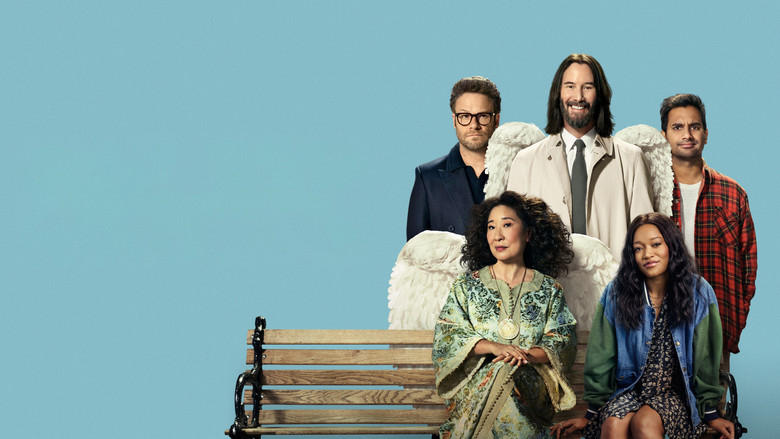
Cast: Keanu Reeves, Aziz Ansari, Seth Rogen, Keke Palmer, Sandra Oh

Fantasy Comedy Class Divide and the Gig Economy Deconstruction of the "Money Can't Buy Happiness" Trope Heavenly Bureaucracy and Egotistical Altruism Community, Labor Solidarity, and Genuine Connection
Budget: $30,000,000
Box Office: $26,117,423

Overview

Written and directed by Aziz Ansari in his feature directorial debut, Good Fortune (2025) is a high-concept supernatural comedy that puts a contemporary spin on classic life-swap fables. The story centers on Arj (Aziz Ansari), an aspiring documentary film editor who has been pushed to the economic margins of modern Los Angeles. Juggling multiple exhausting gigs—from delivering food on an app called "Foodster" and waiting in long lines for rich clients to working shifts at a big-box store called "Hardware Heaven"—Arj lives out of his car while struggling to survive. At Hardware Heaven, he develops feelings for Elena (Keke Palmer), a sharp and determined co-worker actively organizing their workplace into a labor union.

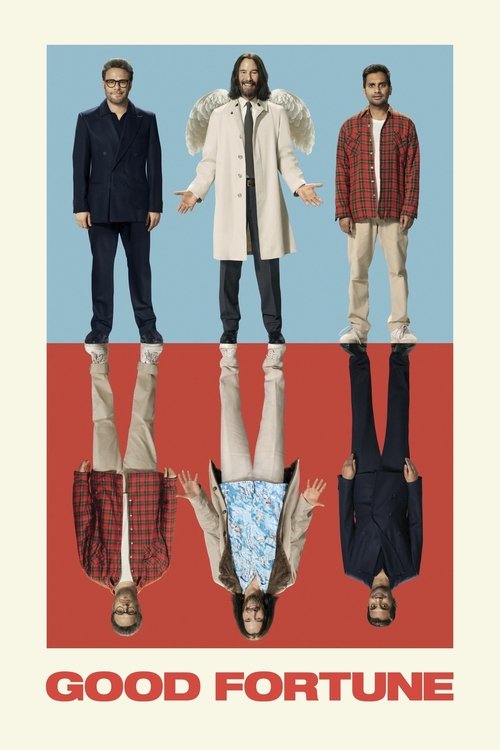
Arj’s plight attracts the attention of Gabriel (Keanu Reeves), an earnest, well-meaning, but remarkably inept guardian angel whose low-level heavenly assignment involves intervening to stop drivers from texting and crashing. Desperate to impress his celestial supervisor Martha (Sandra Oh) and earn full-sized wings, Gabriel orchestrates a supernatural life-swap between Arj and Jeff (Seth Rogen), an excessively wealthy, aloof venture capitalist. Gabriel assumes Arj will quickly learn the classic Hollywood lesson that money cannot buy happiness and yearn to return to his humble life.

Instead, Gabriel's plan goes awry: Arj finds that financial security immediately solves nearly all of his crushing daily anxieties and adamantly refuses to switch back. Stripped of his wings for botching heavenly protocol, Gabriel is banished to Earth as a mortal. He is forced to team up with the now-destitute Jeff to navigate the bewildering realities of human poverty, the gig economy, and the unraveling fabric of angel interventions.

Core Meaning

Aziz Ansari subverts the traditional moralizing trope popularized by Frank Capra's It's a Wonderful Life and comedies like Trading Places: the condescending notion that poverty breeds spiritual nobility while wealth only brings hollow sorrow. Good Fortune argues that material stability is a fundamental human necessity, not a moral flaw, and that the modern gig economy operates on systemic exploitation disguised as "flexibility." The film’s ultimate meaning emphasizes that while wealth eases physical suffering, authentic human fulfillment arises from community solidarity, shared purpose, and collective empathy rather than isolated hyper-individualistic consumption.

Thematic DNA

Class Divide and the Gig Economy 35%
Deconstruction of the "Money Can't Buy Happiness" Trope 25%
Heavenly Bureaucracy and Egotistical Altruism 20%
Community, Labor Solidarity, and Genuine Connection 20%

Class Divide and the Gig Economy

Explores the stark chasm in modern Los Angeles between hyper-rich tech/crypto venture capitalists and precarious workers piecing together four app-based jobs just to sleep in their cars. The absurdity of modern labor is laid bare through dehumanizing tasks like paid line-waiting and delivery algorithms.

Deconstruction of the "Money Can't Buy Happiness" Trope

Directly challenges the wealthy platitude that financial means do not fix personal misery. The film demonstrates that having rent, food, healthcare, and leisure instantly relieves crushing existential dread.

Heavenly Bureaucracy and Egotistical Altruism

Reveals through Gabriel and Martha that even the divine realm operates on corporate-style hierarchies, quotas, and middle-management ambitions, where "helping" humans often becomes a self-serving ladder-climbing exercise rather than true empathy.

Community, Labor Solidarity, and Genuine Connection

Framed through Elena’s union drive and the humbling of both Jeff and Gabriel. True resolution is achieved not by individual enrichment, but when marginalized individuals organize and privileged elites recognize their shared humanity.

Character Analysis

Arj

Aziz Ansari

Archetype: The Struggling Everyman Key Trait: Resilient yet fatigued and cynical

Motivation

To escape crushing debt and achieve basic financial stability.

Character Arc

Moves from desperate, exhausted survivalism to intoxicating wealth, eventually learning that wealth without genuine connection and ethical integrity is hollow.

Gabriel

Keanu Reeves

Archetype: The Inept Guardian Angel / Fallen Mentor Key Trait: Earnest, gentle, otherworldly, and comically naive

Motivation

To earn promotion and larger wings from heavenly management.

Character Arc

Starts as an overconfident celestial bureaucrat; after losing his wings, experiences human hunger, labor, and fragility, gaining genuine mortal wisdom.

All 5 characters and cast

Symbols & Motifs

Gabriel’s Comically Small Wings

Meaning:

Symbolizes bureaucratic rank and celestial inadequacy.

Context:

Gabriel’s undersized wings reflect his status as an entry-level "budget guardian angel" trying to pull off miracles far above his skill level.

Arj’s Car / Makeshift Bedroom

Meaning:

Represents precarity and the modern housing crisis.

Context:

It functions as both a lifeline for his mobility jobs and an inescapable reminder of his homelessness.

The Smart-Phone Delivery/Task Apps ("Foodster")

Meaning:

A motif for the gamification and alienation of labor.

Context:

Used throughout Arj's daily routine, reducing human effort to ratings, notifications, and micro-transactions.

Denny’s Diner & Fast Food (Chicken Nuggets/Milkshakes)

Meaning:

Symbolizes the simple, tactile joys and communal warmth of terrestrial mortal life.

Context:

Appears in key bonding scenes where the formerly detached Gabriel and Jeff come to appreciate human existence when stripped of their lofty positions.

Hardware Heaven Union Badges / Clipboards

Meaning:

Represents grassroots labor resistance and collective power.

Context:

Used during Elena's workplace organizing campaign in contrast to isolated gig-work individualism.

Memorable Quotes

My assignment is Texting and Driving. If you ever looked down at your phone and looked up just in time not to hit a tree... that was me.
— Gabriel

Context

Gabriel explaining his unglamorous day job to Arj.

Meaning

Establishes the film's comedic premise of low-tier celestial civil service and Gabriel's humble position in heaven.

You think money doesn't buy happiness? Money buys a bed, it buys dental work, and it buys not having a panic attack every time your phone rings!
— Arj

Context

Arj’s pushback against Gabriel's high-minded angelic assumptions.

Meaning

Passionately dismantles the traditional Hollywood premise that poverty is spiritually noble and money is irrelevant to happiness.

All 4 quotes

Philosophical Questions

Does Financial Security Invalidate Spiritual Contentment?

The film challenges the ascetic virtue of poverty, arguing that dignity and peace of mind require material security before higher spiritual fulfillment can be pursued.

What Is the True Source of Human Alienation?

Examined through Arj’s realization that extreme wealth isolates the individual in a luxury fortress, cutting off the communal bonds and mutual solidarity that give daily life meaning.

Can True Empathy Exist Across Extreme Economic Divides Without Shared Experience?

Revealed when Jeff only develops genuine compassion after physically living in a car and working gig shifts, suggesting intellectual empathy cannot replace lived experience.

Alternative Interpretations

The film can be analyzed through several distinct thematic frameworks:

Full ending explanation

Cultural Impact

Conceived in the post-pandemic era of rising inflation, skyrocketing Los Angeles housing costs, algorithmic gig exploitation, and renewed American labor union movements, Good Fortune had its world premiere at the Toronto International Film Festival (TIFF) on September 6, 2025, followed by a theatrical release by Lionsgate in North America on October 17, 2025.

The film was widely discussed as a notable industry test case for reviving mid-budget, theatrical R-rated studio comedies in an era dominated by streaming platforms and tentpole franchises.

Audience Reception

Good Fortune received generally warm and positive reviews, earning a "Fresh" rating on Rotten Tomatoes. Audiences and critics praised Keanu Reeves' performance as one of his funniest and most endearing roles in years, the comedic dynamic between Reeves and Seth Rogen during their mortal misadventures, and the narrative's refusal to romanticize poverty.

Minor criticisms focused on tonal unevenness between biting gig-economy realism and broad supernatural slapstick, as well as a third act that resolves complex structural inequalities relatively quickly.

Interesting Facts

  • Aziz Ansari was originally slated to make his feature directorial debut with Being Mortal at Searchlight Pictures in 2022, but after production was suspended due to Bill Murray's on-set conduct, Ansari regrouped with Seth Rogen and Keke Palmer to create Good Fortune.
  • Ansari specifically tailored the character of Gabriel around Keanu Reeves' reputation for humility, gentleness, and offbeat screen presence, drawing inspiration from Bill & Ted, The Matrix, and John Wick.
  • Two weeks into principal photography in early 2024, Keanu Reeves sustained a fractured kneecap on set, requiring production to adjust schedules and complete physical scenes after his recovery.
  • Principal photography was originally scheduled to commence in May 2023 but was postponed due to the 2023 Writers Guild of America strike, eventually filming in Los Angeles in January 2024.
  • When asked about shooting an extensive bonding scene between Seth Rogen and Keanu Reeves at a Denny’s, Ansari explained that Denny's agreed, it fit the indie budget, and it looked cinematic on anamorphic lenses.
  • Ansari intended to deliver an original, R-rated high-concept comedy directly to movie theaters rather than streaming, citing the box-office success of Barbie (2023) as proof audiences desire theatrical comedies.
  • The film was produced by Lionsgate alongside Garam Films, Oh Brudder Productions, Keep Your Head, and Alan Yang's Yang Pictures, with cinematography by Adam Newport-Berra and score by Carter Burwell.

Easter Eggs

It’s a Wonderful Life (1946) Subversion

Gabriel acts as an overt parody of Clarence Odbody. Unlike Clarence, who convinces George Bailey that ordinary life is wonderful, Gabriel's subject immediately discovers that being rich is far superior to being broke.

Trading Places (1983) Homage

The structural blueprint of switching a wealthy elite and a street-level worker mirrors the classic comedy, replacing the cynical bet between billionaires with a botched angelic intervention.

Constantine & The Devil's Advocate Inversion

Keanu Reeves playing an angel serves as a playful nod to his past supernatural and theological roles, flipping his demonic/exorcist filmography into a goofy, pastel-wearing guardian.

Documentary Filmmaking Inside Jokes

Arj's uncompleted documentary projects poke fun at the niche, over-saturated indie documentary market and grant applications in modern Los Angeles.

Comedic Cameos

Prominent comedy performers appear throughout the gig-worker ecosystem, including Matt Rogers, Sherry Cola, Stephen McKinley Henderson, and Penny Johnson Jerald.

Frequently Asked Questions

Explore More About This Movie

Dive deeper into specific aspects of the movie with our detailed analysis pages

Comments (0)

Leave a comment

No comments yet. Be the first to share your thoughts!

Similar Movies