The film resolves with a capitulation from the parents. The father, realizing that he is fighting a losing battle against the times and perhaps missing the boys' voices, buys the television set. The boys are ecstatic and immediately break their silence. However, the film ends on a lingering, quiet note. The English tutor and the aunt stand at a train station, finally having a moment alone. Instead of declaring their love, they awkwardly discuss the weather—precisely the kind of "useless" talk the boys hated. But the audience now understands that this "useless" talk is their way of saying "I love you" without the risk of rejection. The cycle continues: the boys have their TV, but they will eventually grow up to speak the same "meaningless" language of adults.
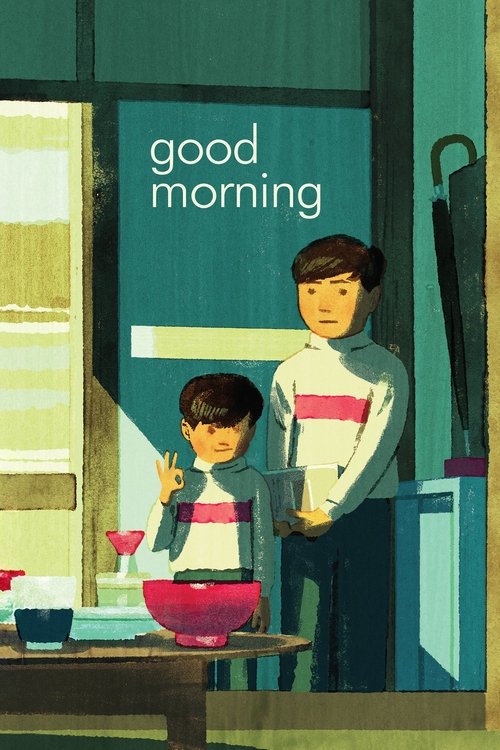
お早よう
"Important things are hard to say."
Director: Yasujirō Ozu
Cast: Keiji Sada, Yoshiko Kuga, Chishū Ryū, Kuniko Miyake, Haruko Sugimura
Good Morning — Ending Explained
⚠️ Spoiler Analysis
Alternative Interpretations
The Fart as Language: Some critics interpret the boys' farting game not just as a joke, but as a genuine alternative language. Since adults use "empty" words to signal belonging, the boys use "empty" gas. Both are phatic acts—meaningless in content but functional in signaling group membership.
Silence as Violence: Another reading suggests the silence strike is a passive-aggressive act of violence that exposes the fragility of the community. By simply removing the "lubricant" of greetings, the boys inadvertently cause chaos, proving that the community's harmony is superficial and held together only by polite lies.
Explore More About This Movie
Dive deeper into specific aspects of the movie with our detailed analysis pages