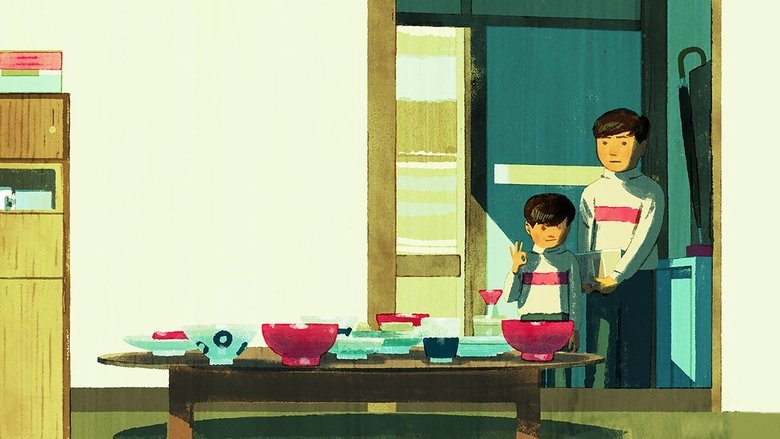
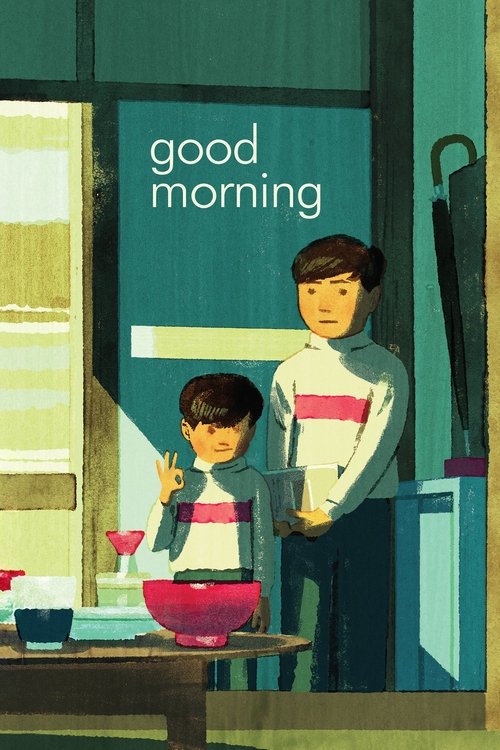
お早よう
"Important things are hard to say."
Good Morning - Symbolism & Philosophy
Symbols & Motifs
Television
Symbolizes the irresistible tide of Western modernity and consumerism. It represents the future and the new "electric hearth" that replaces the traditional family dynamic.
The boys worship the TV at their neighbor's house and eventually force their parents to capitulate and buy one, marking the family's entry into the modern era.
Farts
A subversive counter-ritual to adult small talk. Just as adults exchange empty words to signal belonging, the boys exchange gas to signal membership in their peer group.
Used throughout the film as a comic motif, specifically the boys' game of pressing foreheads to induce flatulence, mocking the seriousness of adult social rules.
Greetings ("Good Morning")
Represents the "social lubricant"—the seemingly empty phrases that actually maintain peace and acknowledge the existence of others.
The title itself; spoken repeatedly by characters to smooth over conflicts and start the day, and conspicuously absent during the boys' silence strike.
The Red Kettle
A signature Ozu visual element, representing domestic stability and the meticulously composed beauty of everyday life.
Placed prominently in the corner of the room in the Hayashi household, acting as a visual anchor in Ozu's vivid color palette.
Philosophical Questions
Is 'small talk' actually meaningless?
The film posits that while phrases like "Good Morning" convey no factual information, they are essential ethical acts that acknowledge the other person's humanity. Without them, we are just efficient machines, not a community.
Does technology connect or divide us?
The TV is initially a source of division (causing the strike), but ultimately becomes a communal hearth where the boys bond. Ozu explores whether modern devices destroy traditional conversation or simply create new modes of being together.
Core Meaning
At its heart, Good Morning is a philosophical defense of the "useless" pleasantries that bind society together. Ozu contrasts the brutal honesty of children with the necessary artificiality of the adult world.
While the boys see greetings like "Good Morning" as a waste of breath, the film argues that these "meaningless" words act as a social lubricant, preventing friction in a crowded community. Through the lens of light comedy, Ozu suggests that while truth is important, the small, empty rituals of politeness are essential for maintaining harmony and human connection in a changing world.