"Ever come across somebody you shouldn't have f#cked with?"
Gran Torino - Symbolism & Philosophy
Symbols & Motifs
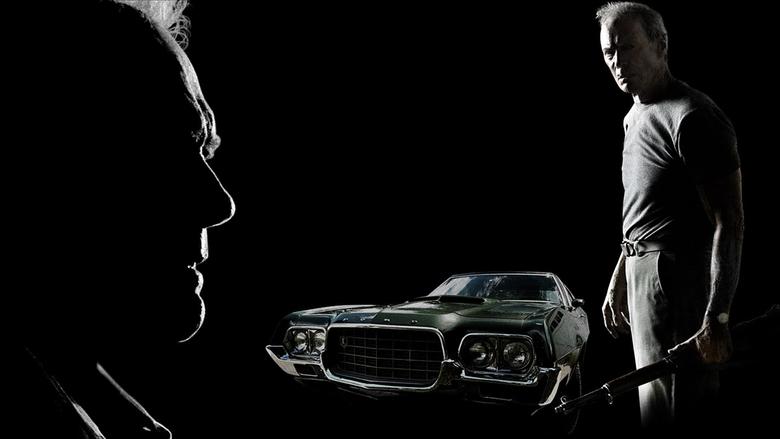
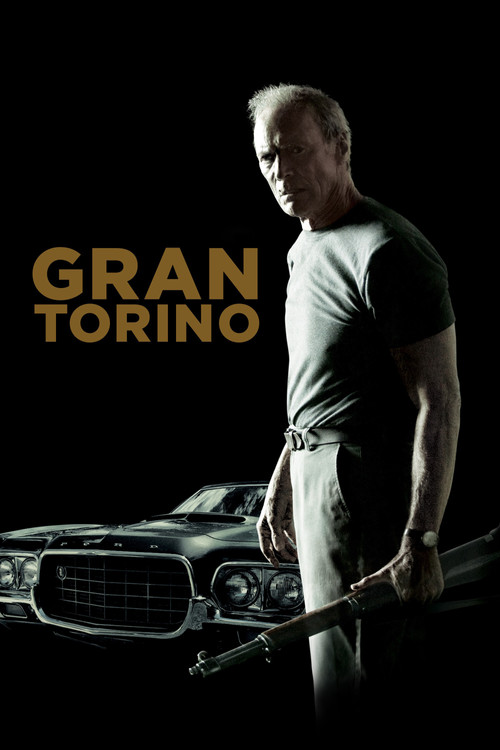
The 1972 Ford Gran Torino
The Gran Torino is a multifaceted symbol. Initially, it represents Walt's past, his pride in American manufacturing, and his traditional sense of masculinity. It is a tangible link to an era he feels has disappeared. As the story progresses, the car becomes the catalyst for his relationship with Thao. Ultimately, by bequeathing the car to Thao, it symbolizes the passing of Walt's legacy, his values of hard work and integrity, and the bridging of a generational and cultural gap.
The car is kept in pristine condition in Walt's garage. The inciting incident of the plot is Thao's failed attempt to steal it. In the final scene, Thao is seen driving the Gran Torino down a coastal road, signifying a hopeful future.
Guns
Guns represent different forms of power and violence. Walt's M1 Garand from the Korean War is a symbol of his past and his readiness to use violence for protection, as seen when he first confronts the gang. The gang's modern firearms are tools of intimidation and senseless violence. The film ultimately critiques the reliance on violence, as Walt's final victory is achieved not with a gun, but by tricking the gang into killing him while he is unarmed.
Walt brandishes his M1 rifle to save Thao from the gang on his lawn. He later uses a finger-gun gesture as a recurring motif to intimidate people. In the climax, he provokes the gang into shooting him by reaching for what they believe is a gun, but is only his lighter.
Zippo Lighter
Walt's Zippo lighter, engraved with the 1st Cavalry Division insignia, is a memento from his time in the Korean War. It represents the painful memories and guilt he carries from the war. It is also a symbol of his mortality, as he is a chronic smoker. In the final scene, it becomes the instrument of his sacrifice; reaching for it is the gesture that provokes the gang to kill him, thereby becoming a tool for justice rather than violence.
The lighter is seen throughout the film whenever Walt smokes. In the climactic confrontation, Walt asks for a light, then reaches into his jacket for his Zippo. The gang members, believing he is pulling out a gun, shoot him down. The camera reveals the lighter in his dead hand.
Crucifixion Pose
When Walt is shot and killed by the gang, he falls to the ground with his arms outstretched, deliberately evoking the imagery of Jesus Christ on the cross. This pose symbolizes his ultimate sacrifice, dying for the sins (or in this case, the safety) of others. It frames his death not as a defeat, but as a redemptive act of martyrdom that saves the Vang Lor family.
This occurs in the film's climax. After being shot multiple times by the gang members, Walt falls backward onto their lawn. The camera lingers on his body from above, clearly showing the Christ-like pose.
Philosophical Questions
Can deeply ingrained prejudice truly be overcome in old age?
The film champions the idea that it is never too late for personal transformation. Walt Kowalski starts as a man defined by his prejudices, a product of his generation and wartime experiences. The film meticulously charts his evolution, suggesting that direct, personal interaction and the formation of genuine human bonds are powerful enough to dismantle a lifetime of bigotry. His journey from using racial slurs to sacrificing his life for his Hmong neighbors serves as the film's central thesis on the human capacity for change and empathy, regardless of age.
What is the nature of true sacrifice and redemption?
"Gran Torino" explores sacrifice not as a single act, but as a process. Walt is haunted by his past and initially seeks solace in isolation. The film questions what constitutes a meaningful life and death. Father Janovich represents a traditional, faith-based path to redemption through confession, which Walt rejects. Instead, Walt finds redemption through action and mentorship. His final act is a calculated sacrifice, a form of secular martyrdom where he uses his death as a tool to bring justice and peace to his community. This suggests that redemption is found not in words or faith alone, but in meaningful, selfless action that benefits others.
Does the end justify the means when confronting violence?
The film presents a complex moral landscape regarding violence. Walt initially confronts the gang with the threat of superior violence, a tactic that reflects his 'Dirty Harry' persona. However, this only leads to escalation and retaliation against the Vang Lor family. Walt realizes that meeting violence with more violence is a destructive cycle. His ultimate solution is a non-violent act on his part—getting himself killed—that manipulates the legal system to permanently stop the gang. The film argues that the most effective way to defeat violence is not through greater force, but through intelligence, courage, and self-sacrifice.
Core Meaning
"Gran Torino" explores the possibility of redemption and the breaking down of deeply ingrained prejudice. The film posits that it's never too late for an individual to change and find common ground with those they once reviled. Director Clint Eastwood uses the character of Walt Kowalski to examine the legacy of a generation of American men shaped by war and industrial labor, who find themselves alienated in a changing world. The film's core message is about sacrifice, the formation of unconventional families, and the idea that understanding and empathy can overcome cultural and generational divides. It's a commentary on the corrosive nature of racism and the unexpected paths to salvation.