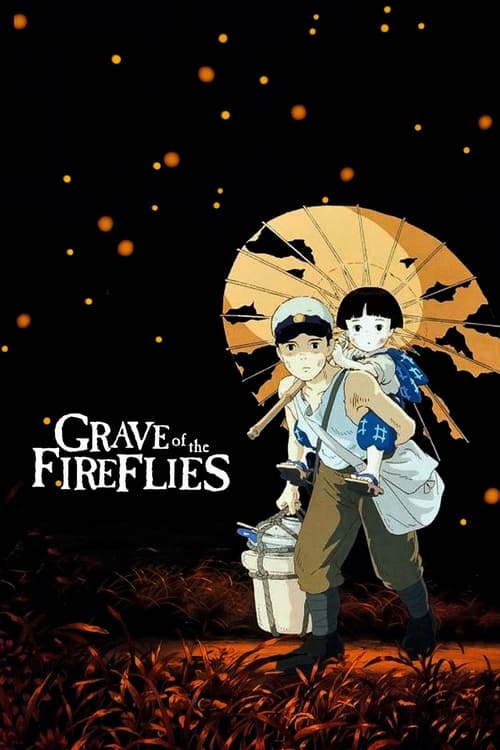
火垂るの墓
"Why do fireflies have to die so soon?"
Grave of the Fireflies - Symbolism & Philosophy
Symbols & Motifs
Fireflies
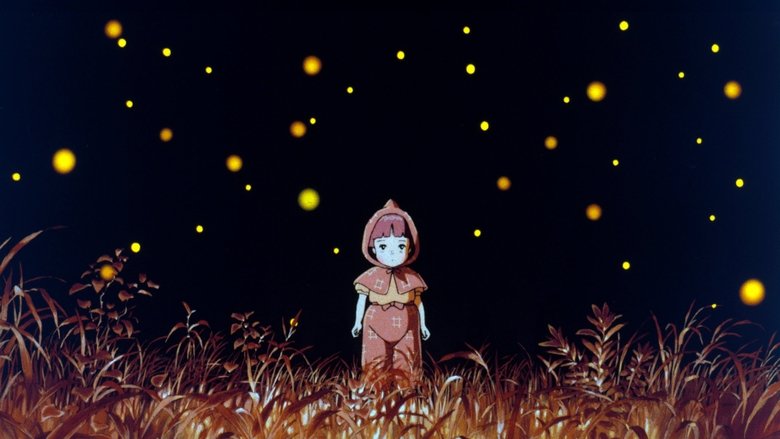
The fireflies are a central symbol representing the fleeting, fragile beauty of life, especially the short lives of the children. They symbolize both hope and impermanence. Like the fireflies that illuminate the bomb shelter for one beautiful night only to be dead the next morning, Seita and Setsuko's moments of happiness are brief and ultimately transient in the face of death. Setsuko burying the dead fireflies is a direct foreshadowing of her own fate and a moment of tragic realization for both siblings.
Seita catches fireflies to light their dark bomb shelter, creating a magical, beautiful moment for Setsuko. The next day, Setsuko creates a grave for the dead insects, asking her brother why they had to die so young, mirroring their own situation. The spirits of the children are often seen surrounded by fireflies, linking their souls to these ephemeral lights.
Sakuma Fruit Drops Tin
The candy tin symbolizes the memory of happier times and the illusion of hope. Initially, it's a source of comfort and a treat that Seita uses to soothe Setsuko. As the candy inside dwindles, so does their hope and vitality. Ultimately, the empty, rusted tin becomes a vessel for Setsuko's ashes, transforming a symbol of sweet childhood innocence into a grim urn and a reminder of all that was lost. It represents the shift from abundance and hope to scarcity and despair.
The film opens with a janitor finding the rusted tin on Seita's dead body and tossing it away, which releases Setsuko's spirit. Throughout the film, Seita gives Setsuko the drops to cheer her up. Near the end, as Setsuko is dying from malnutrition, she hallucinates and puts marbles in her mouth, thinking they are fruit drops. After her death, Seita cremates her and places her ashes in the tin, which he carries until his own death.
The Beach
The beach represents a temporary escape from the horrors of war and a memory of their former, happy family life. It's a place of freedom and innocence where Seita and Setsuko can briefly forget their hunger and grief. Their playful time in the water is one of the film's few moments of pure, untroubled joy, making the memory all the more poignant as their situation deteriorates.
After the initial bombing, Seita takes Setsuko to the beach to wait for news. Later, while living with their aunt, they sneak away to the beach, which becomes one of their fondest memories. As Setsuko lies dying, Seita promises he will take her to the beach again once she is well, a promise he cannot keep.
Philosophical Questions
Is pride a virtue or a fatal flaw in the face of overwhelming adversity?
The film deeply explores this question through Seita. His pride as the son of a naval officer fuels his desire to be independent and to provide for his sister without help, which could be seen as virtuous. However, this same pride makes him unable to stomach the criticism of his aunt, leading him to make the disastrous decision to leave her home. The film forces the audience to question whether it is better to sacrifice one's dignity for survival or to maintain one's pride at the ultimate cost. Seita's tragedy suggests that in extreme circumstances, pride can become a lethal indulgence.
When society breaks down, what is our responsibility to one another?
"Grave of the Fireflies" examines the collapse of social and familial bonds during wartime. The aunt, the farmer, and the doctor all prioritize their own survival or duties over helping two orphaned children. The film asks what moral obligations individuals have to the vulnerable when the systems of support disappear. Director Isao Takahata intended this as a central theme, warning that without a conscious effort to help each other, raw, self-serving instincts take over, and society fails its most helpless members.
Can innocence survive in a world of absolute brutality?
Setsuko embodies pure childhood innocence. Throughout their ordeal, Seita's main goal is to protect that innocence—to create moments of joy with fireflies and candy, and to shield her from the truth of their mother's death. However, the film relentlessly demonstrates that such innocence is unsustainable. The realities of starvation and loss ultimately crush Setsuko's spirit and body. Her death serves as the film's definitive, heartbreaking answer: in the face of war's indiscriminate cruelty, innocence is one of the first and most tragic casualties.
Core Meaning
Director Isao Takahata repeatedly stated that he did not intend "Grave of the Fireflies" to be a simple anti-war film. Instead, he aimed to explore themes of societal collapse and human relationships in times of crisis. The film serves as a critique of what happens when people in a society fail to collaborate and support one another. Takahata wanted to depict Seita not as a wartime hero, but as a modern boy whose pride and failure to adapt to his harsh new reality lead to tragedy. The film is a tragic examination of the consequences of pride, isolation, and the failure of social systems, with the war acting as the catalyst that strips away societal norms and exposes raw human behavior. It's also an exploration of survivor's guilt, as the original story was a semi-autobiographical apology from author Akiyuki Nosaka to the sister he lost to malnutrition during the war.