Grave of the Fireflies
A hauntingly beautiful animated drama capturing the fragile incandescence of childhood innocence tragically extinguished by the indifferent brutalities of war.
Grave of the Fireflies

Grave of the Fireflies

火垂るの墓

"Why do fireflies have to die so soon?"

16 April 1988 Japan 89 min ⭐ 8.4 (6,126)
Director: Isao Takahata
Cast: Tsutomu Tatsumi, Ayano Shiraishi, Yoshiko Shinohara, Akemi Yamaguchi, Masayo Sakai
Drama Animation War
The Brutality and Consequences of War Pride and Poor Judgment Loss of Innocence Societal Indifference
Budget: $3,700,000
Box Office: $842,132

Overview

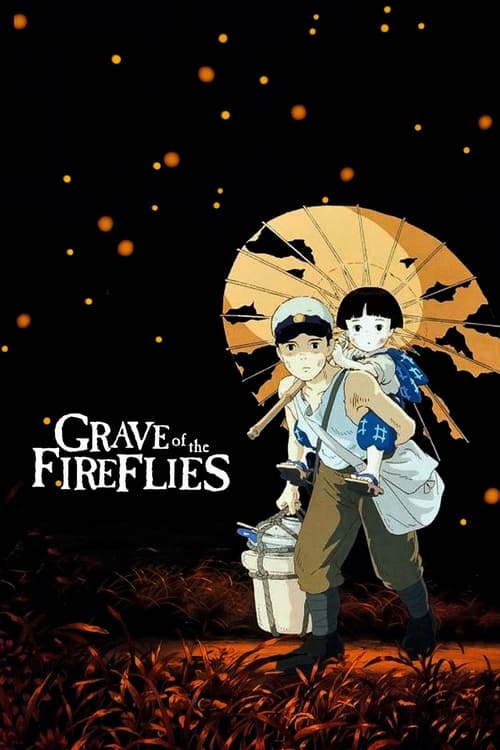
"Grave of the Fireflies" tells the devastating story of two young siblings, Seita and Setsuko, struggling to survive in Kobe, Japan, during the final months of World War II. After an American firebombing raid destroys their home and kills their mother, 14-year-old Seita must take on the responsibility of caring for his 4-year-old sister.

They initially move in with a distant aunt, but as rations become scarce and tensions rise, the aunt's resentment towards them grows. Believing he can provide a better life for Setsuko, Seita makes the fateful decision for them to leave and live on their own in an abandoned bomb shelter. The film follows their desperate, heartbreaking struggle for survival as they face starvation, malnutrition, and the overwhelming indifference of a society consumed by war.

Core Meaning

Director Isao Takahata repeatedly stated that he did not intend "Grave of the Fireflies" to be a simple anti-war film. Instead, he aimed to explore themes of societal collapse and human relationships in times of crisis. The film serves as a critique of what happens when people in a society fail to collaborate and support one another. Takahata wanted to depict Seita not as a wartime hero, but as a modern boy whose pride and failure to adapt to his harsh new reality lead to tragedy. The film is a tragic examination of the consequences of pride, isolation, and the failure of social systems, with the war acting as the catalyst that strips away societal norms and exposes raw human behavior. It's also an exploration of survivor's guilt, as the original story was a semi-autobiographical apology from author Akiyuki Nosaka to the sister he lost to malnutrition during the war.

Thematic DNA

The Brutality and Consequences of War 35%
Pride and Poor Judgment 30%
Loss of Innocence 20%
Societal Indifference 15%

The Brutality and Consequences of War

While the director resisted the "anti-war" label, the film unflinchingly portrays the devastating impact of war on civilians. It focuses not on battles, but on the day-to-day suffering of orphans: the firebombing of cities, the loss of family, widespread starvation, and the breakdown of societal compassion. The story highlights how war strips away humanity, leaving innocent victims like Seita and Setsuko to fend for themselves in a world that has become indifferent to their plight.

Pride and Poor Judgment

A critical theme is Seita's pride, which directly contributes to the tragedy. He chooses to leave his aunt's home rather than endure her criticism or attempt to contribute. This decision, born of a desire for independence and to protect his sister from emotional hardship, ultimately isolates them and cuts them off from the last vestiges of a support system. Takahata intended Seita's actions to be a central focus, viewing his downfall as a result of his stubbornness and inability to swallow his pride for the sake of survival.

Loss of Innocence

The film tragically depicts the destruction of childhood. Setsuko, in her innocence, doesn't fully comprehend the war around her, finding joy in simple things like fireflies and fruit drops. Seita desperately tries to preserve this innocence, shielding her from the truth of their mother's death and creating moments of happiness for her. However, the harsh reality of their situation inevitably intrudes, culminating in Setsuko's heartbreaking question: "Why do fireflies have to die so soon?" This question symbolizes the premature end of their own brief, flickering lives.

Societal Indifference

As the war progresses and resources become scarce, the film shows a society turning inward. The aunt's initial kindness sours into resentment, and other adults—from the farmer to the doctor—are either unable or unwilling to help the children. This indifference is starkly portrayed in the opening and closing scenes, where passersby ignore the dying Seita at the train station. The film suggests that in extreme hardship, the bonds of community can break, leaving the most vulnerable abandoned.

Character Analysis

Seita

Tsutomu Tatsumi

Archetype: Tragic Hero / Flawed Protector
Key Trait: Prideful

Motivation

Seita's primary motivation is to protect his younger sister, Setsuko, both physically and emotionally. He strives to preserve her innocence and provide her with happiness and a sense of normalcy amidst the chaos of war. His actions are also driven by a strong sense of pride and responsibility, stemming from his identity as the son of a naval officer.

Character Arc

Seita begins as a responsible older brother, trying to shield his sister from the war's horrors. His arc is a tragic downfall driven by youthful pride and a desperate attempt to maintain dignity and create a semblance of their old life. He makes the fateful decision to leave their aunt's home, believing he can care for Setsuko alone. This pride prevents him from seeking help or returning, leading him to resort to stealing. By the end, he is broken by Setsuko's death, having failed in his role as protector, and he soon succumbs to starvation himself, a ghost haunting the new, rebuilt Japan.

Setsuko

Ayano Shiraishi

Archetype: The Innocent
Key Trait: Innocent

Motivation

As a four-year-old, Setsuko's motivations are simple and pure: she seeks comfort, happiness, and closeness with her brother, Seita. She is motivated by immediate needs and joys, such as playing, eating fruit drops, and being reassured by her brother's presence. She embodies the innocence that Seita fights so hard to protect.

Character Arc

Setsuko's arc is one of fading innocence and vitality. She starts as a typical, playful four-year-old, finding wonder in simple things like candy and fireflies. The war gradually chips away at her spirit. While she remains a source of spiritual support for Seita, her physical body deteriorates due to severe malnutrition. Her journey from a happy child to a listless, hallucinating victim of starvation is the emotional core of the film's tragedy. Her death signifies the ultimate destruction of innocence by war.

The Aunt

Yoshiko Shinohara

Archetype: The Antagonist / Symbol of Societal Hardship
Key Trait: Pragmatic

Motivation

The aunt is motivated by self-preservation and a pragmatic, hardened view of survival during wartime. She believes that everyone, including children, should contribute to the war effort to earn their keep. As rations dwindle, her motivation shifts to providing for her own family, viewing Seita and Setsuko as an unwelcome burden.

Character Arc

The aunt's character arc reflects the hardening of society under the strain of war. She initially takes the children in, appearing welcoming. However, as food becomes scarcer and she feels the pressure of feeding extra mouths who don't contribute to the war effort, her attitude changes. She becomes resentful, cruel, and emotionally abusive, constantly criticizing the children and pressuring Seita to sell his mother's belongings for rice. Her transformation shows how wartime deprivation can erode empathy and familial duty.

Symbols & Motifs

Fireflies

Meaning:

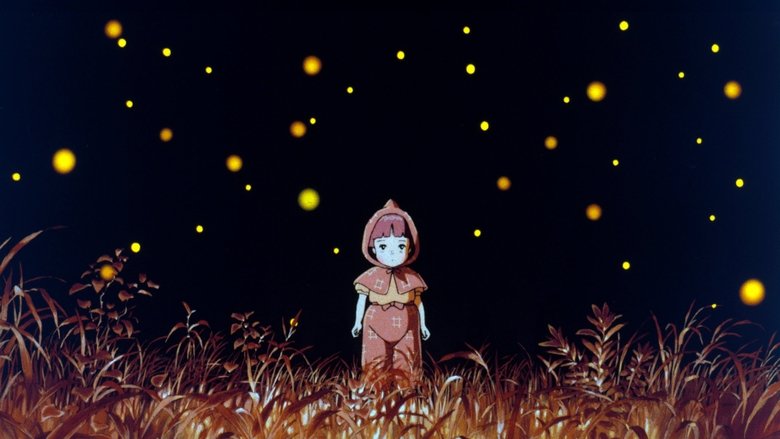
The fireflies are a central symbol representing the fleeting, fragile beauty of life, especially the short lives of the children. They symbolize both hope and impermanence. Like the fireflies that illuminate the bomb shelter for one beautiful night only to be dead the next morning, Seita and Setsuko's moments of happiness are brief and ultimately transient in the face of death. Setsuko burying the dead fireflies is a direct foreshadowing of her own fate and a moment of tragic realization for both siblings.

Context:

Seita catches fireflies to light their dark bomb shelter, creating a magical, beautiful moment for Setsuko. The next day, Setsuko creates a grave for the dead insects, asking her brother why they had to die so young, mirroring their own situation. The spirits of the children are often seen surrounded by fireflies, linking their souls to these ephemeral lights.

Sakuma Fruit Drops Tin

Meaning:

The candy tin symbolizes the memory of happier times and the illusion of hope. Initially, it's a source of comfort and a treat that Seita uses to soothe Setsuko. As the candy inside dwindles, so does their hope and vitality. Ultimately, the empty, rusted tin becomes a vessel for Setsuko's ashes, transforming a symbol of sweet childhood innocence into a grim urn and a reminder of all that was lost. It represents the shift from abundance and hope to scarcity and despair.

Context:

The film opens with a janitor finding the rusted tin on Seita's dead body and tossing it away, which releases Setsuko's spirit. Throughout the film, Seita gives Setsuko the drops to cheer her up. Near the end, as Setsuko is dying from malnutrition, she hallucinates and puts marbles in her mouth, thinking they are fruit drops. After her death, Seita cremates her and places her ashes in the tin, which he carries until his own death.

The Beach

Meaning:

The beach represents a temporary escape from the horrors of war and a memory of their former, happy family life. It's a place of freedom and innocence where Seita and Setsuko can briefly forget their hunger and grief. Their playful time in the water is one of the film's few moments of pure, untroubled joy, making the memory all the more poignant as their situation deteriorates.

Context:

After the initial bombing, Seita takes Setsuko to the beach to wait for news. Later, while living with their aunt, they sneak away to the beach, which becomes one of their fondest memories. As Setsuko lies dying, Seita promises he will take her to the beach again once she is well, a promise he cannot keep.

Memorable Quotes

なぜホタルはすぐ死んでしまうん? (Naze hotaru wa sugu shinde shimaun?)

— Setsuko

Context:

After their first night in the abandoned bomb shelter, Seita awakens to find Setsuko digging a grave for the fireflies they caught, which have all died. She tells Seita she knows their mother is also in a grave before asking this devastating question.

Meaning:

Translated as "Why do fireflies have to die so soon?", this is the film's most iconic and heartbreaking line. At this moment, Setsuko has just buried a tin full of dead fireflies and has also revealed that she knows her mother is dead. The question is a poignant, innocent query about mortality that extends far beyond the insects. It symbolizes the fragility of life and the tragedy of children dying young in the war, directly reflecting her own fate and Seita's grief.

平成20年9月21日、僕は死んだ。(Heisei 20-nen 9-gatsu 21-nichi, boku wa shinda.)

— Seita (voiceover)

Context:

The film opens on a scene of a malnourished and dying Seita in a crowded Sannomiya train station. This line is delivered as his spirit observes his own death, setting a somber and inevitable tone for the flashback that constitutes the rest of the film.

Meaning:

The film's opening line, which translates to "September 21, 1945... that was the night I died." This immediately establishes the film's tragic nature, informing the audience from the outset that the protagonists will not survive. This narrative choice removes any suspense about their survival and forces the viewer to focus instead on the journey and the emotional weight of their struggle, making the story a haunting reflection rather than a simple tale of survival.

おおきに。(Ookini.)

— Setsuko

Context:

Seita returns to the shelter with food after learning of Japan's surrender. He finds Setsuko weak and hallucinating, offering her a piece of watermelon. She thanks him before falling into a final sleep from which she never wakes.

Meaning:

This is Setsuko's last word, a simple "Thank you" to Seita in the Kansai dialect. In her final moments, while hallucinating from malnutrition, Seita gives her a piece of watermelon. Her gratitude in this state is profoundly moving. It demonstrates her enduring love and appreciation for her brother, despite all the hardship he has been unable to save her from. It is a moment of pure, heartbreaking affection before she succumbs.

Philosophical Questions

Is pride a virtue or a fatal flaw in the face of overwhelming adversity?

The film deeply explores this question through Seita. His pride as the son of a naval officer fuels his desire to be independent and to provide for his sister without help, which could be seen as virtuous. However, this same pride makes him unable to stomach the criticism of his aunt, leading him to make the disastrous decision to leave her home. The film forces the audience to question whether it is better to sacrifice one's dignity for survival or to maintain one's pride at the ultimate cost. Seita's tragedy suggests that in extreme circumstances, pride can become a lethal indulgence.

When society breaks down, what is our responsibility to one another?

"Grave of the Fireflies" examines the collapse of social and familial bonds during wartime. The aunt, the farmer, and the doctor all prioritize their own survival or duties over helping two orphaned children. The film asks what moral obligations individuals have to the vulnerable when the systems of support disappear. Director Isao Takahata intended this as a central theme, warning that without a conscious effort to help each other, raw, self-serving instincts take over, and society fails its most helpless members.

Can innocence survive in a world of absolute brutality?

Setsuko embodies pure childhood innocence. Throughout their ordeal, Seita's main goal is to protect that innocence—to create moments of joy with fireflies and candy, and to shield her from the truth of their mother's death. However, the film relentlessly demonstrates that such innocence is unsustainable. The realities of starvation and loss ultimately crush Setsuko's spirit and body. Her death serves as the film's definitive, heartbreaking answer: in the face of war's indiscriminate cruelty, innocence is one of the first and most tragic casualties.

Alternative Interpretations

While the film is most commonly seen as a tragic story of children victimized by war, there are significant alternative interpretations, many encouraged by director Isao Takahata himself. One of the primary alternative readings focuses on Seita's pride and poor decisions as the main cause of the tragedy, rather than the war itself. In this view, the war is merely the setting for a drama about a stubborn teenage boy whose refusal to apologize to his aunt or seek help leads to the deaths of himself and his sister. Takahata stated he intended Seita to be seen as a modern youth transplanted into the past, whose individualistic pride prevents him from integrating and surviving within a strained community. Therefore, the film can be interpreted as a cautionary tale about the failure of social responsibility and the fatal consequences of isolation.

Another interpretation, put forward by author Akiyuki Nosaka, is that the story is akin to a double suicide love story (shinjū-mono), a traditional Japanese genre. Seita, in trying to create a perfect, isolated world for just himself and his sister, effectively chooses a path that can only lead to death. This reading emphasizes the intense, codependent bond between the siblings and frames their story not just as a failure to survive, but as a tragic, foreordained journey toward death, where their brief time together in the shelter is a 'heaven' before the end.

Cultural Impact

"Grave of the Fireflies" is widely regarded as one of the greatest animated films and one of the most powerful war films ever made. Upon its 1988 release, it was a modest success in Japan, but its critical reputation has grown immensely over time. Internationally, it shattered the perception that animation is exclusively for children, proving the medium could tackle profound, mature, and devastating themes. Esteemed critic Roger Ebert championed the film, calling it "the most profoundly human animated film I've ever seen" and comparing its emotional impact to "Schindler's List".

The film is based on Akiyuki Nosaka's 1967 semi-autobiographical story, which itself was an act of personal atonement for the death of his sister during the war. This basis in real-life tragedy gives the film an immense emotional weight. Director Isao Takahata, a survivor of a US air raid, brought a stark realism to the depiction of the firebombings. While often interpreted as an anti-war film, Takahata himself disputed this, stating his goal was to explore the breakdown of social structures in crisis and to warn younger generations in prosperous, modern Japan about the dangers of isolation and selfishness. Despite the director's intent, its unflinching portrayal of civilian suffering has cemented its legacy as a potent anti-war statement for audiences worldwide.

Audience Reception

Audience reception for "Grave of the Fireflies" is overwhelmingly emotional, with most viewers describing it as one of the saddest films they have ever seen. It is widely praised for its powerful storytelling, beautiful yet haunting animation, and its unflinching portrayal of the human cost of war. Many viewers feel a profound connection to the characters and are devastated by the tragic ending, which is known from the film's first line. This foreknowledge of their fate makes the fleeting moments of happiness between the siblings even more poignant and painful to watch.

The main point of praise is the film's ability to evoke deep empathy and grief through the animated medium, proving it can be as emotionally powerful as any live-action drama. Criticism is rare, but some discussion revolves around the character of Seita. While many view him as a tragic hero doing his best, others, echoing the director's intent, are critical of his prideful decisions, particularly leaving the aunt's house, seeing it as a fatal mistake that directly caused the tragedy. This debate over Seita's culpability is a controversial point, with some feeling it victim-blames the children, while others see it as a crucial layer of the film's complex message. Overall, the verdict is that it is a masterpiece of animation, a profoundly moving and unforgettable film that most agree they can only bear to watch once.

Interesting Facts

  • The film is based on the semi-autobiographical 1967 short story of the same name by Akiyuki Nosaka, who wrote it as an apology to his own younger sister, whom he lost to malnutrition during the war.
  • "Grave of the Fireflies" was originally released in Japan as a double feature with Hayao Miyazaki's much more cheerful and lighthearted film, "My Neighbor Totoro". Studio heads feared audiences wouldn't show up for such a depressing film on its own.
  • Director Isao Takahata was a survivor of a WWII air raid himself when he was a child, which informed the film's realistic and harrowing depiction of the firebombing.
  • The voice actress for Setsuko, Ayano Shiraishi, was only five years old at the time. Takahata wanted a genuine child's voice and often had her deliver lines in fragments, which were then edited together to create a raw, authentic performance.
  • The specific type of candy in the iconic red tin, Sakuma Drops, saw a surge in popularity due to the film. The company even released limited edition tins resembling the one in the movie.
  • Renowned director Akira Kurosawa praised the film and mistakenly wrote a letter of praise to Hayao Miyazaki, believing he had directed it.
  • To achieve a softer look, the animation team used brown outlines for the characters instead of the traditional black, which was a challenging and unconventional technique at the time.

⚠️ Spoiler Analysis

Click to reveal detailed analysis with spoilers

Frequently Asked Questions

Explore More About This Movie

Dive deeper into specific aspects of the movie with our detailed analysis pages

Comments (0)

Leave a comment

No comments yet. Be the first to share your thoughts!