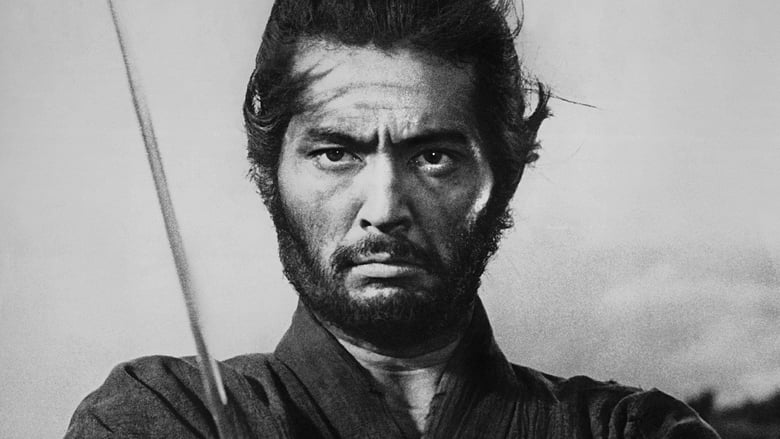

Harakiri
A stark and haunting samurai requiem, this film's somber elegance exposes the hollow echo of honor within a rigid, unforgiving world.
Harakiri
Harakiri

切腹

"What befalls others today, may be your own fate tomorrow."

15 September 1962 Japan 135 min ⭐ 8.4 (1,118)
Director: Masaki Kobayashi
Cast: Tatsuya Nakadai, Akira Ishihama, Shima Iwashita, Tetsuro Tamba, Masao Mishima
Drama History Action
Hypocrisy of the Bushido Code Critique of Authority and Power Structures Humanism vs. Inhuman Tradition The Individual Against the System

Harakiri - Ending Explained

⚠️ Spoiler Analysis

The entire narrative of "Harakiri" is a meticulously constructed trap, with the final revelations serving as its devastating trigger. The key twist is that Hanshirō Tsugumo is not a random ronin, but the father-in-law of Motome Chijiiwa, the young samurai whose tragic story is initially used to intimidate him. Hanshirō's request to commit seppuku is a pretext to gain an audience and systematically dismantle the honor of the Iyi clan from within.

The second major revelation is that the three samurai Hanshirō requests to be his seconds (the men who officiated Motome's cruel death) are not absent due to 'illness' as the clan claims. Hanshirō has already confronted them, defeated them in duels, and taken their topknots—the ultimate symbol of a samurai's honor. He throws the three topknots into the courtyard, providing undeniable proof of their cowardice and the clan's lies. This act transforms the film from a somber drama into a tense revenge thriller, exposing the clan's claims of martial superiority as a complete fraud.

The ending reinforces the film's cynical view of power. Hanshirō fights with near-superhuman ferocity, killing several retainers and smashing the clan's symbolic armor, but he is ultimately overwhelmed. In a final act of dishonor, the clan, unable to defeat him with swords, resorts to using three matchlock guns to kill him as he attempts to commit seppuku. The clan's official records are then altered: Hanshirō is declared mentally unstable, the clan's casualties are attributed to 'illness', and the shogun praises the House of Iyi for their handling of the affair. This ending reveals the hidden meaning: history is written by the victors, and power preserves itself through lies. The truth of Hanshirō's rebellion is buried, and the hollow facade of honor is meticulously restored.

Alternative Interpretations

While the dominant interpretation of "Harakiri" is a straightforward critique of feudal hypocrisy, some analysis points to a deeper, more tragic reading of Hanshirō's final actions. After spending the entire film exposing the samurai code as a hollow facade, Hanshirō attempts to commit seppuku in his final moments before being shot. This act can be interpreted not as a final victory, but as the ultimate tragedy: even a man who sees through the system's lies cannot fully escape its ideological grip. In this view, Hanshirō's final gesture suggests that the corrosive power of such traditions is so deeply ingrained that even its most ardent critic remains bound by its rituals in death.

Another perspective focuses less on the historical critique and more on the film's universal, existentialist themes. Hanshirō's journey can be seen as that of an individual creating his own meaning and morality in a meaningless, absurd world. Stripped of his status, family, and purpose, he rejects the socially prescribed code of honor and forges his own path of justice. His final stand is less about samurai tradition and more about an individual's ultimate, defiant assertion of his own humanity against an oppressive and indifferent universe.