"Harry Potter and the Deathly Hallows: Part 2" is built around several major plot twists and revelations. The most significant is the truth about Severus Snape. Through his memories, Harry discovers that Snape was never loyal to Voldemort but was in fact protecting Harry his entire life, motivated by his deep, unrequited love for Harry's mother, Lily. It is also revealed that Dumbledore's death was pre-arranged between him and Snape. Another crucial twist is the revelation that Harry himself is the final, unintentional Horcrux. This means that for Voldemort to be defeated, Harry must die at his hands. Harry's subsequent sacrifice in the Forbidden Forest leads him to a limbo-like state where he converses with Dumbledore, who explains that the killing curse destroyed the piece of Voldemort's soul within him, allowing Harry to return to life. The film's climax reveals that the true master of the Elder Wand was not Voldemort, but Harry, as he had disarmed Draco Malfoy, who had previously disarmed Dumbledore. This is why the wand's allegiance was to Harry, causing Voldemort's final killing curse to backfire and ultimately destroy him. The film concludes with an epilogue set 19 years in the future, showing a married Harry and Ginny, and Ron and Hermione, sending their own children off to Hogwarts.

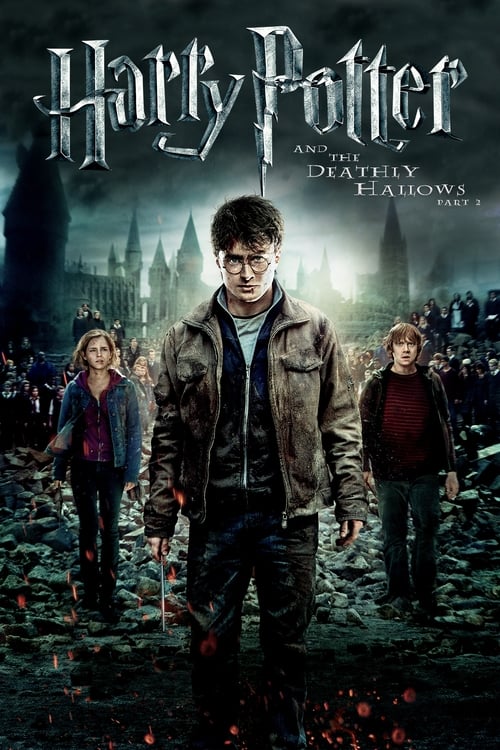
"It all ends."
Director: David Yates
Cast: Daniel Radcliffe, Emma Watson, Rupert Grint, Ralph Fiennes, Alan Rickman
Harry Potter and the Deathly Hallows: Part 2 — Ending Explained
⚠️ Spoiler Analysis
Alternative Interpretations
While the film presents a clear narrative of good triumphing over evil, some alternative interpretations have emerged among critics and audiences. One perspective is a religious allegory, with Harry as a Christ-like figure who willingly sacrifices himself and is resurrected to save humanity. Another interpretation focuses on the political undertones of the story, with Voldemort's pure-blood ideology mirroring fascist regimes and the Ministry of Magic's corruption serving as a critique of governmental overreach. Some have also analyzed the story through a psychological lens, viewing the Horcruxes as representations of trauma that must be confronted and destroyed for healing to occur. The ending itself has been subject to different readings; while it is presented as a happy conclusion, some viewers find the "19 years later" epilogue to be overly sentimental and a departure from the darker tone of the rest of the film.
Explore More About This Movie
Dive deeper into specific aspects of the movie with our detailed analysis pages