
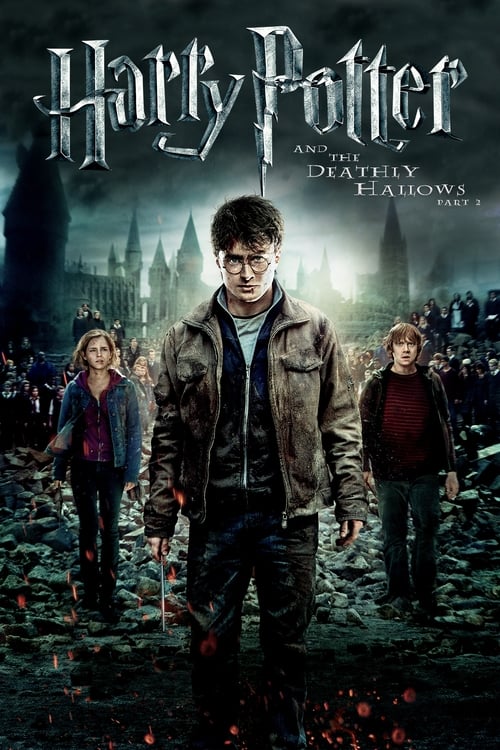
"It all ends."
Harry Potter and the Deathly Hallows: Part 2 - Symbolism & Philosophy
Symbols & Motifs
The Deathly Hallows
The three Deathly Hallows—the Elder Wand, the Resurrection Stone, and the Cloak of Invisibility—symbolize the human desire to conquer death. However, the film suggests that true mastery of death comes not from possessing these powerful objects, but from accepting mortality. Harry, who possesses all three Hallows at one point, ultimately chooses to reject the power they offer, demonstrating his wisdom and true strength.
The Hallows are central to the plot, with Voldemort seeking the Elder Wand for its power. Harry uses the Resurrection Stone to find strength from his deceased loved ones before facing Voldemort, and the Cloak of Invisibility has protected him throughout his journey. His decision to break the Elder Wand at the end of the film symbolizes his rejection of ultimate power.
Horcruxes
The Horcruxes, objects containing fragments of Voldemort's soul, symbolize his desperate and unnatural fear of death. They represent his corruption and his willingness to sacrifice his humanity for immortality. The destruction of each Horcrux signifies the chipping away of Voldemort's power and his forced confrontation with his own mortality.
The film revolves around Harry, Ron, and Hermione's quest to find and destroy the remaining Horcruxes, which include Hufflepuff's cup, Ravenclaw's diadem, and Nagini the snake. Harry himself is revealed to be an unintentional Horcrux, which necessitates his sacrifice.
The Sword of Gryffindor
The Sword of Gryffindor symbolizes true courage and worthiness. It appears to those who demonstrate bravery in times of need. The sword is one of the few objects capable of destroying Horcruxes, representing the power of good to vanquish evil.
The sword is used to destroy several Horcruxes throughout the series. In this film, Neville Longbottom pulls the sword from the Sorting Hat during a moment of profound courage, using it to kill Nagini, the final Horcrux, which is a pivotal moment in Voldemort's defeat.
Philosophical Questions
What is the nature of death, and how should we confront our own mortality?
The film explores this question through the stark contrast between Harry and Voldemort. Voldemort's obsessive fear of death leads him to mutilate his own soul in a desperate bid for immortality, ultimately living a tormented and loveless existence. Harry, on the other hand, learns to accept death as a natural part of life and is willing to sacrifice himself for a greater purpose. The film suggests that true mastery over death is not about avoiding it, but about living a life filled with love and courage, so that when death comes, it can be faced without fear.
Are our destinies predetermined, or do our choices shape our lives?
This classic philosophical debate is at the heart of Harry's journey. While he is burdened by a prophecy that seems to dictate his fate as "the Chosen One," it is ultimately his choices that define him as a hero. He consistently chooses love over hate, friendship over isolation, and self-sacrifice over self-preservation. The film argues that even in the face of prophecy and seemingly insurmountable odds, it is the power of free will and the moral compass of one's choices that truly shape one's destiny.
Core Meaning
The core meaning of "Harry Potter and the Deathly Hallows: Part 2" revolves around the themes of mortality, sacrifice, and the triumph of love over evil. Director David Yates sought to convey that true power lies not in immortality or dominance, but in the courage to face death and the willingness to sacrifice oneself for the greater good. The film posits that it is our choices, especially in the face of adversity, that truly define us. Ultimately, the message is that love, in its purest form—familial, platonic, and selfless—is the most potent magic of all, capable of conquering even the darkest of forces.