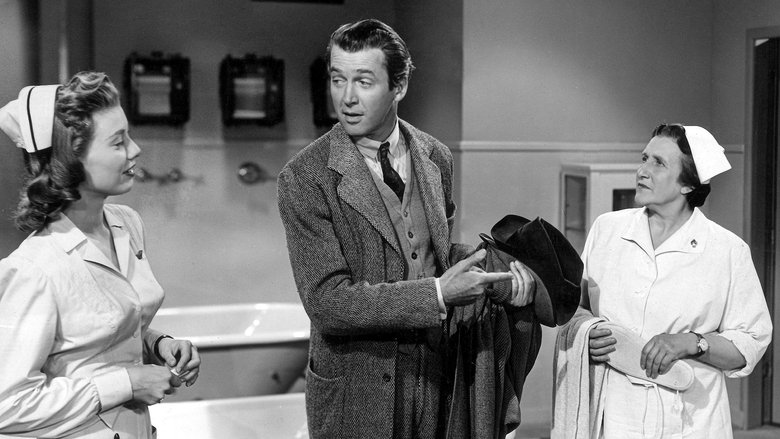
The film builds to a climax where Veta, exhausted by the social stigma, takes Elwood to the sanitarium to receive an injection (Formula 977) that will cure his hallucinations and make him 'normal.' As Elwood prepares for the procedure with his typical polite resignation, the cab driver tells Veta that he drives many people to get the shot, and afterwards, they become 'perfectly normal human beings, and you know what stinkers they are.' Realizing she prefers her eccentric, kind brother over a normal, cynical bore, Veta bangs on the door to stop the injection. She accepts Elwood as he is. They leave the sanitarium together, with Harvey (invisible) following them, implying that the magic—and the kindness—will continue.
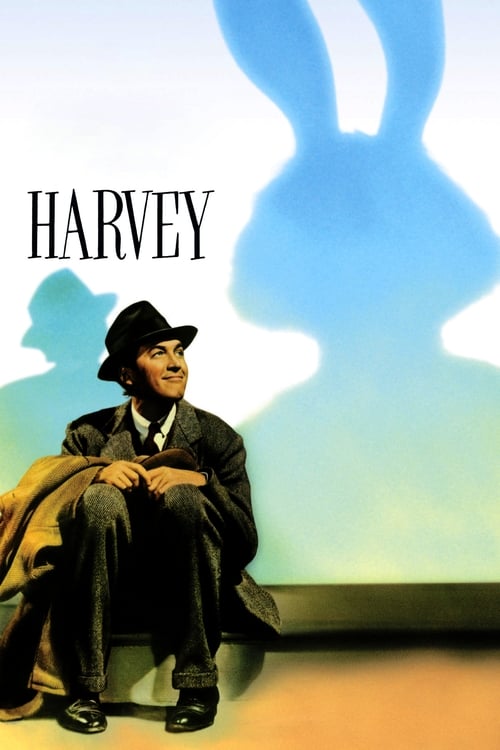
A whimsical yet profound fantasy-comedy where a gentle eccentric challenges societal norms of sanity through his friendship with an invisible six-foot rabbit. Warmth radiates from every frame, questioning whether it is better to be smart or simply kind.
Harvey
"The Wonderful Pulitzer Prize Play … becomes one of the Great Motion Pictures of our Time!"
04 December 1950
United States of America
104 min
7.7
(667)
Director: Henry Koster
Cast: James Stewart, Josephine Hull, Peggy Dow, Charles Drake, Cecil Kellaway
Fantasy
Comedy
Kindness vs. Cunning
Subjective Reality vs. Objective Fact
The Definition of Sanity
Harvey — Ending Explained
⚠️ Spoiler Analysis
Alternative Interpretations
Harvey as a Pooka (Real Magic): The film provides evidence (the hat with holes, the dictionary definition, Veta seeing him, the purse appearing) that Harvey is a genuine Celtic spirit, making the film a fantasy rather than a study of mental illness.
Harvey as a Shared Delusion: Another reading is that Harvey is a 'folie à deux' or mass hysteria where Elwood's sheer force of personality makes others hallucinate what he sees.
Harvey as a Metaphor for Alcoholism: While the play was darker, the film softens Elwood's drinking. However, some critics view Harvey as the manifestation of an alcoholic's denial and escapism, though the film treats this with warmth rather than judgment.
Explore More About This Movie
Dive deeper into specific aspects of the movie with our detailed analysis pages