Harvey
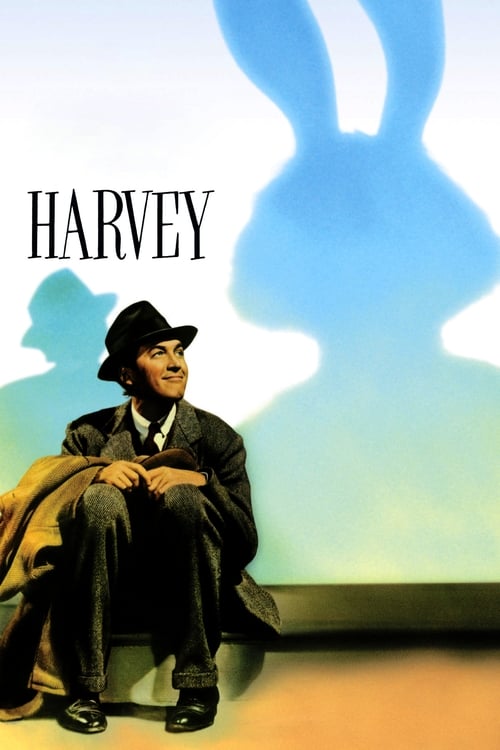
A whimsical yet profound fantasy-comedy where a gentle eccentric challenges societal norms of sanity through his friendship with an invisible six-foot rabbit. Warmth radiates from every frame, questioning whether it is better to be smart or simply kind.
Harvey

Harvey

"The Wonderful Pulitzer Prize Play … becomes one of the Great Motion Pictures of our Time!"

04 December 1950 United States of America 104 min ⭐ 7.7 (667)
Director: Henry Koster
Cast: James Stewart, Josephine Hull, Peggy Dow, Charles Drake, Cecil Kellaway
Fantasy Comedy
Kindness vs. Cunning Subjective Reality vs. Objective Fact The Definition of Sanity

Overview

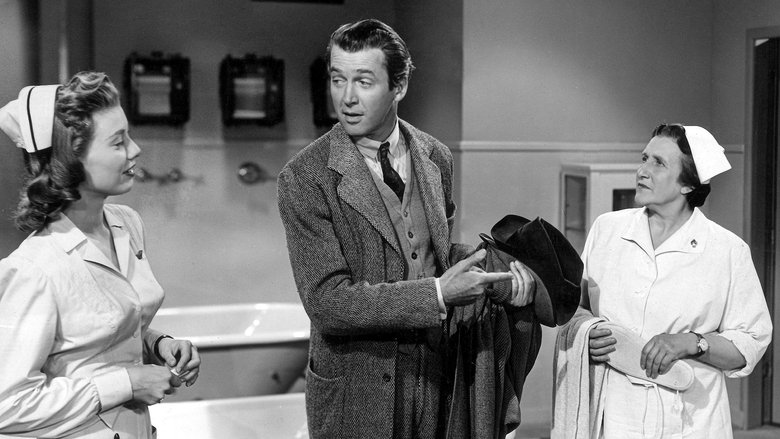
Elwood P. Dowd is an amiable, wealthy eccentric who introduces everyone he meets to his best friend, Harvey—a six-foot, three-and-a-half-inch tall invisible white rabbit. Elwood's insistence on Harvey's existence and his habit of introducing the pooka to high-society guests mortifies his social-climbing sister, Veta Louise Simmons, and her daughter Myrtle Mae.

Desperate to save the family's reputation, Veta attempts to have Elwood committed to a sanitarium. However, in a comedy of errors, the psychiatrist Dr. Sanderson believes Veta is the one hallucinating and commits her instead, while setting Elwood free. As the hospital staff realizes their mistake and scrambles to find Elwood, the film explores the infectious nature of Elwood's kindness and the magical possibility that Harvey might be real after all.
Core Meaning

The film posits that kindness and simple human connection are more valuable than intelligence or social conformity. Through Elwood, the director suggests that 'sanity' is often just a miserable adherence to reality, whereas a little bit of delusion—if it brings joy and harm to none—is a superior way to live. It critiques the cynical 'smart' world in favor of a 'pleasant' one.

Thematic DNA

Kindness vs. Cunning 40%
Subjective Reality vs. Objective Fact 30%
The Definition of Sanity 30%

Kindness vs. Cunning

Elwood explicitly states the film's central thesis: one can be 'oh so smart or oh so pleasant.' The film illustrates how the 'smart' characters (Veta, the doctors) are stressed and unhappy, while the 'pleasant' Elwood glides through life with grace, eventually disarming and charming everyone around him.

Subjective Reality vs. Objective Fact

The film challenges the rigidity of objective reality. While medical science deems Harvey a hallucination, the narrative repeatedly validates his existence (opening doors, the hat with holes, the dictionary entry). It suggests that reality is malleable and that believing in something magical can be more 'real' than cold facts.

The Definition of Sanity

The sanitarium, intended to cure mental illness, is populated by neurotic staff members who seem far less stable than Elwood. The film flips the script, portraying the 'insane' protagonist as the most rational and well-adjusted person in the story, questioning societal standards of mental health.

Character Analysis

Elwood P. Dowd

James Stewart

Archetype: The Wise Fool
Key Trait: Unflappable Kindness

Motivation

To be pleasant, to enjoy the moment, and to introduce his friend Harvey to others. He seeks connection over conflict.

Character Arc

Elwood remains static in his nature; he does not change, but rather changes the world around him. He acts as a catalyst, forcing other characters to confront their own cynicism and unhappiness.

Veta Louise Simmons

Josephine Hull

Archetype: The Antagonist turned Believer
Key Trait: High-strung Anxiety

Motivation

Initially social status and marrying off her daughter; later, protecting her brother's happiness.

Character Arc

Starts as a frantic social climber ashamed of her brother. Through her traumatic experience at the sanitarium and the realization of what 'normalcy' would cost Elwood, she transitions to acceptance and ultimately protects Elwood's eccentricity.

Dr. William Chumley

Cecil Kellaway

Archetype: The Man of Science
Key Trait: Pompous Authority

Motivation

To maintain his professional reputation, which evolves into a desire for his own magical escape.

Character Arc

Begins as an arrogant authority figure of psychiatry. His encounter with Elwood and subsequent 'sighting' of Harvey shatters his worldview, reducing him to a frightened but intrigued man who longs for the escapism Harvey offers.

Symbols & Motifs

Harvey (The Pooka)

Meaning:

Harvey represents the magic of the unseen, pure escapism, and the disrupting force of whimsy in a rigid world. He is a 'pooka'—a mischievous spirit—symbolizing a bridge between the mundane and the divine.

Context:

He is technically invisible throughout the film (except in the portrait), yet his presence is felt through opened doors, empty chairs, and the reactions of those who eventually 'see' him.

Formula 977

Meaning:

The injection represents the crushing weight of conformity and the erasure of individuality. It is the tool of the 'real' world designed to kill the magic of the human spirit.

Context:

The climax revolves around whether Elwood will take this injection, with the cab driver revealing that it turns people into 'perfectly normal human beings... and you know what stinkers they are.'

The Portrait

Meaning:

Visual proof of Harvey's acceptance and integration into the family history. It elevates the 'delusion' to the status of a tangible ancestor.

Context:

Revealed near the end, showing Elwood posing formally with the giant rabbit, cementing Harvey's place in the physical world.

Bars and Gates

Meaning:

Irony of confinement. The 'sane' people are often shown behind bars (Veta in the sanitarium) or trapped by social rules, while Elwood walks freely through them.

Context:

Visual motifs at Chumley's Rest, particularly when Veta is locked up, highlighting who is truly imprisoned by their mind.

Memorable Quotes

In this world, Elwood, you must be oh so smart, or oh so pleasant. Well, for years I was smart. I recommend pleasant. You may quote me.

— Elwood P. Dowd

Context:

Spoken to Dr. Chumley in the garden as Elwood explains his life philosophy.

Meaning:

The philosophical core of the film. It rejects the cynical pursuit of advantage ('smart') in favor of simple human warmth ('pleasant').

Well, I've wrestled with reality for 35 years, Doctor, and I'm happy to state I finally won out over it.

— Elwood P. Dowd

Context:

Elwood describing his mental state to the psychiatrist, reversing the doctor's expectations of a patient.

Meaning:

A declaration of victory over the mundane. Elwood frames his delusion not as a defeat or illness, but as a triumphant choice.

I always have a wonderful time, wherever I am, whoever I'm with.

— Elwood P. Dowd

Context:

Elwood's casual remark that emphasizes his contentment, contrasting with the other characters' constant dissatisfaction.

Meaning:

Highlights Elwood's superpower: his ability to find joy in the present moment regardless of circumstances.

He'll be a perfectly normal human being, and you know what stinkers they are.

— E.J. Lofgren (Taxi Driver)

Context:

The cab driver warning Veta about the effects of the serum she is about to force on Elwood.

Meaning:

The turning point for Veta. It redefines 'normal' from a desirable goal to a state of miserable mediocrity.

Philosophical Questions

Is subjective happiness more important than objective truth?

The film argues that if a delusion brings kindness and harms no one, it is superior to a 'truth' that makes one miserable and cynical.

What constitutes true sanity?

By contrasting the calm, kind Elwood with the frantic, angry, and fearful 'sane' characters, the film suggests that sanity is determined by how one treats others, not by adherence to strict reality.

Alternative Interpretations

Harvey as a Pooka (Real Magic): The film provides evidence (the hat with holes, the dictionary definition, Veta seeing him, the purse appearing) that Harvey is a genuine Celtic spirit, making the film a fantasy rather than a study of mental illness.

Harvey as a Shared Delusion: Another reading is that Harvey is a 'folie à deux' or mass hysteria where Elwood's sheer force of personality makes others hallucinate what he sees.

Harvey as a Metaphor for Alcoholism: While the play was darker, the film softens Elwood's drinking. However, some critics view Harvey as the manifestation of an alcoholic's denial and escapism, though the film treats this with warmth rather than judgment.

Cultural Impact

Harvey left an indelible mark on American pop culture, becoming the definitive reference for invisible companions. It cemented James Stewart's post-war persona as the gentle, decent American male, distinct from his earlier, more frantic roles. Culturally, it challenged the rigid 1950s emphasis on conformity and psychiatry, suggesting that eccentricity was a valid and perhaps superior lifestyle. The film has been remade for television multiple times and remains a touchstone for discussions about harmless delusions versus harsh reality.

Audience Reception

Upon release, Harvey was a critical and commercial success, praised for its whimsy and the performances of Stewart and Hull. Modern audiences continue to adore the film, often citing it as a 'comfort movie.' Critics generally view it as a timeless fable about kindness. Some contemporary analyses critique the film's lighthearted treatment of mental institutions and forced medication, but the overwhelming consensus remains positive, focusing on its humanistic message.

Interesting Facts

  • James Stewart considered Elwood P. Dowd to be his favorite role of all time.
  • The film was based on a Pulitzer Prize-winning play by Mary Chase.
  • Josephine Hull won the Academy Award for Best Supporting Actress for her role as Veta.
  • In the film, Elwood states Harvey is 6'3.5" tall, but James Stewart (who was 6'3") decided to look up at Harvey, imagining him as 6'8" to give him more physical presence.
  • The cast and crew reportedly would set a chair and a plate of food for Harvey during lunch breaks to stay in the spirit of the film.
  • A scene was planned where Elwood would meet 'Francis the Talking Mule' (from another Universal film), but it was scrapped because the mule wouldn't talk to Elwood, only to the invisible rabbit.
  • Universal paid a then-record $1 million for the film rights to the play.

Easter Eggs

The Portrait of Harvey

In the final scene, a painting is revealed showing Elwood and a visible rabbit. This is the only time the audience sees a representation of Harvey, validating his physical form in the film's universe.

Framing for the Invisible

Director Henry Koster and cinematographer William H. Daniels consistently framed shots with 'dead space' next to James Stewart to visually account for Harvey's presence, subconsciously making the audience accept the space he occupies.

Reference in Who Framed Roger Rabbit

Decades later, a character in Who Framed Roger Rabbit puts his arm around an empty space and says 'Say hello, Harvey,' paying homage to this film as the definitive 'invisible rabbit' movie.

⚠️ Spoiler Analysis

Click to reveal detailed analysis with spoilers

Frequently Asked Questions

Explore More About This Movie

Dive deeper into specific aspects of the movie with our detailed analysis pages

Comments (0)

Leave a comment

No comments yet. Be the first to share your thoughts!