"The Wonderful Pulitzer Prize Play … becomes one of the Great Motion Pictures of our Time!"
Harvey - Symbolism & Philosophy
Symbols & Motifs
Harvey (The Pooka)
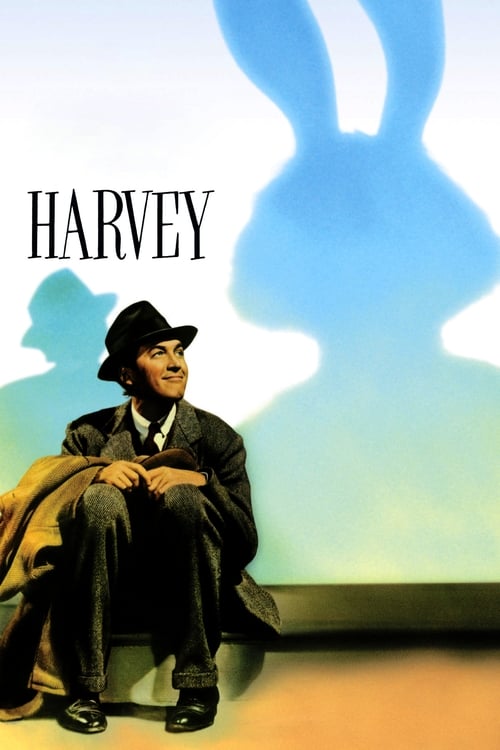
Harvey represents the magic of the unseen, pure escapism, and the disrupting force of whimsy in a rigid world. He is a 'pooka'—a mischievous spirit—symbolizing a bridge between the mundane and the divine.
He is technically invisible throughout the film (except in the portrait), yet his presence is felt through opened doors, empty chairs, and the reactions of those who eventually 'see' him.
Formula 977
The injection represents the crushing weight of conformity and the erasure of individuality. It is the tool of the 'real' world designed to kill the magic of the human spirit.
The climax revolves around whether Elwood will take this injection, with the cab driver revealing that it turns people into 'perfectly normal human beings... and you know what stinkers they are.'
The Portrait
Visual proof of Harvey's acceptance and integration into the family history. It elevates the 'delusion' to the status of a tangible ancestor.
Revealed near the end, showing Elwood posing formally with the giant rabbit, cementing Harvey's place in the physical world.
Bars and Gates
Irony of confinement. The 'sane' people are often shown behind bars (Veta in the sanitarium) or trapped by social rules, while Elwood walks freely through them.
Visual motifs at Chumley's Rest, particularly when Veta is locked up, highlighting who is truly imprisoned by their mind.
Philosophical Questions
Is subjective happiness more important than objective truth?
The film argues that if a delusion brings kindness and harms no one, it is superior to a 'truth' that makes one miserable and cynical.
What constitutes true sanity?
By contrasting the calm, kind Elwood with the frantic, angry, and fearful 'sane' characters, the film suggests that sanity is determined by how one treats others, not by adherence to strict reality.
Core Meaning
The film posits that kindness and simple human connection are more valuable than intelligence or social conformity. Through Elwood, the director suggests that 'sanity' is often just a miserable adherence to reality, whereas a little bit of delusion—if it brings joy and harm to none—is a superior way to live. It critiques the cynical 'smart' world in favor of a 'pleasant' one.