Heat's narrative culminates in a series of choices that lead to the tragic downfall of Neil McCauley's crew and his own demise. After the bank heist goes wrong, resulting in a massive shootout with the LAPD, Cheritto and new crew member Breedan are killed, and Shiherlis is badly wounded. McCauley manages to get Shiherlis to safety but discovers that their original getaway driver, Trejo, was forced to betray them by Waingro, the loose cannon from the film's opening heist. McCauley finds Trejo mortally wounded and mercy-kills him. This sets up the film's final act: McCauley's choice between escape and revenge. Despite having a clear path to a new life in New Zealand with Eady, and with Hanna closing in, McCauley cannot let Waingro's betrayal go unpunished. He chooses to hunt down and kill Waingro at a hotel near the airport. This decision, a fatal deviation from his own rule of dropping everything when he feels the "heat," allows Hanna to spot him. McCauley is forced to abandon Eady in the car—a heartbreaking moment where he finally lives up to his code at the worst possible time—and flees onto the airport tarmac. The final confrontation is a tense, atmospheric cat-and-mouse game among the runway lights. Hanna gets the upper hand and shoots McCauley. The film ends with Hanna holding McCauley's hand as he dies, a silent acknowledgment of the profound respect and understanding between the two men. The hidden meaning that becomes clear is that McCauley's code was not just a professional discipline but a defense mechanism against emotional connection. His brief relationship with Eady was the one thing that threatened it, but ironically, it was his adherence to an older, more primal code of revenge that ultimately destroyed him.
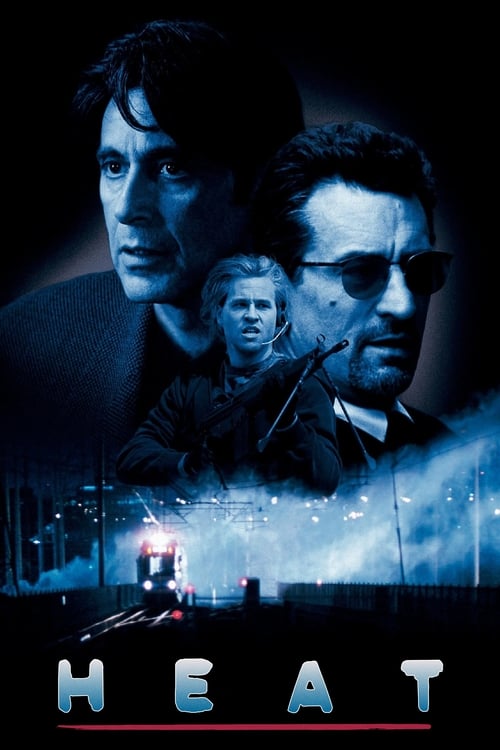
"A Los Angeles crime saga."
Director: Michael Mann
Cast: Al Pacino, Robert De Niro, Val Kilmer, Jon Voight, Tom Sizemore
Heat — Ending Explained
⚠️ Spoiler Analysis
Alternative Interpretations
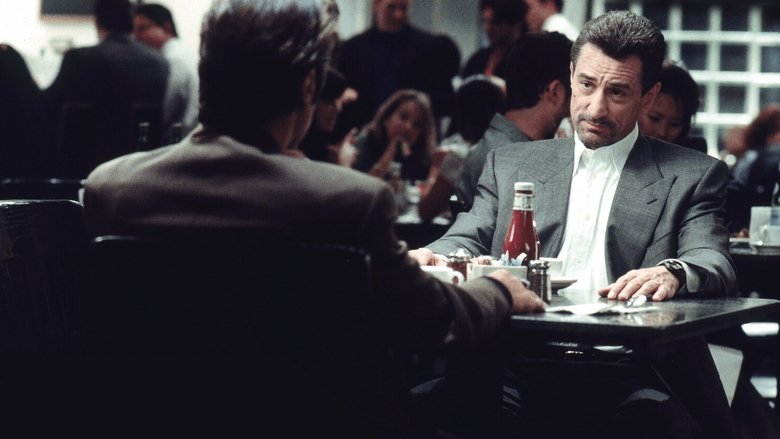
While the film is largely seen as a tragedy about two professionals on a collision course, some interpretations focus more on the idea of the film as a critique of contemporary masculinity. Both Hanna and McCauley represent a failing model of manhood, where emotional repression and an obsession with work lead to the destruction of personal relationships and any chance at happiness. Their brief moment of connection in the diner can be read as a yearning for an intimacy that their hyper-masculine codes otherwise forbid. Another perspective sees the ending not as tragic, but as the only possible 'happy ending' for these characters. In their final moments, they achieve a perfect, albeit fatal, understanding. Hanna doesn't just kill a criminal; he, in a sense, frees his counterpart from a life of running, and in holding his hand, validates the strange bond they shared. For men who lived in isolation, this final moment of connection could be interpreted as the most profound relationship either man ever had.
Explore More About This Movie
Dive deeper into specific aspects of the movie with our detailed analysis pages