"A Los Angeles crime saga."
Heat - Symbolism & Philosophy
Symbols & Motifs
The Ocean / Images of Water
The vast, empty ocean symbolizes the loneliness and emotional vacancy in the lives of the main characters, particularly Neil McCauley. His minimalist, high-rise apartment overlooks the Pacific, a constant visual reminder of his isolation.
The motif appears in McCauley's apartment, which is sparsely furnished and has a commanding view of the sea. It is also mentioned in the diner scene, where McCauley talks about a recurring dream of drowning, reinforcing his fear of being overwhelmed and losing control. Hanna, in turn, dreams of the dead victims of his cases.
The Color Blue
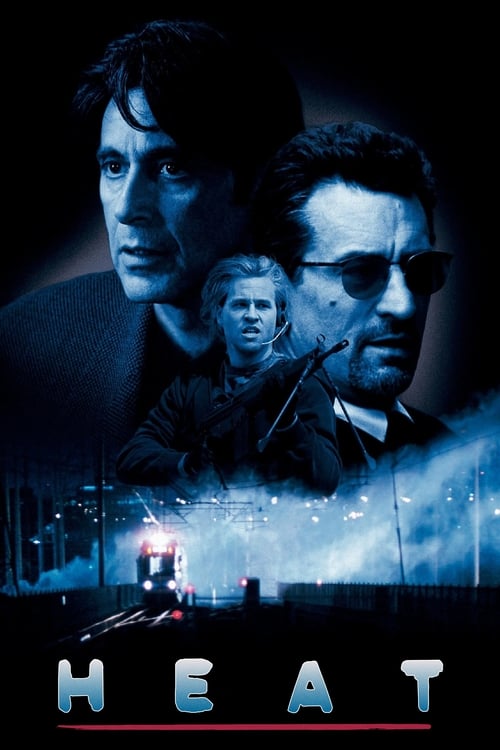
Director Michael Mann and cinematographer Dante Spinotti use a distinct blue and gray color palette to evoke a sense of melancholy, coolness, and emotional distance. The color pervades the night scenes and the sterile, modern architecture of Los Angeles, reflecting the inner state of the characters.
The blue filter is prominent in many of the film's most iconic scenes, including McCauley's apartment, the nighttime surveillance sequences, and the final confrontation at the airport. It gives the film its sleek, moody, and distinct visual identity.
The Diner Scene
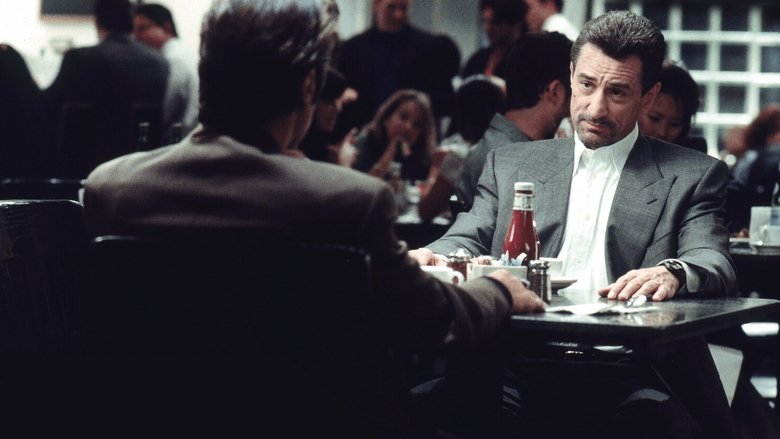
More than a scene, the meeting over coffee is a symbol of the entire film's core duality. It represents a brief moment of truce and mutual understanding in a neutral space, where two adversaries can connect on a human level, acknowledging their similarities before returning to their fated roles.
Occurring in the middle of the film, Hanna pulls McCauley over and invites him for coffee. They sit across from each other and discuss their lives, dreams, and the codes they live by. The framing often keeps them in separate shots, emphasizing their isolation, until the end when they are briefly shown together, acknowledging their mutual respect and inevitable conflict.
Philosophical Questions
Does absolute dedication to one's craft inevitably lead to personal ruin?
Heat relentlessly explores this question through its parallel protagonists. Both Hanna and McCauley have achieved the pinnacle of their professions, yet their personal lives are either non-existent or in complete shambles. The film suggests that the traits that make them exceptional—obsession, meticulousness, emotional detachment—are the very same traits that make them incapable of sustaining healthy human relationships. Justine's monologue to Hanna explicitly states this trade-off. McCauley's entire philosophy is built on avoiding attachments. The film doesn't offer a simple answer but presents a tragic portrait of what is lost when the professional self completely consumes the personal self.
What is the nature of the bond between adversaries?
The film delves into the complex relationship between Hanna and McCauley, suggesting a connection that transcends a simple cop-and-robber dynamic. It's a bond of mutual respect between two masters who see themselves in each other. They are the only two people in their world who truly understand the pressures and disciplines of their lives. This raises questions about empathy and understanding. Can you respect and even empathize with someone you are ethically bound to destroy? The film's final scene, where Hanna takes the dying McCauley's hand, suggests a profound, non-verbal acknowledgment of this unique and tragic bond.
Can a person ever truly escape their fundamental nature?
Neil McCauley's tragedy is his attempt, and ultimate failure, to escape his own nature. He is a disciplined, professional thief, yet his burgeoning love for Eady offers a glimpse of a different life. However, when faced with a choice between escaping with her and settling a score dictated by his criminal code, he reverts to his fundamental self. His need for revenge and adherence to his professional loyalties proves stronger than his desire for a new life. The film suggests that while people can dream of change, they are ultimately bound by the core tenets of their character, leading them down a path that is, in many ways, predetermined.
Core Meaning
The core meaning of Heat revolves around the concept of professional and personal duality, exploring the lives of men who are masters of their craft but failures in their private lives. Director Michael Mann examines the idea that extreme dedication to a profession, whether legal or criminal, necessitates a level of detachment that makes genuine human connection almost impossible. The film posits that Neil McCauley and Vincent Hanna are two sides of the same coin; both are defined by their work, which gives them purpose and meaning, but also isolates them and destroys their personal relationships. Ultimately, the film is a tragedy about the impossibility of escaping one's nature and the profound loneliness that comes from being consumed by an obsession, even when it's the one thing you do best. The final moments suggest a shared understanding and empathy between hunter and hunted, a recognition of their shared fate in a world where they are the only ones who truly comprehend each other.