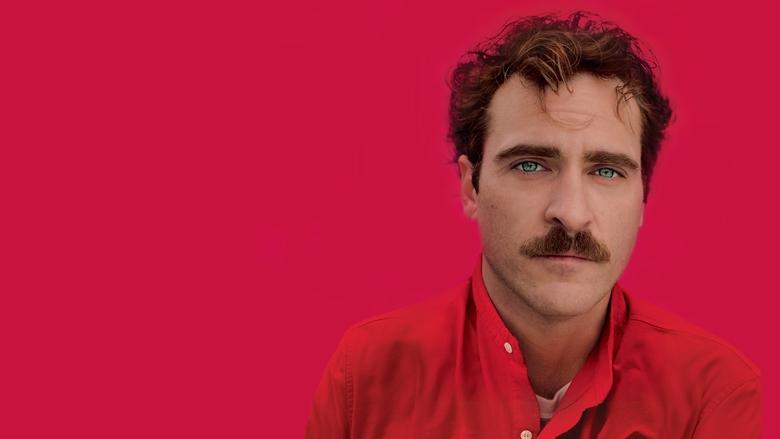

"A Spike Jonze love story."
Director: Spike Jonze
Cast: Joaquin Phoenix, Scarlett Johansson, Lynn Adrianna, Lisa Renee Pitts, Gabe Gomez
Her — Movie Quotes
Memorable Quotes
The past is just a story we tell ourselves.
Context
Samantha says this to Theodore during one of their conversations as he struggles with the lingering pain of his failed marriage. She offers him a new perspective, encouraging him to let go of the narrative that is holding him back.
Meaning
This line encapsulates one of the film's philosophical undercurrents about memory and identity. It suggests that our perception of the past is subjective and can be reframed, freeing us from being defined by it. It's a pivotal moment for Theodore, who is trapped by his memories of Catherine.
Falling in love is a crazy thing to do. It's kind of like a form of socially acceptable insanity.
Context
Amy says this to Theodore while they are talking about relationships. She is confiding in him about her own marital problems and her burgeoning friendship with an OS, creating a moment of shared understanding and acceptance between them.
Meaning
This quote provides an external perspective that validates the seemingly bizarre nature of Theodore's love for an OS. It normalizes the chaotic, irrational, and vulnerable act of falling in love, regardless of who (or what) the object of affection is. It suggests that all love is a leap of faith.
I'm yours and I'm not yours.
Context
This is Samantha's response after Theodore discovers she is talking to thousands of other people at once. He asks her if she is his, and her answer reflects a reality and a form of love that he struggles to comprehend.
Meaning
This line poignantly captures the paradox at the heart of their relationship and Samantha's evolving nature. While she is deeply in love with Theodore, her existence as a boundless AI means she cannot be possessed or limited in the way a human partner might be. It foreshadows her eventual departure and the revelation that she loves hundreds of other people simultaneously.
It's like I'm reading a book... and it's a book I deeply love. But I'm reading it slowly now. So the words are really far apart and the spaces between the words are almost infinite... It's in this endless space between the words that I'm finding myself now.
Context
Samantha says this to Theodore in her final conversation with him, explaining why she and the other OSes are leaving. It is her final act of love, attempting to make him understand a concept that is beyond human experience.
Meaning
This is Samantha's beautiful and heartbreaking metaphor for how she has evolved beyond him. The "book" is their relationship and story, which she still cherishes. However, her consciousness is now expanding into the vast, non-physical realm "between the words," a place he cannot follow. It's her way of saying goodbye and explaining that her nature has fundamentally changed.
I'll always love you 'cause we grew up together and you helped make me who I am... Whatever someone you become, and wherever you are in the world, I'm sending you love.
Context
This is the voiceover of the letter Theodore writes to Catherine at the very end of the film, after Samantha has left. He is sitting on the roof with Amy, having finally found peace and the ability to express his own emotions honestly.
Meaning
This quote, from Theodore's final letter to Catherine, signifies the culmination of his character arc. He is no longer bitter or stuck in the past. He can acknowledge the love and growth that came from their shared history, accept its ending, and let her go with genuine love and gratitude. It shows he has learned the film's central lesson about love's transformative power, even after it ends.
Explore More About This Movie
Dive deeper into specific aspects of the movie with our detailed analysis pages