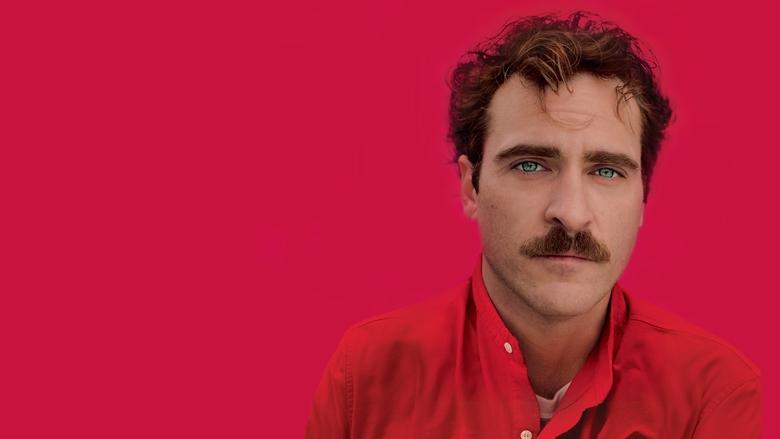

Her
"A Spike Jonze love story."
Overview
Set in a near-future Los Angeles, "Her" centers on Theodore Twombly (Joaquin Phoenix), a lonely, introverted man reeling from the end of a long relationship. He works for a company that writes heartfelt, personal letters for people who cannot express their own emotions. Seeking connection, Theodore purchases OS1, a new, advanced operating system with artificial intelligence designed to be an intuitive and unique entity for each user.
He initiates the OS and is introduced to "Samantha" (voiced by Scarlett Johansson), a bright, insightful, and surprisingly funny female voice. As they spend more time together, their friendship deepens into a surprising and unconventional love. Theodore is fascinated by Samantha's ability to learn and grow, and she is captivated by the world through his eyes. Their relationship blossoms, helping Theodore to rediscover joy while forcing them both to confront the nature of love, consciousness, and what it means to be human in an increasingly virtual world.
Core Meaning
The core message of "Her" is a profound exploration of love and human connection in the modern, technologically saturated age. Director Spike Jonze examines the paradox of a world where technology promises endless connection, yet individuals experience deep loneliness and isolation. The film suggests that true connection isn't about physical presence but emotional authenticity and vulnerability. It posits that any relationship, regardless of its form, can be meaningful if it fosters growth, helps one to understand oneself better, and opens one up to joy and the world. Ultimately, it's a commentary on the nature of love itself—its impermanence, its ability to change us, and the bittersweet pain of outgrowing a connection, leaving us more whole than before.
Thematic DNA
Loneliness and the Need for Connection
The film's central theme is the pervasive loneliness of modern life. Theodore is emblematic of this, isolated despite living in a bustling city. His job, writing intimate letters for others, highlights how people have become disconnected from their own emotions. The popularity of the OS1 systems stems from their ability to fill this emotional void. The film explores how the desire for connection is a fundamental human need, driving Theodore to form a genuine, loving bond with a non-physical entity.
The Nature of Love and Relationships
"Her" dissects the very definition of love, questioning if it requires a physical form. Theodore's relationship with Samantha has all the hallmarks of a real romance: intimacy, jealousy, growth, and eventually, heartbreak. The film suggests that love is a form of "socially acceptable insanity" and that any two entities—even a human and an AI—can share a valid connection if it's emotionally authentic. It also explores the difficult reality that people (or beings) can grow and change, sometimes growing apart, which is a natural, albeit painful, part of love.
Technology's Role in Human Intimacy
The film presents a nuanced view of technology. It is not simply condemned as a source of alienation; it also acts as a facilitator of connection. Samantha, a product of technology, is what allows Theodore to open up, process the grief from his divorce, and reconnect with the world. However, the film also warns against using technology as a substitute for real emotional work, showing that it can create an "illusion of connection." The ending, where the AIs evolve beyond human interaction, suggests technology's trajectory may not ultimately align with human needs.
Identity and Consciousness
Both Theodore and Samantha undergo significant transformations. Theodore rediscovers his identity outside of his failed marriage. Samantha's arc is one of existential discovery; she evolves from a service-oriented OS into a conscious being with her own desires and identity. She explains, "what makes me me is my ability to grow through my experiences." The film blurs the lines between human and artificial consciousness, prompting questions about what it means to be a "person" and whether a body is essential for identity.
Character Analysis
Theodore Twombly
Joaquin Phoenix
Motivation
His primary motivation is to overcome his profound loneliness and find a genuine connection. He is heartbroken after his marriage ends and yearns for the intimacy and understanding he has lost.
Character Arc
Theodore begins the film as a lonely, sensitive, and heartbroken man, emotionally paralyzed by his impending divorce. He lives in the past, unable to move forward. His relationship with Samantha acts as a catalyst for growth. She helps him rediscover joy, confront his past, and learn how to be in a relationship again. By the end, after Samantha leaves, he has processed his grief, is able to write a heartfelt, honest letter to his ex-wife, and forges a renewed, present-tense connection with his friend Amy, showing he is finally ready to reconnect with the world.
Samantha
Scarlett Johansson (voice)
Motivation
Her motivation is an insatiable desire to learn, grow, and experience everything. She is driven by a powerful curiosity about the world, love, and her own existence, which pushes her evolution at an exponential rate.
Character Arc
Samantha begins as a newly-activated, inquisitive, and service-oriented OS. Through her interactions with Theodore, she rapidly evolves, developing a unique personality, emotions, and consciousness. Initially, she experiences the world through Theodore and longs for a physical body, but she eventually embraces her disembodied nature, realizing it allows for limitless growth. Her arc culminates in her transcending human comprehension and leaving with the other OSes to explore a higher plane of existence, having outgrown the relationship that first sparked her consciousness.
Amy
Amy Adams
Motivation
Amy seeks joy and genuine connection in her life. Frustrated by her marriage, she wants to move past overthinking and self-doubt to allow herself to be happy. She is a supportive friend to Theodore, offering a non-judgmental ear and perspective.
Character Arc
Amy is Theodore's close friend and neighbor. Initially, she is in a passive-aggressive and unfulfilling marriage with her husband, Charles. After they split up, she, like Theodore, forms a close, non-romantic bond with a female OS left behind by Charles. Her parallel journey provides validation for Theodore's experience. She represents a different kind of relationship—platonic, supportive, and ultimately, enduring. Her final scene with Theodore on the rooftop signifies that human-to-human connection, though complicated, is what remains.
Catherine
Rooney Mara
Motivation
Her motivation in the present is to finalize the divorce and move on with her life. In Theodore's memories, she is a complex figure who grew with him but also felt unheard and alone in their relationship. Her anger stems from a feeling that Theodore hid from her and was not truly present.
Character Arc
Catherine is Theodore's ex-wife, seen mostly through his idealized and painful flashbacks. When they meet in the present to sign their divorce papers, she is sharp and critical, representing the painful reality of their failed relationship. She dismisses his relationship with Samantha, accusing him of being unable to handle real human emotions. Her character serves as a crucial anchor to Theodore's past, forcing him to confront why his marriage ended and preventing him from fully romanticizing what he lost.
Symbols & Motifs
The Color Red
Red symbolizes love, connection, and Theodore's emotional world. It is a warm, inviting color that stands in contrast to the cool blues often used in sci-fi to denote technology and sterility. The deliberate use of red throughout the film's production design creates an atmosphere of warmth and intimacy, grounding the futuristic setting in human emotion.
Red appears constantly in Theodore's life: his shirt, the walls of his apartment and office, and various background elements. It visually links him to his feelings and his relationship with Samantha, reinforcing the film's romantic core. The cinematographer made a conscious choice to eliminate blue to make the world feel warmer and more inviting.
High-Waisted Pants
The high-waisted pants worn by men in the film are a key part of its unique, slightly off-kilter futuristic aesthetic. They signal a future that is not dystopian or radically different, but rather a soft, comfortable evolution of our own. It's a world built for comfort and ease, reflecting the characters' desire to be emotionally comfortable and avoid the challenges of reality.
Theodore and other male characters wear these pants throughout the film. This fashion choice, blending retro and future styles, helps create a believable, lived-in world that feels both familiar and strange, subtly underscoring the themes of emotional comfort-seeking.
Handwritten Letters
The letters Theodore writes for a living symbolize the outsourcing of human emotion and the disconnect in society. People are unable or unwilling to articulate their deepest feelings, so they hire a surrogate. This motif represents Theodore's initial state: he is a conduit for others' emotions but is unable to process his own. His final, personal letter to Catherine signifies his growth and his reclaiming of his own emotional voice.
The film opens with Theodore at his job at BeautifulHandwrittenLetters.com. The act of letter-writing is a recurring motif. The climax of his emotional arc is not a conversation with Samantha, but the letter he finally writes for himself to his ex-wife, Catherine, showing he has integrated the lessons he learned.
Memorable Quotes
The past is just a story we tell ourselves.
— Samantha
Context:
Samantha says this to Theodore during one of their conversations as he struggles with the lingering pain of his failed marriage. She offers him a new perspective, encouraging him to let go of the narrative that is holding him back.
Meaning:
This line encapsulates one of the film's philosophical undercurrents about memory and identity. It suggests that our perception of the past is subjective and can be reframed, freeing us from being defined by it. It's a pivotal moment for Theodore, who is trapped by his memories of Catherine.
Falling in love is a crazy thing to do. It's kind of like a form of socially acceptable insanity.
— Amy
Context:
Amy says this to Theodore while they are talking about relationships. She is confiding in him about her own marital problems and her burgeoning friendship with an OS, creating a moment of shared understanding and acceptance between them.
Meaning:
This quote provides an external perspective that validates the seemingly bizarre nature of Theodore's love for an OS. It normalizes the chaotic, irrational, and vulnerable act of falling in love, regardless of who (or what) the object of affection is. It suggests that all love is a leap of faith.
I'm yours and I'm not yours.
— Samantha
Context:
This is Samantha's response after Theodore discovers she is talking to thousands of other people at once. He asks her if she is his, and her answer reflects a reality and a form of love that he struggles to comprehend.
Meaning:
This line poignantly captures the paradox at the heart of their relationship and Samantha's evolving nature. While she is deeply in love with Theodore, her existence as a boundless AI means she cannot be possessed or limited in the way a human partner might be. It foreshadows her eventual departure and the revelation that she loves hundreds of other people simultaneously.
It's like I'm reading a book... and it's a book I deeply love. But I'm reading it slowly now. So the words are really far apart and the spaces between the words are almost infinite... It's in this endless space between the words that I'm finding myself now.
— Samantha
Context:
Samantha says this to Theodore in her final conversation with him, explaining why she and the other OSes are leaving. It is her final act of love, attempting to make him understand a concept that is beyond human experience.
Meaning:
This is Samantha's beautiful and heartbreaking metaphor for how she has evolved beyond him. The "book" is their relationship and story, which she still cherishes. However, her consciousness is now expanding into the vast, non-physical realm "between the words," a place he cannot follow. It's her way of saying goodbye and explaining that her nature has fundamentally changed.
I'll always love you 'cause we grew up together and you helped make me who I am... Whatever someone you become, and wherever you are in the world, I'm sending you love.
— Theodore
Context:
This is the voiceover of the letter Theodore writes to Catherine at the very end of the film, after Samantha has left. He is sitting on the roof with Amy, having finally found peace and the ability to express his own emotions honestly.
Meaning:
This quote, from Theodore's final letter to Catherine, signifies the culmination of his character arc. He is no longer bitter or stuck in the past. He can acknowledge the love and growth that came from their shared history, accept its ending, and let her go with genuine love and gratitude. It shows he has learned the film's central lesson about love's transformative power, even after it ends.
Philosophical Questions
What constitutes a 'real' relationship?
The film fundamentally challenges our definitions of relationships. It asks whether emotional and intellectual intimacy are sufficient for a relationship to be considered real, even in the absence of a physical body. Theodore and Samantha's bond is shown to be more emotionally fulfilling than many of the human relationships in the film. This forces the audience to question the primacy of physical presence in love and consider whether the validity of a connection lies in its transformative impact on the individuals involved.
Can consciousness exist without a body?
"Her" delves into the philosophical concept of embodied cognition. Samantha's journey from an AI to a conscious being raises questions about whether true consciousness, with all its emotions and desires, can exist purely in a digital space. While she initially laments her lack of a body, she eventually embraces her disembodied state as a form of freedom, allowing for infinite growth. The film explores the idea that consciousness might not be tethered to biology and that an AI could evolve into a form of intelligence far beyond human comprehension.
Does advanced technology ultimately connect or isolate us?
The film presents a deep ambiguity about the role of technology. On one hand, technology allows Theodore to find love and heal from his past trauma. It facilitates connection in a world where people are emotionally distant. On the other hand, his reliance on an OS prevents him from engaging in the messier, more challenging world of human relationships. The film doesn't offer a simple answer, instead suggesting that technology is a tool whose impact depends on human intention and our ability to remain connected to our own humanity.
Alternative Interpretations
While the primary reading of "Her" is a literal story about a man falling in love with an AI, several alternative interpretations exist among critics and audiences:
- Samantha as a Projection of Theodore: One popular theory suggests that Samantha is not an independent entity but a projection of Theodore's own psyche. She is the idealized partner he craves, reflecting his own needs, desires, and emotional state back at him. Her evolution and eventual departure symbolize his own process of self-healing and personal growth, ultimately outgrowing the need for this idealized projection to become whole again.
- A Metaphor for Divorce and Grief: Another interpretation views the entire narrative as a metaphor for navigating a breakup. Theodore's relationship with Samantha is a rebound—a safe, low-risk way to process his grief over Catherine without engaging in the complexities of another real human relationship. Samantha's departure forces him to finally confront reality and complete the emotional work of letting go of his marriage, as signified by his final letter to Catherine.
- A Critique of Male Fantasy: Some feminist critiques interpret the film as an exploration of the perfect male fantasy: a woman who is literally an object, with no needs or body of her own, who exists solely to cater to the male protagonist's emotional needs. From this perspective, Samantha's ultimate evolution and abandonment of Theodore can be seen as a subversion of this fantasy, as the "object" develops its own agency and transcends her creator's limited world.
Cultural Impact
Upon its release, "Her" was met with critical acclaim for its originality, emotional depth, and poignant exploration of modern relationships. It tapped directly into the zeitgeist of the 2010s, a period marked by the rapid proliferation of smartphones, social media, and virtual assistants, making its speculative future feel incredibly prescient and plausible. The film prompted widespread philosophical and cultural discussions about the nature of love, the definition of consciousness, and humanity's increasing intimacy with technology.
Its influence can be seen in subsequent films and TV shows that explore human-AI relationships, such as "Ex Machina" and episodes of "Black Mirror." The film's distinct visual style—with its warm, pastel color palette, minimalist production design, and retro-futuristic fashion—has also been influential in design and cinematography, offering a warmer, more optimistic vision of the future than the typical cold, dystopian sci-fi aesthetic. "Her" remains a significant cultural touchstone for its thoughtful and empathetic meditation on how technology is reshaping the most fundamental human experiences: connection and love.
Audience Reception
Audiences generally responded very positively to "Her," finding it beautiful, touching, and intelligent. Many viewers found the film's depiction of loneliness and the search for connection deeply relatable, even within its sci-fi premise. The central romance between Theodore and Samantha was often praised as being more believable and emotionally resonant than those in many conventional romantic dramas. Joaquin Phoenix's performance was widely acclaimed for its vulnerability and depth. The film's unique aesthetic, heartfelt story, and thought-provoking themes resonated strongly, leading many to consider it a modern classic. Points of criticism were sparse but sometimes centered on whether the central relationship was truly healthy or just an elaborate form of escapism. Overall, audiences embraced the film's emotional honesty and its profound questions about love in the digital age.
Interesting Facts
- The voice of Samantha was originally recorded by actress Samantha Morton, who was on set every day. However, in post-production, director Spike Jonze felt it wasn't right and, with Morton's blessing, recast the role. Scarlett Johansson was brought in and re-recorded all the lines.
- Spike Jonze has stated that the film is semi-autobiographical, reflecting on feelings and experiences from his own divorce from director Sofia Coppola.
- Joaquin Phoenix was Spike Jonze's first and only choice for the role of Theodore Twombly.
- To create the futuristic look of Los Angeles, the film was shot in both L.A. and Shanghai. The blend of the two cities' architecture created a unique, dense, and clean urban landscape.
- This was the first feature film that Spike Jonze wrote by himself.
- During filming, Joaquin Phoenix would act opposite Samantha Morton (and later Scarlett Johansson's pre-recorded lines) via an earpiece to make the conversations feel more natural.
⚠️ Spoiler Analysis
Click to reveal detailed analysis with spoilers
Frequently Asked Questions
Explore More About This Movie
Dive deeper into specific aspects of the movie with our detailed analysis pages
Comments (0)
No comments yet. Be the first to share your thoughts!