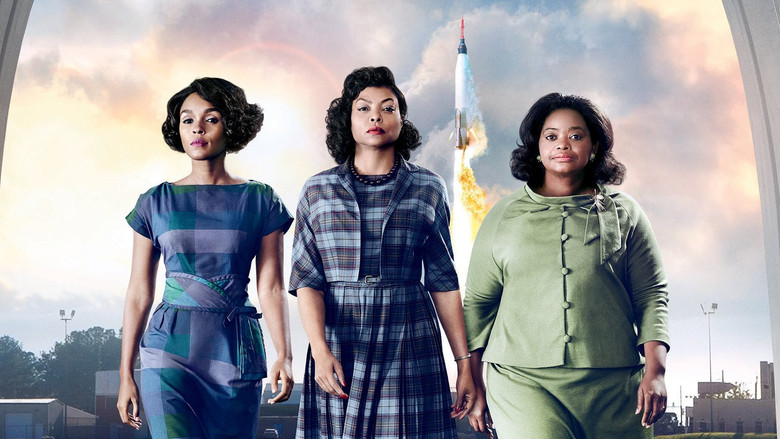
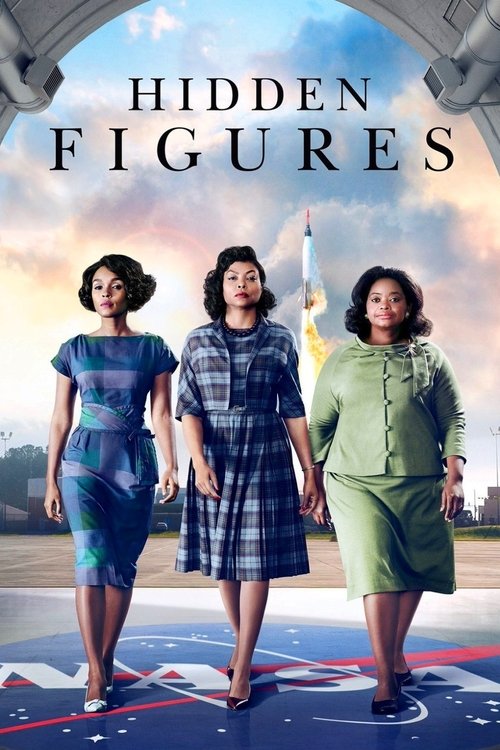
"Meet the women you don't know, behind the mission you do."
Hidden Figures - Symbolism & Philosophy
Symbols & Motifs
Segregated Bathrooms
The separate, and often distant, "colored" bathrooms symbolize the daily, demeaning reality of segregation and the systemic obstacles placed before the Black employees at NASA. It represents the physical and psychological distance the institution creates to reinforce racial hierarchy.
Katherine Johnson's recurring, frantic run across the Langley campus to use the only designated restroom for Black women is a major plot point. Her supervisor, Al Harrison, eventually tearing down the "Colored Ladies Room" sign serves as a climactic, albeit fictionalized, moment of desegregation and recognition within their immediate workspace.
The IBM 7090 Computer
The massive IBM electronic computer symbolizes the dawn of a new technological era and the threat of human obsolescence. For Dorothy Vaughan, it represents both a challenge and an opportunity—the potential for her and her team of human "computers" to be replaced, but also the chance to evolve and secure their future at NASA.
The computer is installed at Langley, and the engineers struggle to make it operational. Dorothy, denied the official title of supervisor, secretly learns the FORTRAN programming language from a book she takes from the segregated section of a public library. She then teaches her entire team, making them indispensable for programming the new machine, thus securing their jobs.
Chalk and Blackboard
The chalk and blackboard represent pure, unadulterated intellectual power and Katherine's unique genius. In an era before digital displays, complex calculations were done by hand. Her ability to fill vast blackboards with intricate equations that even her male colleagues cannot solve visually demonstrates her superior mathematical ability and her indispensable role in the Space Race.
When faced with complex trajectory calculations that have been redacted in official reports, Katherine takes to a large blackboard to solve them from scratch, impressing her supervisor Al Harrison. The final, crucial calculation of the landing coordinates for John Glenn's mission is also performed by her on a blackboard, showcasing the triumph of human intellect over machine error.
Pearl Necklace
The pearl necklace symbolizes professionalism, dignity, and the quiet fight for respect. In the film, Katherine is told that there is no protocol for women in high-level briefings and that they should not wear jewelry. Her decision to wear a simple string of pearls is a subtle act of defiance, asserting her femininity and her right to be in that professional space on her own terms.
Before attending a critical briefing, Katherine is reminded of the dress code. She chooses to wear her pearls anyway, a small but significant gesture of her refusal to be erased or made to conform to a male-centric environment. It represents her quiet strength and unwavering self-respect.
Philosophical Questions
What is the relationship between individual genius and systemic barriers?
The film explores how societal structures like racism and sexism can suppress extraordinary talent. Katherine, Dorothy, and Mary possess brilliant minds, yet their potential is constantly constrained by the discriminatory rules of their time. The film asks whether individual excellence is enough to overcome deeply entrenched prejudice. While the women's genius ultimately proves indispensable, their journey shows that it required immense perseverance, strategic maneuvering, and the eventual, pragmatic acknowledgment of their value by those in power. It questions the societal cost of such barriers, which prevent the most capable individuals from contributing fully.
Does the pursuit of a common, transcendent goal (like space exploration) have the power to overcome social divisions?
"Hidden Figures" presents the Space Race as a national imperative that, out of sheer necessity, begins to break down racial and gender barriers. Al Harrison's primary goal is to beat the Russians; he doesn't have time for segregation if it impedes progress. This raises the question of whether a shared, ambitious goal can force a society to confront and discard its prejudices for the sake of a greater good. The film suggests that while such goals can be a catalyst for change, the change is often driven by pragmatism rather than a true moral awakening, and the underlying social issues do not simply disappear.
Core Meaning
The central message of "Hidden Figures" is a powerful testament to the triumph of intellect, perseverance, and human dignity over systemic discrimination. Director Theodore Melfi aims to illuminate a forgotten chapter of American history, celebrating the monumental contributions of Black women who were instrumental in the Space Race yet erased from the narrative. The film carries a message of equality, demonstrating that genius is not confined by race or gender. It underscores the idea that for a nation to achieve its greatest potential—like sending a man into orbit—it must utilize the talents of all its citizens. Ultimately, the film argues that the most significant barriers to progress are not technical, but social, and that breaking them requires courage, resilience, and a demand for respect.