High and Low
A taut, morally searing thriller that plunges from the pristine heights of corporate power into the sweltering hell of society's forgotten depths.
High and Low
High and Low

天国と地獄

"Stark, intense drama almost beyond belief!"

01 March 1963 Japan 142 min ⭐ 8.3 (1,034)
Director: Akira Kurosawa
Cast: Toshirō Mifune, Tatsuya Nakadai, Kyōko Kagawa, Tatsuya Mihashi, Isao Kimura
Drama Crime Thriller
Social Class and Inequality Moral Responsibility and Humanism Duality and Identity
Budget: $250,000

High and Low - Ending Explained

⚠️ Spoiler Analysis

The central twist of High and Low occurs early: the kidnapper has mistakenly taken Shinichi, the son of Gondo's chauffeur, Aoki, instead of Gondo's own son, Jun. This transforms the narrative from a standard kidnapping plot into a profound moral quandary. Gondo's decision to pay the ¥30 million ransom, an amount he has mortgaged his entire life to raise for a corporate takeover, leads to his complete financial and professional ruin.

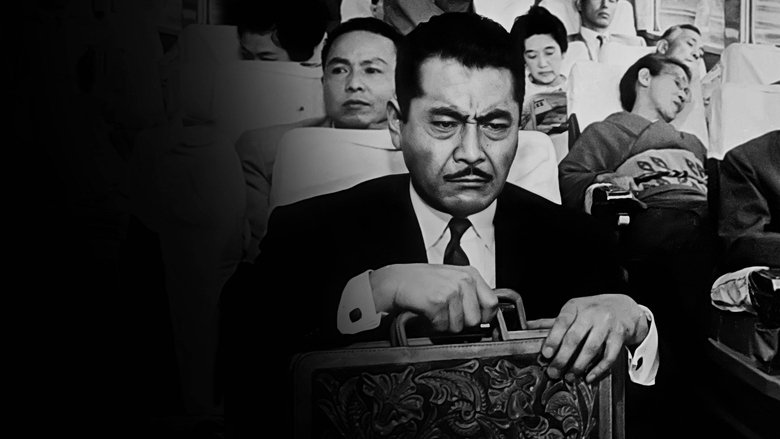
The second half of the film is a meticulous police procedural. The police recover the child after a tense ransom drop from a moving bullet train, a sequence filmed with incredible precision. The kidnapper is identified as Ginjirō Takeuchi, a medical intern from the slums. The police discover he had two accomplices, both heroin addicts, whom he murdered by giving them an overdose of pure heroin. To trap Takeuchi, the police plant a fake news story suggesting his accomplices are still alive and then forge a note from them demanding more drugs. The trap works, and Takeuchi is arrested after trying to dispose of another addict with a lethal dose.

The film concludes with a final, searing confrontation in prison. Gondo, now working for a rival shoe company, meets Takeuchi, who is on death row. Takeuchi confesses his crime was born of envy from seeing Gondo's house, a 'heaven' that made his own squalid life feel like 'hell.' He tries to maintain a detached superiority but finally breaks down into hysterics, a screaming, tormented figure, as a metal grate slams down, separating the two men and sealing Takeuchi's fate. This ending reveals the crime was never about the money; it was an act of desperate, nihilistic class warfare. Gondo may have lost his wealth, but he has been morally redeemed, while Takeuchi, the man from the 'low', is consumed by the hell of his own making.

Alternative Interpretations

The most debated aspect of the film is the final scene. While the primary interpretation focuses on Gondo's humanistic recognition of Takeuchi, other readings exist.

  • The Double/Doppelgänger Theory: Some critics argue that the superimposition of Gondo and Takeuchi's faces in the glass pane suggests they are not just socially linked but are two conflicting aspects of a single split subject—a hero and his shadow self. It implies that given different circumstances, Gondo could have become Takeuchi, and vice versa.
  • Critique of Humanism: A more cynical interpretation suggests the film's humanist resolution is a facade. Mitsuhiro Yoshimoto argues that by focusing on Gondo's individual moral triumph, the film de-emphasizes his privileged class status and fails to challenge the underlying social structure that created Takeuchi's desperation. In this view, Gondo's final pity for Takeuchi is a way to neutralize the kidnapper's legitimate class rage without truly addressing the systemic injustice.
  • Unresolved Division: Another interpretation posits that the final scene doesn't represent reconciliation but reinforces the unbridgeable gap between the two men. Even after his fall, Gondo lands on his feet with a new job, while Takeuchi faces death. The metal grate that finally slams down, separating them, can be seen as a symbol that the social division is permanent and absolute, and Gondo's brief moment of empathy changes nothing about the structure of their world.