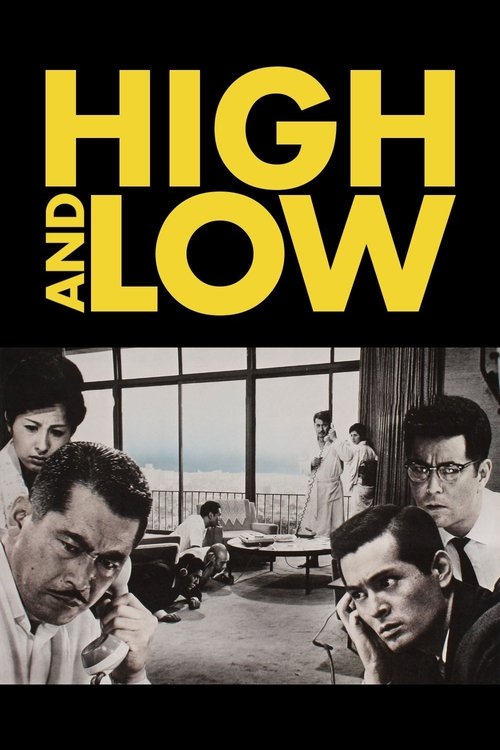
High and Low
A taut, morally searing thriller that plunges from the pristine heights of corporate power into the sweltering hell of society's forgotten depths.
High and Low

High and Low

天国と地獄

"Stark, intense drama almost beyond belief!"

01 March 1963 Japan 142 min ⭐ 8.3 (1,034)
Director: Akira Kurosawa
Cast: Toshirō Mifune, Tatsuya Nakadai, Kyōko Kagawa, Tatsuya Mihashi, Isao Kimura
Drama Crime Thriller
Social Class and Inequality Moral Responsibility and Humanism Duality and Identity
Budget: $250,000

Overview

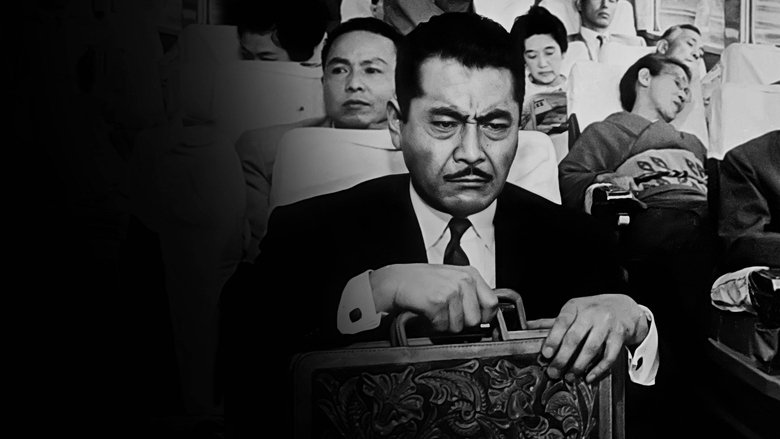
Directed by the legendary Akira Kurosawa, High and Low (originally Tengoku to Jigoku, meaning 'Heaven and Hell') is a masterful crime thriller that transcends its genre to deliver a potent social commentary. The film centers on Kingo Gondo (Toshirō Mifune), a wealthy shoe executive on the verge of executing a leveraged buyout to gain control of his company. His meticulously laid plans are thrown into chaos when he receives a phone call demanding a colossal ransom for his kidnapped son.

The situation takes a devastating turn when Gondo discovers that the kidnapper has mistakenly abducted his chauffeur's son instead of his own. This plunges Gondo into an agonizing moral dilemma: should he pay the ransom, which would mean his own financial ruin, to save a child who is not his? The film is famously split into two distinct halves. The first is a tense, claustrophobic drama set almost entirely within Gondo's luxurious hilltop mansion. The second half transforms into a sprawling, methodical police procedural as detectives, led by the calm Inspector Tokura (Tatsuya Nakadai), descend into the city's seedy underbelly to hunt for the perpetrator.
Core Meaning

At its core, High and Low is a profound exploration of morality, social responsibility, and the cavernous class divide in post-war Japan. Kurosawa uses the framework of a kidnapping thriller to ask a deeply humanist question: "Why can't people be happier together?" The film's original title, Heaven and Hell, more accurately reflects its central thesis—the stark contrast between the insulated, air-conditioned world of the wealthy elite (Gondo's 'heavenly' mansion on the hill) and the sweltering, desperate existence of the disenfranchised below ('hell'). The film argues that human life and moral integrity hold a value that transcends wealth and social status, forcing its protagonist—and the audience—to confront the ethical obligations one has to their fellow human beings, regardless of class. Ultimately, it suggests that true worth is not defined by one's position on the social ladder, but by the moral choices made within the circumstances fate provides.

Thematic DNA

Social Class and Inequality 40%
Moral Responsibility and Humanism 35%
Duality and Identity 25%

Social Class and Inequality

This is the film's central theme, visualized by the vertical geography of Yokohama. Gondo's modern, air-conditioned house sits high on a hill, a 'heaven' looking down upon the sweltering, impoverished 'hell' of the city below where the kidnapper, Takeuchi, resides. The kidnapper's motivation is not just greed, but a deep-seated resentment born from this inequality. He explicitly states his hatred began from constantly seeing Gondo's house, a symbol of a life entirely out of his reach. The film meticulously contrasts the clean, orderly world of the 'high' with the grimy, chaotic world of the 'low', particularly in the scenes exploring the city's 'dope alley'.

Moral Responsibility and Humanism

The film's entire premise hinges on Gondo's moral dilemma: is he responsible for the life of his chauffeur's son? Initially, he refuses to pay, but spurred by his wife and his own conscience, he makes the ruinous decision to sacrifice his fortune. This act is presented as a triumph of humanism over ruthless capitalism. The police, initially skeptical of the wealthy executive, come to respect him, with one detective remarking, "That Gondo is all right." Kurosawa elevates a genre story into a timeless examination of the idea that a human life is worth more than any fortune.

Duality and Identity

Kurosawa masterfully creates a duality between Gondo and the kidnapper, Takeuchi. Though on opposite ends of the social spectrum, they are inextricably linked. Gondo worked his way up from an apprentice, while Takeuchi is an impoverished medical intern who never had the chance to rise. This connection culminates in the final scene, where their reflections are superimposed on the glass partition between them in the prison. This visual suggests a shared psychology or that they are two sides of the same coin in a society of extreme disparity, forcing Gondo and the audience to see the humanity in the criminal.

Character Analysis

Kingo Gondo

Toshirō Mifune

Archetype: The Tested Hero
Key Trait: Moral Integrity

Motivation

Initially, his motivation is to gain control of his shoe company to produce quality products, a goal rooted in craftsmanship and pride. This is supplanted by the moral imperative to save a child's life, which ultimately becomes his defining purpose.

Character Arc

Gondo begins as a proud, ruthless businessman, willing to risk everything for corporate control. The kidnapping forces him into a moral crisis. Initially, he resists paying for another man's child, but his conscience prevails. He sacrifices his entire fortune and social standing, transforming from a captain of industry into a morally redeemed man who finds peace in honest work, albeit on a smaller scale. He is a broken man by the end, but one who has affirmed his humanity.

Inspector Tokura

Tatsuya Nakadai

Archetype: The Methodical Mentor
Key Trait: Professionalism

Motivation

His motivation is simple and unwavering: to uphold justice. He is dedicated to catching the criminal and seeing the law served, but not at the expense of a man's livelihood, as he tells Gondo he has the right to protect himself.

Character Arc

Inspector Tokura is the cool, rational center of the film's second half. He shows little personal arc, but his perception of Gondo changes. Initially just another rich industrialist to him, Tokura develops a deep respect for Gondo's sacrifice. He represents the diligence and unwavering professionalism of the justice system, methodically leading the investigation into the 'hell' of the criminal underworld.

Ginjirō Takeuchi

Tsutomu Yamazaki

Archetype: The Shadow Self / The Resentful Underdog
Key Trait: Resentment

Motivation

His primary motivation is not wealth but a nihilistic desire to pull a fortunate man down into the same misery he experiences. He is driven by pure class-based envy and a feeling of cosmic injustice, symbolized by Gondo's house looming over his wretched apartment.

Character Arc

Takeuchi is a medical intern living in squalor whose intelligence has been warped by poverty and resentment. He orchestrates the kidnapping out of a burning hatred for Gondo's success. Throughout the investigation, he is a shadowy, almost omniscient figure. His arc culminates in his capture and a final, explosive confrontation with Gondo, where his cool demeanor cracks, revealing the tormented, desperate man beneath before he is dragged away screaming.

Reiko Gondo

Kyōko Kagawa

Archetype: The Conscience
Key Trait: Compassion

Motivation

Her motivation is rooted in pure empathy and maternal instinct. She believes that no amount of success or wealth is worth sacrificing one's humanity for the life of an innocent child.

Character Arc

Reiko Gondo serves as the film's moral compass. While her husband wrestles with the business implications of the ransom, she consistently advocates for the child's life. Her arc is one of quiet strength, as her unwavering belief in humanity helps guide her husband to make the morally correct, albeit personally disastrous, decision.

Symbols & Motifs

Gondo's House on the Hill

Meaning:

It symbolizes the 'heaven' of wealth, success, and the isolating privilege of the upper class. It represents the vast, seemingly uncrossable chasm between the rich and the poor, and serves as the direct catalyst for the kidnapper's envy and hatred. Its physical height directly corresponds to Gondo's social standing.

Context:

The house is the primary setting for the film's first half. It is constantly shown overlooking the sprawling city of Yokohama. The kidnapper explicitly tells Gondo in the final scene, "Your house looked like heaven, high up there. That's how I began to hate you."

Windows and Curtains

Meaning:

Windows and curtains symbolize the barrier between the 'high' and 'low' worlds. From Gondo's panoramic windows, the city is a distant, abstract map. From Takeuchi's perspective, Gondo's house is a constant, taunting presence. The closed curtains signify Gondo's air-conditioned comfort and his obliviousness to the suffering below.

Context:

The film opens with a shot from behind the curtains in Gondo's house. Later, we see the kidnapper looking up at the house with binoculars. Takeuchi mentions the closed curtains as a sign of the air-conditioning that fueled his resentment in the stifling summer heat.

Pink Smoke

Meaning:

The single burst of color in the predominantly black-and-white film symbolizes the irrefutable stain of the crime bleeding into the sterile world of the police investigation. It is a moment of pure cinema, a beautiful image born from a vile act, representing the first tangible clue that leads the police from the 'high' world down into the 'low'.

Context:

The police plant a chemical in the ransom briefcases. When the kidnapper incinerates them after retrieving the money, a plume of pink smoke emerges from a factory chimney, allowing the police to pinpoint his general location. This is the only use of color in the film until the very end credits.

Shoes

Meaning:

Shoes represent Gondo's identity, integrity, and connection to the working class. He is not just a corporate executive; he is a craftsman who takes pride in making durable, quality shoes, contrasting with his partners who want to produce cheap, low-quality products for quick profit. His refusal to compromise on quality signifies his underlying moral code.

Context:

The film opens with Gondo arguing with his fellow executives over the quality of their shoes. He passionately declares, "Shoes carry all your body weight," and making them is his "life and love." After his ruin, he finds satisfaction working for a smaller rival company, where he can once again make shoes his way.

Memorable Quotes

Your house looked like heaven, high up there. That's how I began to hate you.

— Ginjirō Takeuchi

Context:

Spoken during the final scene in the prison, where Takeuchi explains his motivations to Gondo face-to-face for the first and only time.

Meaning:

This line crystallizes the entire social commentary of the film. It reveals that the crime was not born of simple greed, but of a deep, systemic resentment created by class inequality. It is the voice of the 'low' directly confronting the 'high' with the source of its anguish.

Success isn't worth losing your humanity.

— Reiko Gondo

Context:

Said to her husband, Kingo Gondo, in their living room as he struggles with the decision of whether or not to pay the ransom, initially prioritizing his business takeover.

Meaning:

Reiko's plea serves as the film's central moral thesis. She cuts through Gondo's pragmatic, business-oriented arguments to remind him of a higher value, effectively acting as his conscience and guiding him toward his ultimate decision.

I know how much this money means to you, but a human life means more.

— Kawanishi (Gondo's secretary)

Context:

Spoken to Gondo during the tense deliberations in the mansion, urging him to prioritize the kidnapped child over his corporate ambitions.

Meaning:

This quote reinforces the film's core humanist message, coming from a business associate who fully understands the financial stakes. It highlights that the moral choice is clear to everyone except, initially, the man who has the most to lose.

Philosophical Questions

What is the true measure of a person's worth: their social standing or their moral choices?

The film directly pits Gondo's social status and wealth against his moral duty to save a child. His initial hesitation is based on preserving his wealth and position. However, his ultimate decision to pay the ransom, bankrupting himself, suggests that true worth lies in humane action. He loses his 'high' position but becomes a hero in the public eye and retains his integrity, ultimately finding more personal satisfaction in a lower-paying job where he can practice his craft with pride.

To what extent is an individual responsible for the well-being of others in society?

High and Low extends the concept of responsibility beyond immediate family. Gondo is not legally or familially obligated to save his chauffeur's son at the cost of his own ruin. The film explores the idea of a broader social contract, suggesting a humanist obligation that the individual has to society. Gondo's journey forces him to learn this lesson, evolving from a self-interested capitalist to someone who accepts a profound responsibility for another's life.

Can good and evil be understood as products of social conditions rather than inherent traits?

The film deliberately contextualizes the kidnapper Takeuchi's evil actions within the framework of extreme poverty and class resentment. While not excusing his crimes, Kurosawa forces the audience and Gondo to understand their social cause. The final scene, where Takeuchi explains his hatred was born from the sight of Gondo's 'heavenly' home, challenges a simple black-and-white view of morality, suggesting that 'hellish' conditions can breed monstrous acts.

Alternative Interpretations

The most debated aspect of the film is the final scene. While the primary interpretation focuses on Gondo's humanistic recognition of Takeuchi, other readings exist.

  • The Double/Doppelgänger Theory: Some critics argue that the superimposition of Gondo and Takeuchi's faces in the glass pane suggests they are not just socially linked but are two conflicting aspects of a single split subject—a hero and his shadow self. It implies that given different circumstances, Gondo could have become Takeuchi, and vice versa.
  • Critique of Humanism: A more cynical interpretation suggests the film's humanist resolution is a facade. Mitsuhiro Yoshimoto argues that by focusing on Gondo's individual moral triumph, the film de-emphasizes his privileged class status and fails to challenge the underlying social structure that created Takeuchi's desperation. In this view, Gondo's final pity for Takeuchi is a way to neutralize the kidnapper's legitimate class rage without truly addressing the systemic injustice.
  • Unresolved Division: Another interpretation posits that the final scene doesn't represent reconciliation but reinforces the unbridgeable gap between the two men. Even after his fall, Gondo lands on his feet with a new job, while Takeuchi faces death. The metal grate that finally slams down, separating them, can be seen as a symbol that the social division is permanent and absolute, and Gondo's brief moment of empathy changes nothing about the structure of their world.

Cultural Impact

Historical Context and Creation

High and Low was created during a period of rapid economic growth and Westernization in post-war Japan. This 'economic miracle' also led to a widening class divide, increased urban crime, and social anxiety, all of which Kurosawa masterfully channels into the film. The plot was inspired by a rise in ransom kidnappings in Japan, and Kurosawa intended the film as a social critique against what he saw as overly lenient laws for such crimes.

Influence on Cinema

The film is considered a towering masterpiece of the police procedural genre. Its meticulous, quasi-documentary depiction of the police investigation in the second half has influenced countless crime films and directors, including Martin Scorsese, David Fincher (notably in Zodiac), and Bong Joon-ho (in films like Memories of Murder and Parasite). Spike Lee is directing an American reinterpretation titled Highest 2 Lowest.

Critical and Audience Reception

In Japan, High and Low was a massive critical and commercial success, becoming the highest-grossing film of 1963. However, its initial reception in the West was more mixed, with some critics praising its technical aspects but dismissing its structure or failing to grasp its deep social relevance. Over time, its reputation has grown immensely, and it is now widely regarded by critics and audiences as one of Kurosawa's greatest works and a landmark of world cinema.

Impact on Pop Culture

The film's moral dilemma and stark depiction of class struggle have resonated through the decades. The kidnapping of Yoshinobu Murakoshi occurred just a month after the film's release, with the kidnapper admitting to having seen it, cementing the film's uncomfortable connection to real-world events. Kurosawa himself became a target of extortion threats modeled after the film's plot.

Audience Reception

Audience reception for High and Low is overwhelmingly positive, with many viewers hailing it as a masterpiece of the thriller genre and one of Kurosawa's best films. Praised aspects frequently include:

  • The Tense First Half: Viewers are consistently gripped by the film's first hour, often described as a masterful, stage-play-like exercise in suspense set within a single location.
  • Toshirō Mifune's Performance: Mifune's portrayal of Kingo Gondo is lauded as powerful and complex, moving from a ruthless executive to a tormented man facing an impossible choice.
  • The Meticulous Second Half: The shift to a detailed police procedural is often cited as a highlight, turning the mundane work of an investigation into white-knuckle suspense.
  • The Powerful Ending: The final confrontation between Gondo and the kidnapper is considered one of cinema's most memorable and emotionally devastating endings, leaving a lasting impact on viewers.

Criticism is sparse but occasionally points to the film's deliberate pacing, which some find slow, or the stark structural divide between the two halves, which can feel jarring to some first-time viewers. However, most fans and critics agree that this structure is one of the film's greatest strengths, brilliantly reflecting its thematic concerns.

Interesting Facts

  • The film is a loose adaptation of the 1959 American crime novel 'King's Ransom' by Ed McBain (Evan Hunter). Kurosawa significantly expanded the story, adding the entire police procedural second half.
  • Kurosawa was personally motivated to make the film because a friend's son had been kidnapped, and he felt that Japanese laws regarding kidnapping were too lenient at the time. The film is credited with influencing a change in Japanese law in 1964, which increased the penalty for kidnapping for ransom.
  • The famous use of a single plume of pink smoke was Kurosawa's first-ever use of color in a feature film. He felt he and his crew were still too unfamiliar with color to shoot the entire movie that way.
  • The original scripted ending involved a final conversation between Gondo and Inspector Tokura. However, Kurosawa was so impressed by actor Tsutomu Yamazaki's powerful performance as the kidnapper that he changed the ending to the raw, emotional prison confrontation.
  • For the tense scenes in Gondo's house, which make up the first hour, many of the takes were nearly ten minutes long, limited only by the capacity of the camera's film magazine.
  • Two identical sets were built for Gondo's hilltop house: one in Toho Studios and another on location overlooking Yokohama, allowing for different filming perspectives.
  • The kidnapper in a real-life kidnapping case that occurred just 30 days after the film's release admitted to having seen the movie 11 days before committing the crime.

⚠️ Spoiler Analysis

Click to reveal detailed analysis with spoilers

Frequently Asked Questions

Explore More About This Movie

Dive deeper into specific aspects of the movie with our detailed analysis pages

Comments (0)

Leave a comment

No comments yet. Be the first to share your thoughts!