At its core, High and Low is a profound exploration of morality, social responsibility, and the cavernous class divide in post-war Japan. Kurosawa uses the framework of a kidnapping thriller to ask a deeply humanist question: "Why can't people be happier together?" The film's original title, Heaven and Hell, more accurately reflects its central thesis—the stark contrast between the insulated, air-conditioned world of the wealthy elite (Gondo's 'heavenly' mansion on the hill) and the sweltering, desperate existence of the disenfranchised below ('hell'). The film argues that human life and moral integrity hold a value that transcends wealth and social status, forcing its protagonist—and the audience—to confront the ethical obligations one has to their fellow human beings, regardless of class. Ultimately, it suggests that true worth is not defined by one's position on the social ladder, but by the moral choices made within the circumstances fate provides.
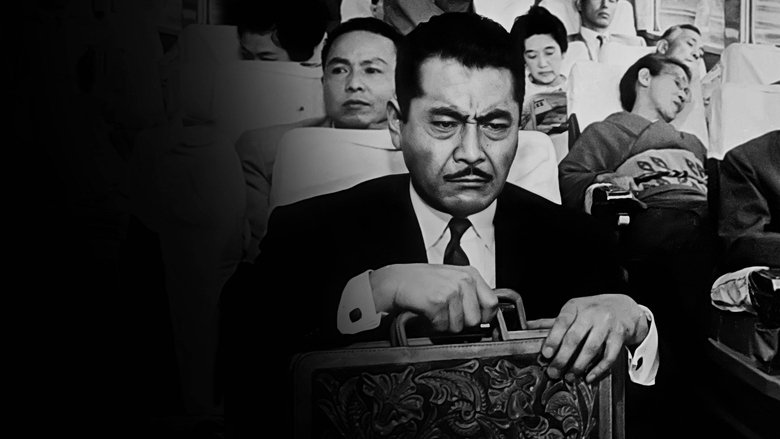
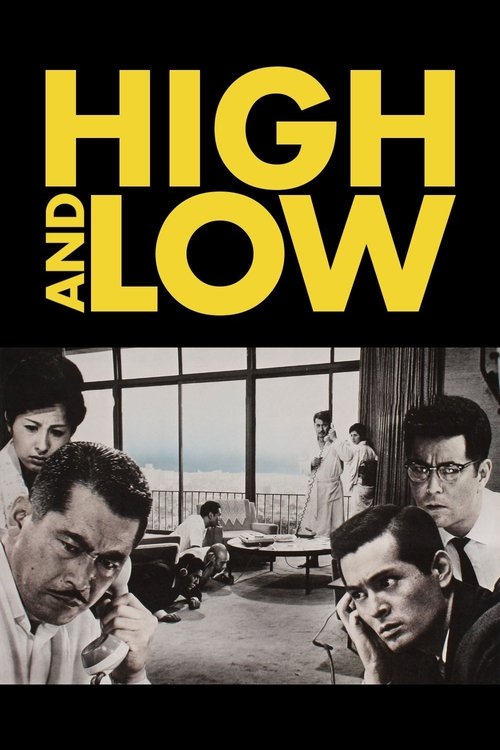
天国と地獄
"Stark, intense drama almost beyond belief!"
Director: Akira Kurosawa
Cast: Toshirō Mifune, Tatsuya Nakadai, Kyōko Kagawa, Tatsuya Mihashi, Isao Kimura
High and Low — Symbolism & Philosophy
Symbols & Motifs
Gondo's House on the Hill
It symbolizes the 'heaven' of wealth, success, and the isolating privilege of the upper class. It represents the vast, seemingly uncrossable chasm between the rich and the poor, and serves as the direct catalyst for the kidnapper's envy and hatred. Its physical height directly corresponds to Gondo's social standing.
The house is the primary setting for the film's first half. It is constantly shown overlooking the sprawling city of Yokohama. The kidnapper explicitly tells Gondo in the final scene, "Your house looked like heaven, high up there. That's how I began to hate you."
Windows and Curtains
Windows and curtains symbolize the barrier between the 'high' and 'low' worlds. From Gondo's panoramic windows, the city is a distant, abstract map. From Takeuchi's perspective, Gondo's house is a constant, taunting presence. The closed curtains signify Gondo's air-conditioned comfort and his obliviousness to the suffering below.
The film opens with a shot from behind the curtains in Gondo's house. Later, we see the kidnapper looking up at the house with binoculars. Takeuchi mentions the closed curtains as a sign of the air-conditioning that fueled his resentment in the stifling summer heat.
Pink Smoke
The single burst of color in the predominantly black-and-white film symbolizes the irrefutable stain of the crime bleeding into the sterile world of the police investigation. It is a moment of pure cinema, a beautiful image born from a vile act, representing the first tangible clue that leads the police from the 'high' world down into the 'low'.
The police plant a chemical in the ransom briefcases. When the kidnapper incinerates them after retrieving the money, a plume of pink smoke emerges from a factory chimney, allowing the police to pinpoint his general location. This is the only use of color in the film until the very end credits.
Shoes
Shoes represent Gondo's identity, integrity, and connection to the working class. He is not just a corporate executive; he is a craftsman who takes pride in making durable, quality shoes, contrasting with his partners who want to produce cheap, low-quality products for quick profit. His refusal to compromise on quality signifies his underlying moral code.
The film opens with Gondo arguing with his fellow executives over the quality of their shoes. He passionately declares, "Shoes carry all your body weight," and making them is his "life and love." After his ruin, he finds satisfaction working for a smaller rival company, where he can once again make shoes his way.
Philosophical Questions
What is the true measure of a person's worth: their social standing or their moral choices?
The film directly pits Gondo's social status and wealth against his moral duty to save a child. His initial hesitation is based on preserving his wealth and position. However, his ultimate decision to pay the ransom, bankrupting himself, suggests that true worth lies in humane action. He loses his 'high' position but becomes a hero in the public eye and retains his integrity, ultimately finding more personal satisfaction in a lower-paying job where he can practice his craft with pride.
To what extent is an individual responsible for the well-being of others in society?
High and Low extends the concept of responsibility beyond immediate family. Gondo is not legally or familially obligated to save his chauffeur's son at the cost of his own ruin. The film explores the idea of a broader social contract, suggesting a humanist obligation that the individual has to society. Gondo's journey forces him to learn this lesson, evolving from a self-interested capitalist to someone who accepts a profound responsibility for another's life.
Can good and evil be understood as products of social conditions rather than inherent traits?
The film deliberately contextualizes the kidnapper Takeuchi's evil actions within the framework of extreme poverty and class resentment. While not excusing his crimes, Kurosawa forces the audience and Gondo to understand their social cause. The final scene, where Takeuchi explains his hatred was born from the sight of Gondo's 'heavenly' home, challenges a simple black-and-white view of morality, suggesting that 'hellish' conditions can breed monstrous acts.
Core Meaning
Explore More About This Movie
Dive deeper into specific aspects of the movie with our detailed analysis pages