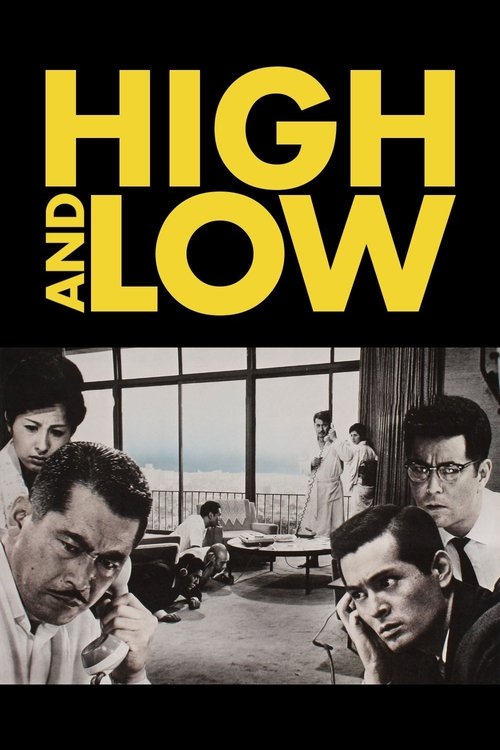
天国と地獄
"Stark, intense drama almost beyond belief!"
Director: Akira Kurosawa
Cast: Toshirō Mifune, Tatsuya Nakadai, Kyōko Kagawa, Tatsuya Mihashi, Isao Kimura
High and Low — Movie Quotes
Memorable Quotes
Your house looked like heaven, high up there. That's how I began to hate you.
Context
Spoken during the final scene in the prison, where Takeuchi explains his motivations to Gondo face-to-face for the first and only time.
Meaning
This line crystallizes the entire social commentary of the film. It reveals that the crime was not born of simple greed, but of a deep, systemic resentment created by class inequality. It is the voice of the 'low' directly confronting the 'high' with the source of its anguish.
Success isn't worth losing your humanity.
Context
Said to her husband, Kingo Gondo, in their living room as he struggles with the decision of whether or not to pay the ransom, initially prioritizing his business takeover.
Meaning
Reiko's plea serves as the film's central moral thesis. She cuts through Gondo's pragmatic, business-oriented arguments to remind him of a higher value, effectively acting as his conscience and guiding him toward his ultimate decision.
I know how much this money means to you, but a human life means more.
Context
Spoken to Gondo during the tense deliberations in the mansion, urging him to prioritize the kidnapped child over his corporate ambitions.
Meaning
This quote reinforces the film's core humanist message, coming from a business associate who fully understands the financial stakes. It highlights that the moral choice is clear to everyone except, initially, the man who has the most to lose.
Explore More About This Movie
Dive deeper into specific aspects of the movie with our detailed analysis pages