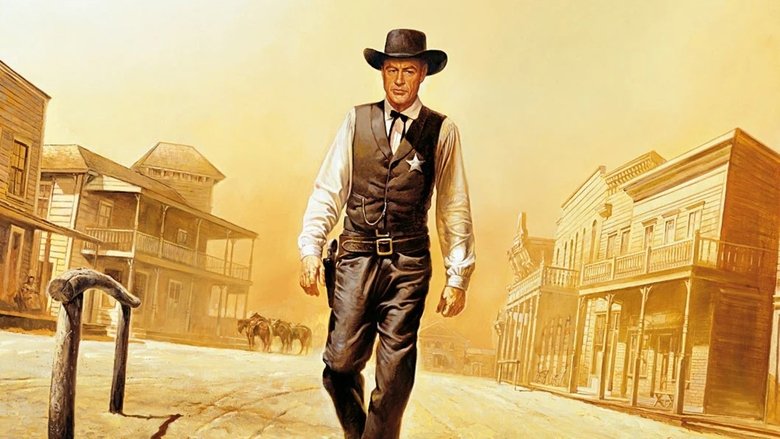
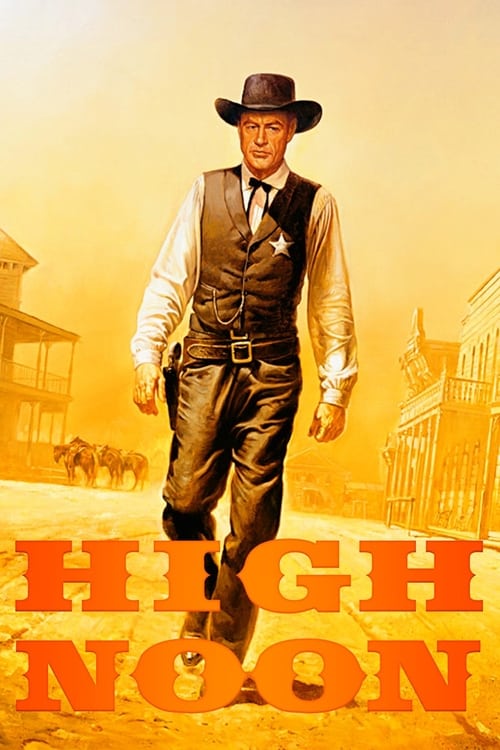
"The story of a man who was too proud to run!"
High Noon - Symbolism & Philosophy
Symbols & Motifs
The Ticking Clocks
The inescapable approach of fate and the relentless, suffocating pressure of time.
Shown in frequent, dramatic close-ups throughout the film, synchronizing the film's 85-minute run-time with the real-time narrative as noon approaches.
The Tin Star (Marshal's Badge)
Duty, law, and the thankless burden of public service.
Pinned to Kane's chest, the badge is heavily criticized by the old marshal as being for nothing, and is famously thrown into the dirt by Kane at the end of the film.
The Train
The unstoppable arrival of violence, the past catching up, and the threat of the outside world.
It brings Frank Miller to town at exactly high noon. The piercing sound of its whistle cuts through the tension of the final minutes, signaling the end of Kane's time to prepare.
Philosophical Questions
What is the true nature of civic duty, and do citizens have a moral obligation to protect their community even when it requires extreme personal risk?
The film shows a town that gladly accepts the economic and social benefits of law and order but refuses to share the burden of maintaining it. It poses the uncomfortable question of whether a society that will not defend itself actually deserves to be saved by a hero.
Are there moral limits to absolute pacifism?
Amy's strict religious vows against violence are severely tested when her husband is about to be murdered. The film suggests that pacifism is often a luxury paid for by the violence of others, and that choosing not to fight can sometimes directly enable evil.
Is personal integrity dependent on external validation?
Kane chooses to fight an unwinnable battle even when the very people he is protecting explicitly tell him to leave. He acts not for glory, reward, or public approval, but because he cannot live with himself if he runs, questioning whether true honor is entirely internal.
Core Meaning
At its core, High Noon is a searing critique of complacency and the failure of civic duty in the face of evil. Screenwriter Carl Foreman explicitly wrote the film as an allegory for the Hollywood Blacklist and McCarthyism, where individuals were abandoned by their friends and colleagues out of fear and self-preservation during the Red Scare. The town of Hadleyville represents a society that talks about law and order but lacks the courage to defend it when threatened.
Beyond its specific political context, the film explores the heavy burden of personal integrity. Will Kane's refusal to run, even when given every logical reason to do so, underscores the existential dilemma of a man who must stay true to his conscience, regardless of whether the public supports him or even deserves his sacrifice.