
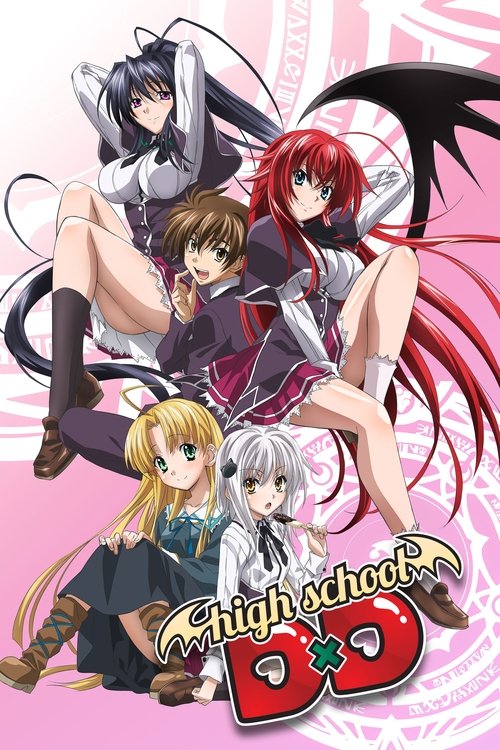
ハイスクールD×D
"Fueled by the fires of perversion!"
High School D×D - Symbolism & Philosophy
Symbols & Motifs
Chess Pieces (Evil Pieces)
The Evil Pieces, modeled after chess pieces (King, Queen, Rook, Bishop, Knight, Pawn), symbolize hierarchy, strategy, and the unique value of each individual within a team. A devil's peerage is a reflection of their leader's judgment and ability to cultivate diverse talents. For Issei, being a Pawn initially signifies his weakness, but his ability to 'promote' to any other piece in enemy territory symbolizes his limitless potential for growth.
The system is introduced in the first season when Rias explains that she used her Pawns to reincarnate Issei. Throughout the series, the roles and abilities associated with each piece are central to the strategy in Rating Games (official devil competitions) and real battles. The composition of Rias's peerage and how she utilizes each member's unique skills is a recurring strategic element.
Dragons
Dragons, particularly the two Heavenly Dragons, Ddraig and Albion, represent overwhelming, primal power that exists outside the established hierarchy of angels and devils. They symbolize raw ambition and eternal rivalry. For Issei, hosting Ddraig within his Sacred Gear (the Boosted Gear) symbolizes his potential to disrupt the world's balance of power and become a being of immense strength, capable of killing gods.
Ddraig's consciousness resides within Issei's arm, acting as both a source of power and a mentor. His rivalry with the Vanishing Dragon, Albion (hosted by Issei's rival, Vali Lucifer), is a major plot driver across all seasons, leading to several fated and destructive confrontations. Issei's ultimate forms, like the Juggernaut Drive and Diabolos Dragon, are manifestations of this draconic power.
Wings
Wings are a direct visual representation of a character's species and status. Devil wings are bat-like, angel wings are feathery and white, and fallen angel wings are black. The appearance and number of wings denote power and rank. Akeno's single devil wing and single fallen angel wing symbolize her conflicted heritage, a source of deep personal shame that she must learn to accept.
Wings are used for flight and are a common feature in battle. Issei's initial inability to fly and his subsequent pride in manifesting his own devil wings mark a significant step in his development. Akeno's struggle with her heritage is a key part of her character arc, particularly in the second season, culminating in her acceptance of both sides of her lineage.
Philosophical Questions
What is the true nature of good and evil?
The series consistently challenges the traditional definitions of good and evil associated with its mythological figures. The devils, led by Sirzechs Lucifer, are shown to be an organized society that values order and the well-being of its citizens. The angels can be dogmatic, and the fallen angels are a mixed group of renegades and researchers. The primary antagonists are often extremists from any of these factions who threaten the established peace. The series explores the idea that morality is defined by one's actions and principles, not by the label one is born with.
Can a person's initial, selfish desires lead to selfless, heroic outcomes?
Issei's entire character arc is an exploration of this question. His quest for power begins with the shallow and selfish goal of becoming a 'Harem King'. However, to achieve this, he must become strong enough to protect the women he cares about. This need for strength forces him into heroic situations where he repeatedly chooses to risk his life for others. The series suggests that the origin of one's motivation is less important than how that motivation evolves and what actions it inspires. Issei's base desires are a catalyst for his journey toward genuine heroism.
Does destiny define an individual, or does an individual define their destiny?
Many characters are born into roles with heavy expectations—Rias as the heir of the Gremory clan, Vali as the descendant of the original Lucifer, and Issei as the host of the Welsh Dragon. The series follows their struggles against these pre-defined paths. Rias fights an arranged marriage to choose her own partner. Issei, a seemingly ordinary human, rises to a level of power capable of challenging gods. The narrative champions the idea that through will, effort, and the bonds with others, one can break free from the constraints of their lineage and forge their own destiny.
Core Meaning
At its core, High School D×D explores the idea that one's origins and inherent nature do not define their destiny or worth. Issei, initially driven by simplistic and lecherous desires, gradually transforms into a genuine hero who commands respect through loyalty and self-sacrifice. The series posits that true power comes not from birthright or demonic rank, but from the bonds forged with others and the will to protect what one holds dear. It deconstructs traditional notions of good and evil, presenting angels, devils, and fallen angels as complex political factions with their own virtues and flaws, suggesting that morality is a matter of action and intent rather than supernatural alignment. The journey is a testament to personal growth and finding a noble purpose in the most unexpected of circumstances.