
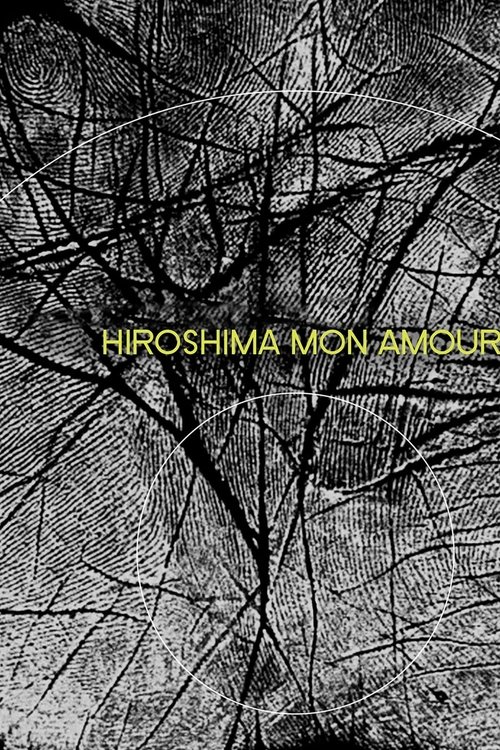
Hiroshima mon amour
"From the measureless depths of a woman's emotions..."
Hiroshima Mon Amour - Symbolism & Philosophy
Symbols & Motifs
Hiroshima and Nevers
The cities symbolize the identities of the characters themselves. Hiroshima represents collective suffering, destruction, and rebuilding. Nevers represents personal shame, youth, and the 'petrified' past that the woman cannot escape.
In the final scene, the characters explicitly name each other: 'Hi-ro-shi-ma. That's your name,' she says. 'That's my name. Yes. Your name is Nevers. Ne-vers in France,' he replies.
Ashes and Sweat
In the opening sequence, the lovers' intertwined bodies are covered first in what looks like radioactive ash, then glittering dew or sweat. This visually links the ecstasy of lovemaking with the horror of atomic fallout, suggesting the inseparable nature of creation and destruction.
The very first shot of the film shows this texture on their skin before their faces are revealed.
The Twitching Hand
A visual trigger that bridges the past and present. It symbolizes the persistence of the dead in the living.
While the Japanese lover sleeps, his hand twitches. This motion instantly transports the woman back to the moment she watched her German lover die, his hand twitching in his final moments.
The Cellar
Represents the subconscious, madness, and the physical space of repression.
Flashbacks show the woman locked in a cellar in Nevers by her parents to hide her shame and 'madness' after the liberation.
Philosophical Questions
Is it possible to truly understand the suffering of another?
The film repeatedly asserts 'You saw nothing,' suggesting an unbridgeable gap between the observer and the victim. It questions the efficacy of empathy in the face of massive trauma.
Is forgetting a betrayal or a necessity?
The protagonist feels that forgetting her dead lover is a 'horror' because it erases his existence. However, the film suggests that life can only continue through the process of forgetting, presenting memory as a burden that must eventually be laid down.
How does individual trauma weigh against collective tragedy?
By placing a teenage romance gone wrong alongside the atomic bombing, the film asks if pain is relative. It concludes that for the individual, personal pain is absolute and world-shattering, regardless of the scale of external events.
Core Meaning
Hiroshima Mon Amour is a profound meditation on the impossibility of truly knowing another's pain and the inevitability of forgetting. Director Alain Resnais and screenwriter Marguerite Duras suggest that while we have a moral duty to remember historical atrocities (like Hiroshima), the human mind survives trauma through the natural, yet terrifying, process of forgetting. The film posits that personal grief (Nevers) and collective tragedy (Hiroshima) are inextricably linked, yet ultimately incommunicable; we can only ever see the 'shell' of another's suffering, never the thing itself.