
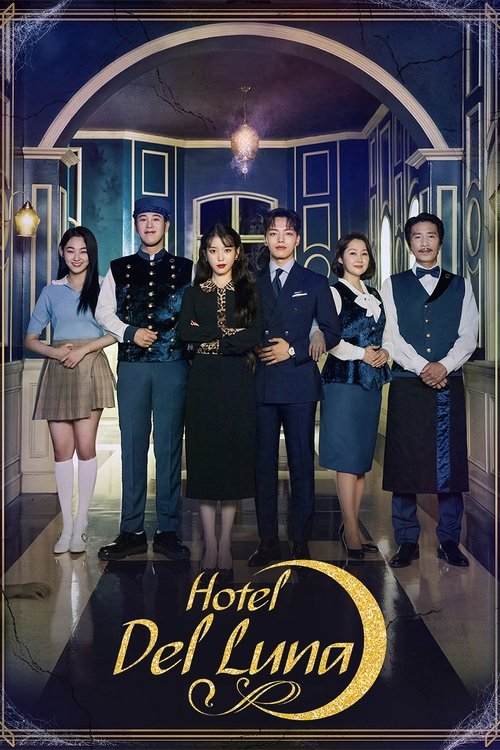
호텔 델루나
"I don't care if this place is a prison or a fence to you. I'll be here with you."
Hotel Del Luna - Symbolism & Philosophy
Symbols & Motifs
The Moon Tree (Wolryeongsu)
The ancient, withered Moon Tree symbolizes Jang Man-wol's soul, time, and emotional state. For centuries, it has been barren, representing her stagnant, cursed existence and frozen heart. Its condition reflects her spiritual well-being.
Located in the hotel's courtyard, the tree is the physical manifestation of Man-wol's curse. When Gu Chan-sung arrives, leaves begin to sprout, and eventually, flowers bloom, signifying the return of life, emotion, and love into her heart. The shedding of its flowers and leaves later in the series marks the progression of her time and her imminent departure to the afterlife.
Hotel Del Luna / Guest House of the Moon
The hotel itself symbolizes purgatory or a liminal space between the world of the living and the afterlife. It is a place of healing and resolution, where souls can unburden themselves of their worldly attachments before crossing over.
Visible only to ghosts and certain humans under special circumstances, the hotel serves as the primary setting. Its lavish, opulent interiors, which change with Man-wol's whims, represent a beautiful facade hiding deep sorrow and unfinished business. Its transient nature, only appearing majestic at night, reinforces its otherworldly purpose.
The Sanzu River Bridge
The bridge represents the final transition from the mortal realm to the afterlife. Crossing it signifies acceptance, the shedding of past memories and regrets, and the soul's journey towards reincarnation. It is the point of no return.
The hotel staff's primary mission is to guide souls to this bridge. Several key moments occur here, including Man-wol's emotional confrontation with Go Chung-myung and her final, heartbreaking farewell to Chan-sung. Her ability to finally cross the bridge symbolizes the completion of her redemption arc.
Philosophical Questions
What is the true nature of closure, and why is it essential for the soul?
The series explores this question through every ghost that enters the hotel. Each soul is trapped by an unresolved issue—betrayal, unfulfilled dreams, injustice, or unspoken feelings. The hotel functions as a therapeutic space where these spirits are given the opportunity to confront their pasts. The show posits that closure isn't about changing the past but about changing one's perspective on it. It requires forgiveness (of others and oneself), acceptance, and the act of letting go. Without this emotional and spiritual resolution, the series suggests a soul cannot achieve peace and is destined to wander, weighed down by its own history.
Can a life lived for centuries, defined by punishment, be redeemed by a single act of love?
Jang Man-wol's entire existence is a penance for her past sins. For 1,300 years, she remains unchanged, trapped by her own bitterness. The arrival of Gu Chan-sung introduces genuine, selfless love into her life for the first time since her betrayal. His compassion becomes the catalyst for her transformation. The series suggests that time alone does not bring redemption; rather, it is the profound human connection and the choice to open one's heart that allows for true change. Her final, peaceful departure implies that the love she experienced with Chan-sung was powerful enough to heal a millennium of hatred and allow her soul to be saved.
Core Meaning
"Hotel Del Luna" explores the profound human need for closure and the healing power of forgiveness. The series posits that resentment, regret, and unresolved emotions are chains that bind souls to the past, preventing them from moving forward. Through the stories of its ghostly guests and the central arc of its cursed protagonist, the show suggests that letting go of past grievances is not an act of forgetting, but a necessary step towards peace and redemption. It emphasizes that love and compassion are the keys to severing these chains, allowing both the living and the dead to finally find solace and continue their journey.