
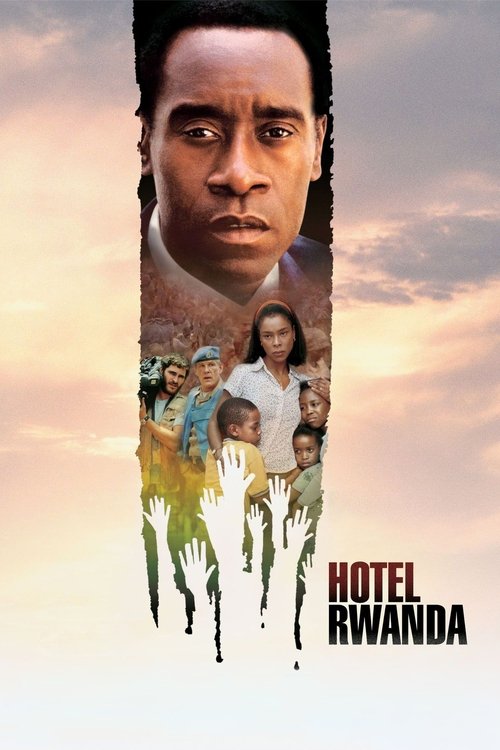
"When the world closed its eyes, he opened his arms."
Hotel Rwanda - Symbolism & Philosophy
Symbols & Motifs
The Fog
Symbolizes the obscurity of truth and the overwhelming scale of the horror that is initially hidden. It represents the psychological inability to process the magnitude of the genocide.
In a pivotal scene, Paul and his staff drive on a bumpy road in heavy fog. When the fog lifts, they realize the 'bumps' were hundreds of bodies, forcing Paul to physically confront the reality he has been trying to bribe away.
Cuban Cigars & Scotch
They represent corruption and the currency of survival. They are the tools Paul uses to buy time and life, reducing human worth to a transaction of luxury goods.
Paul constantly gifts these items to General Bizimungu. The luxury goods serve as a stark contrast to the death surrounding them, highlighting the general's greed over his humanity.
The Hotel
A metaphor for a Western oasis. It is a bubble of privilege and safety that is respected only because of its European ownership, underlining the film's theme that only things valued by the West are deemed worth protecting.
The militia initially hesitates to attack the hotel not out of morality, but because of its connection to Sabena (the Belgian airline) and the potential diplomatic fallout.
Philosophical Questions
Does the value of a human life depend on geography?
The film ruthlessly explores the concept of the 'hierarchy of death.' It asks why the world mobilized for conflicts in Europe or the Middle East but ignored 800,000 deaths in Rwanda. It forces the viewer to confront their own subconscious bias regarding the worth of African lives.
Is bribery moral if it saves lives?
Paul engages in 'immoral' acts—bribing murderers with alcohol and money—to achieve a moral good. The film questions the purity of ethics in extreme survival situations, suggesting that utilitarianism (doing whatever works to save the most lives) supersedes deontological ethics (following rules).
Core Meaning
The film serves as a scathing critique of Western apathy and the international community's failure to value African lives. It argues that in the absence of global intervention, ordinary individual heroism becomes the last line of defense against evil. It poses the uncomfortable truth that geopolitical interests often outweigh humanitarian moral obligations.