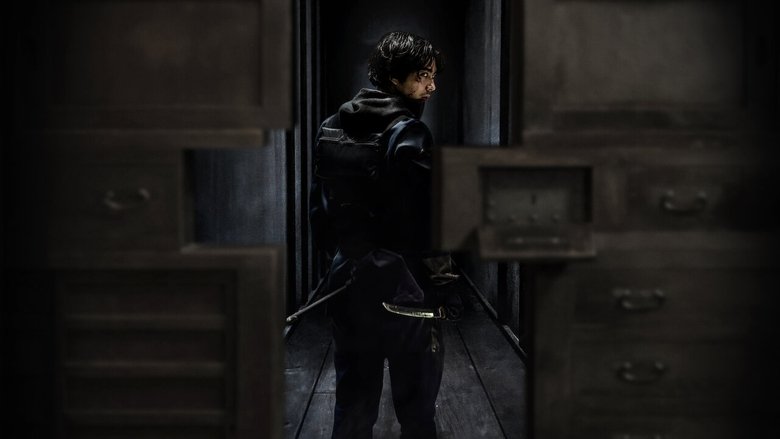
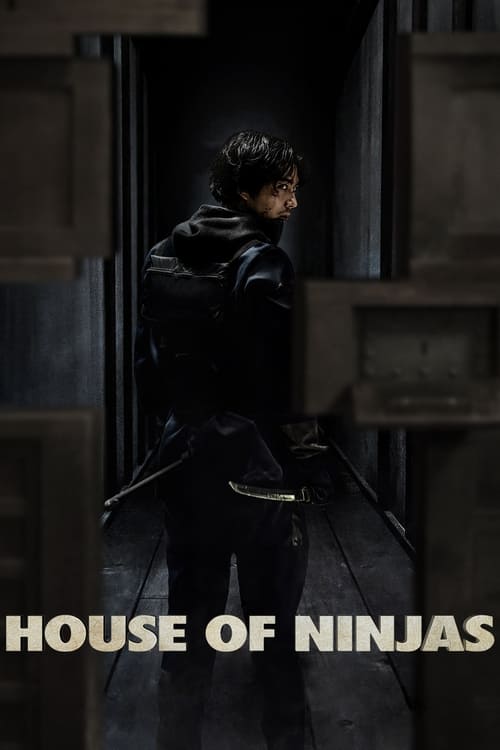
忍びの家 House of Ninjas
Cast: Kento Kaku, Yosuke Eguchi, Tae Kimura, Kengo Kora, Aju Makita
House of Ninjas — Characters & Cast
Character Analysis
Haru Tawara
Kento Kaku
Motivation
Initially: to be left alone and to be ordinary — a normal job, a normal relationship, no blades. Midway: to protect the family he keeps at arm's length. By the end: to reach the person he lost, and to hold the family together as an act of will rather than obligation. His motivation evolves from escape the legacy to redeem what the legacy did to us.
Character Arc
Haru begins as the family's designated failure: a young man in a menial job, drinking, going through the motions of a civilian life he chose as penance rather than preference. He is the one who most explicitly wants out, and the season slowly exposes why — his refusal is not laziness but guilt about the past incident that broke the family.
His arc moves from avoidance to re-engagement to a hard-won separation of the two. Kaku plays him with pointed restraint, letting repression rather than emotion do the work, so that his few moments of release land as events. By the finale he has stopped hiding from what he did and has to face a betrayal that makes his self-blame both smaller and far worse than he imagined.
Souichi Tawara
Yōsuke Eguchi
Motivation
To preserve the Tawara line and its code, and to honor obligations to the authorities who manage what remains of the shinobi. This hardens into a need to atone — to be a father rather than a clan head — as the cost of his loyalty becomes undeniable.
Character Arc
The father is introduced as a man keeping a failing sake brewery afloat purely out of habit — a cover that no longer covers anything. He embodies the show's respect for tradition and its critique of it: he is disciplined, dutiful, and catastrophically unable to speak to his own children.
Across the season he is pulled back into service and forced to confront how much of his family's suffering he authorized in the name of the clan. His late-season reckoning is less about combat than about admitting that obedience was easier than honesty.
Yoko Tawara
Tae Kimura
Motivation
To feel alive and useful again; underneath that, to hold the family in one piece and to protect her children from the choice she was never really offered. Her want shifts from stimulation to agency.
Character Arc
Bored to distraction by domestic life, Yoko is the season's comic engine and one of its most quietly radical figures: a woman whose extraordinary competence has been filed away into shopping, cooking and keeping the peace. Her boredom is played for laughs before it is revealed as a form of grief.
She moves from small transgressions to full participation, reclaiming both her skills and her appetite for a life of her own. Her arc argues that the family's decision to quit cost her the most while asking her opinion the least.
Gaku Tawara
Kengo Kora
Motivation
Originally: to be the son his father needed and the clan's best weapon. After captivity: to remake the country according to the doctrine he was rebuilt inside — and, ambiguously, to punish or rescue the family that stopped looking for him. His motive is never cleanly severed from love, which is precisely what makes it dangerous.
Character Arc
Gaku is the eldest son, the ideal shinobi, and the absence around which the entire household is arranged. Long presumed lost after the incident that ended the family's active service, he returns — and the season's greatest cruelty is that the returning is the betrayal.
Held for six years by the rival Fuma, injured and systematically indoctrinated, he comes home as an infiltrator codenamed The Crow. His trajectory ends with him seizing the Fuma leadership outright, converting the perfect son into the perfect antagonist. The final image, of him walking away alone, keeps him legible as a brother rather than a monster.
Nagi Tawara
Aju Makita
Motivation
To find a purpose of her own and to be seen. This matures into a desire to make the family honest — to keep her brothers and parents from repeating a silence that has already cost them one son.
Character Arc
The daughter, still young enough that the family's rules feel like arbitrary cruelty rather than tradition. She spends the early season pushing against the ban on being what she is — talented, curious, alive — and testing whether the truth can be told outside the house.
Her arc is the show's clearest generational argument: she refuses the premise that secrecy is love, and her willingness to speak and to act on her own moral read repeatedly forces the older Tawaras to justify themselves. She grows from a rule-breaking kid into the family member most capable of choosing the legacy freely.
Cast
Explore More About This Movie
Dive deeper into specific aspects of the movie with our detailed analysis pages