Skip to content
House of Ninjas
A sly, sorrowful action-drama where a family of hidden ninjas curdles under one unspoken grief — sake steam, black blades and suburban silence sharpening into a nation-shaking wound.
House of Ninjas

House of Ninjas

忍びの家 House of Ninjas

15 February 2024 — 15 February 2024 Japan 1 season 8 episode Ended 7.2 (173)

Cast: Kento Kaku, Yosuke Eguchi, Tae Kimura, Kengo Kora, Aju Makita

Drama Action & Adventure Inherited duty versus the right to choose a life Grief that a family refuses to speak Tradition colliding with modernity Identity, invisibility and the cost of being no one Loyalty, betrayal and who counts as family

Overview

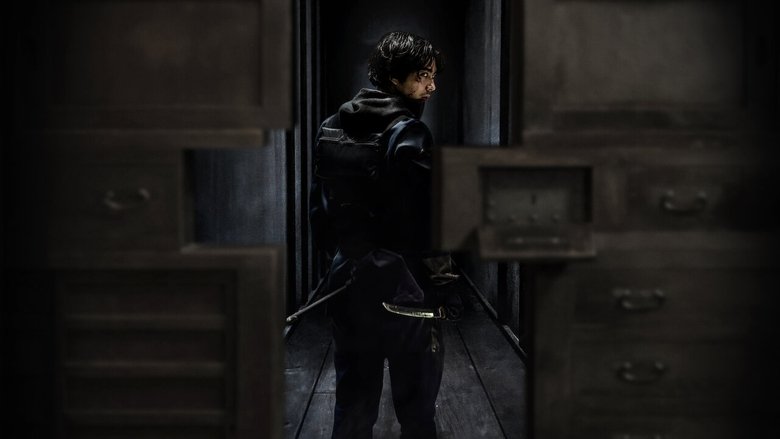
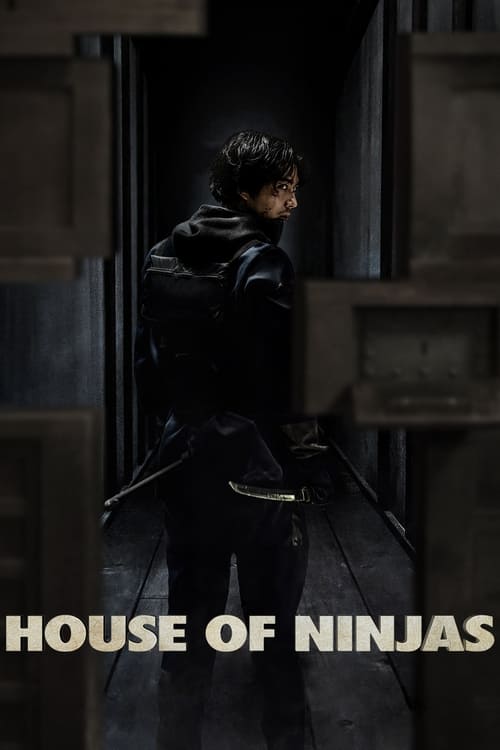
House of Ninjas (忍びの家 House of Ninjas) is a Japanese Netflix original that premiered on February 15, 2024, running eight roughly 53-minute episodes. Created by American director Dave Boyle and built from a story by star Kento Kaku with Takafumi Imai and Yoshiaki Murao, it imagines that the shinobi never actually vanished — they simply went underground, into ordinary houses, ordinary jobs, ordinary shame. The Tawaras are the last true ninja clan, and when we meet them they have quit: the family has abandoned its calling after a catastrophe in the past that nobody in the house is willing to name aloud.

Father Souichi keeps a sake brewery running long after it has stopped being a useful cover story; mother Yoko is quietly suffocating in the role of housewife; eldest surviving son Haru works a dead-end job and drinks his guilt; daughter Nagi and her siblings drift, unsure what a life is for when the only thing you were ever trained to be is forbidden. Then the country's shadow bureaucracy comes knocking, because a rival lineage — the Fuma — is moving again, and only a family that no longer wants to be ninjas can stop them.

Across the season the show braids three registers that rarely share a screen: hard, blade-close action staged in inky nighttime shadow; a domestic comedy about relatives who cannot talk to each other; and a political thriller in which Japan's entire power structure is quietly put in play. Secrets surface, loyalties invert, and the Tawaras discover that the crisis they are being asked to avert and the wound at their own dinner table are the same thing. The series ended after its single season, its final movement deliberately left open.
Core Meaning

At its heart House of Ninjas asks what a person owes to an inheritance they never chose. The Tawaras are bound by rules — secrecy, obedience, self-erasure — that were designed for a world that no longer exists, and the series treats those rules with genuine tenderness and genuine suspicion at once. Boyle has said the strict codes historically observed by ninja reminded him of the religious upbringing he grew up inside, and that ambivalence is the show's engine: tradition as both a gift and a cage.

The creators use the ninja not as spectacle but as metaphor for the Japanese family itself — a unit that survives by not saying things. Every character is fluent in disappearing, and every catastrophe in the plot traces back to grief that went unspoken. The nation-scale conspiracy the Tawaras are asked to stop is, in the end, an amplification of their own untreated wound.

The message: secrecy practiced as love becomes a slow violence. A legacy is only worth carrying if the people carrying it are permitted to be people — to grieve out loud, to want things, to refuse. The show argues, gently and then bloodily, that the only way to honor a house is to open it.

Thematic DNA

Inherited duty versus the right to choose a life 28%
Grief that a family refuses to speak 24%
Tradition colliding with modernity 18%
Identity, invisibility and the cost of being no one 16%
Loyalty, betrayal and who counts as family 14%

Inherited duty versus the right to choose a life

The central tension. Every Tawara is defined by a vocation assigned at birth: Souichi clings to it, Haru has fled it, Yoko married into it, Nagi and her brother are still deciding. The season structures itself as a series of recruitments — the family is pulled back into service one member at a time, each for a different and personal reason — so that by the end the question is no longer can we do this but who are we if we do.

Crucially, the show refuses to answer cleanly. Returning to the shinobi life saves lives and also destroys them; the character who most fully embraces the ninja identity ends up the season's antagonist. Duty here is not a virtue to be reclaimed but a substance to be handled carefully.

Grief that a family refuses to speak

The Tawara house is organized around an unnamed loss. Kento Kaku plays Haru with deliberate restraint — a performance built out of repression, guilt and burden rather than expression — and the whole household mirrors it: drinking, overwork, compulsive tidiness, sarcasm, anything but speech.

The plot converts this into structure. Information the audience is denied is the same information the characters withhold from each other, so every revelation lands twice, as thriller twist and as family confession. When the truth about the past finally surfaces, it is devastating less for what happened than for how long everyone chose silence over each other.

Tradition colliding with modernity

The show is built on comic and tragic anachronism: shuriken beside smartphones, a sake brewery as a decommissioned cover story, an ancient clan war being fought through modern political machinery and mass-media manipulation. The old skills still work; the old reasons have expired.

Across the season this curdles from joke to indictment. A feudal lineage is shown to be perfectly capable of capturing a contemporary democracy — the fight ends up in ministries and command structures, not on castle roofs — suggesting that what is truly archaic has never left Japanese public life, it has only changed uniforms.

Identity, invisibility and the cost of being no one

A shinobi's core competency is not being seen. The series takes that literally and psychologically: Yoko's invisibility as a housewife, Haru's invisibility in a menial job, Nagi's invisibility as a teenager whose talents must never be shown. Boyle and Kaku deliberately distributed screen time across the whole family rather than centering one hero, which makes the theme formal as well as thematic — nobody is allowed to be the protagonist.

The arc of the season is each character testing what happens when they become visible: to an outsider, to a lover, to the public, to each other. Some are freed by it; some are destroyed by it.

Loyalty, betrayal and who counts as family

The Fuma clan functions as a dark mirror of the Tawaras — another lineage, another set of absolute obligations, another family that takes people and remakes them. The season repeatedly poses blood against belonging and refuses to let blood automatically win.

By the finale the betrayal is total and intimate, and the show's coldest insight lands: the same techniques that make a family loyal — secrecy, hierarchy, unquestioning obedience — are exactly the techniques used to turn one of its own. A cult and a clan are separated only by whose side you are on.

Character Analysis

Haru Tawara

Kento Kaku

Archetype: Reluctant hero / wounded survivor Key Trait: Guilt-driven restraint — enormous capability held under lock

Motivation

Initially: to be left alone and to be ordinary — a normal job, a normal relationship, no blades. Midway: to protect the family he keeps at arm's length. By the end: to reach the person he lost, and to hold the family together as an act of will rather than obligation. His motivation evolves from escape the legacy to redeem what the legacy did to us.

Character Arc

Haru begins as the family's designated failure: a young man in a menial job, drinking, going through the motions of a civilian life he chose as penance rather than preference. He is the one who most explicitly wants out, and the season slowly exposes why — his refusal is not laziness but guilt about the past incident that broke the family.

His arc moves from avoidance to re-engagement to a hard-won separation of the two. Kaku plays him with pointed restraint, letting repression rather than emotion do the work, so that his few moments of release land as events. By the finale he has stopped hiding from what he did and has to face a betrayal that makes his self-blame both smaller and far worse than he imagined.

Souichi Tawara

Yōsuke Eguchi

Archetype: Patriarch / compromised mentor Key Trait: Dutiful stoicism that reads, up close, as emotional absence

Motivation

To preserve the Tawara line and its code, and to honor obligations to the authorities who manage what remains of the shinobi. This hardens into a need to atone — to be a father rather than a clan head — as the cost of his loyalty becomes undeniable.

Character Arc

The father is introduced as a man keeping a failing sake brewery afloat purely out of habit — a cover that no longer covers anything. He embodies the show's respect for tradition and its critique of it: he is disciplined, dutiful, and catastrophically unable to speak to his own children.

Across the season he is pulled back into service and forced to confront how much of his family's suffering he authorized in the name of the clan. His late-season reckoning is less about combat than about admitting that obedience was easier than honesty.

All 5 characters and cast

Symbols & Motifs

The sake brewery

Meaning:

The family's obsolete cover story, kept running long after it has any purpose. It stands for tradition preserved past its function — a craft that is now performance, labor as denial, and a father's refusal to admit the world has moved.

Context:

Souichi keeps the brewery alive throughout the series even though the family no longer needs a front. Its fermenting tanks, cellars and quiet daily ritual anchor most of the domestic scenes, and the show mines it for both warmth and absurdity: the machinery of ancient secrecy reduced to a small business struggling to break even.

The house itself

Meaning:

Hidden compartments, concealed passages and a facade of ordinariness make the Tawara home a body with buried organs — a direct image of a family that stores its truth behind panels. The title says it: the house is the subject.

Context:

Recurring throughout the season as the show's principal set. Domestic space is repeatedly revealed to contain armories, hideaways and evidence, so that every ordinary room is retroactively a lie. Fights and confessions alike happen inside it, collapsing the distance between the war outside and the war at the table.

The crow

Meaning:

An omen of death and a scavenger of the battlefield, and in this series a codename for the one who returns from the dead to feed on their own kin. It carries the show's idea that the returning dead do not come back as themselves.

Context:

Attached to the Fuma-made mole planted inside the family — the identity revealed late in the season — the motif reframes earlier scenes of homecoming as scenes of infiltration on rewatch.

Shadow and darkness

Meaning:

The shinobi's medium and the family's psychology. Darkness is where the Tawaras are most competent and least honest; the show equates skill at concealment with emotional damage.

Context:

The action is staged largely at night, in what critics described as inky but appealing shadow. Fight scenes are lit so that bodies emerge and vanish, while the domestic scenes are comparatively flat and bright — the family is more visually alive when hiding than when at home.

The poisoned powder

Meaning:

A mass-distributed toxin marketed under the language of hope. It symbolizes ideology as contagion — the way a promise of national renewal can be the delivery system for annihilation.

Context:

The Fuma plot's central weapon in the back half of the season, spread across Japan through ordinary channels. Its branding as something restorative is the show's sharpest satire: the public accepts poison because it is handed to them as salvation.

The scroll

Meaning:

The clan document as authority itself — legitimacy that can be carried, stolen and handed to the wrong person. It represents inheritance detached from worthiness.

Context:

Its delivery is a pivot in the endgame, transferring power within the Fuma line and confirming that the season's conspiracy runs on paperwork and lineage as much as on blades.

Philosophical Questions

Can you inherit an identity you never consented to — and is refusing it betrayal or honesty?

Every Tawara is born into a vocation with absolute rules and no exit interview. The series stages the question across generations simultaneously: a father who never questioned it, a son who fled it, a mother who married into it, a daughter who has not yet been asked. It refuses a verdict — reclaiming the legacy brings competence and connection, and it also produces the season's catastrophe — which reframes the question from should you accept your inheritance to can an inheritance be accepted freely at all when it was installed before you could speak.

Is secrecy a form of love or a form of harm?

The family's silences are all defensible: protecting children, honoring duty, sparing each other pain. The show tracks their compound interest. Grief unspoken becomes drinking, estrangement, a missing son nobody could search for properly, and finally an infiltration that only worked because no one in the house asks direct questions. The series' answer is quietly brutal: what the Tawaras call discretion is the exact mechanism by which they lose each other.

What separates a clan from a cult?

The Fuma and the Tawaras run on the same operating system — lineage, obedience, secrecy, self-erasure, a title that outlives its holder. By having one family's beloved son remade into the other family's leader over six years, the series demonstrates that the conversion required almost no new software. The unsettling implication is that loyalty and indoctrination are not opposites but the same technique pointed in different directions.

Who really governs a modern democracy?

The season moves its conflict out of the shadows and into ministries, a defense command structure and a government office that manages ninja as a personnel matter. When a feudal lineage can install its people at the top of a contemporary state and distribute a toxin to the public under the branding of hope, the show is asking whether the old order ever left — or simply learned to fill out forms.

If you were remade by force, is what remains still you?

The captivity at the center of the story — six years, a maiming, systematic indoctrination, a new name — poses the identity problem without abstraction. The series never shows the seam where one person ends and another begins, and its final gesture, a solitary walk away from victory, insists that traces of the original persist. Whether those traces constitute a person or only a haunting is the question it declines to close.

Alternative Interpretations

The finale as tragedy vs. the finale as promise. The last image — the new Fuma Kotarō walking alone out of a smoke-filled arena — has been read two ways. One reading takes it as a completed corruption: the brother is gone, remade by six years of captivity and indoctrination, and what walks away is the doctrine wearing his face. The other, favored by much of the commentary, reads the solitude and the lingering camera as evidence that he has neither forgotten nor abandoned his family — that the conquest is a long game with a rescue or a reckoning buried inside it. The show gives no line that settles it.

Full ending explanation

Cultural Impact

Context of creation. House of Ninjas arrived in February 2024 during Netflix's aggressive push into Japanese-language originals, and it was positioned as a deliberate intervention in a moribund genre. Both Dave Boyle and Kento Kaku framed the show publicly as an attempt to revitalize the ninja genre — to rescue the shinobi from decades of camp, kids' television and Western pastiche and return them to something psychologically serious. That it was created by an American director working in Japanese, from a story conceived by its Japanese star, made it an unusually hybrid object: a Japanese family drama built with the structural instincts of a prestige streaming thriller.

Reach. The gamble paid off commercially. The series hit the Netflix Top 10 in more than 70 countries in its opening week — later reported at over 90 — and recorded 8.7 million views in its first two weeks, charting in the US Top 10 and establishing itself among the most successful Japanese dramas Netflix had released.

Critical standing. Reviews were strongly positive, with the small pool of certified critics on Rotten Tomatoes registering a 100% score against an 88% audience score. Critics converged on the same description: a genuinely appealing blend of martial-arts action, family drama and comedy, with production values and cinematography above the platform's Japanese-series norm. Dissent existed — the San Francisco Chronicle found the action generic in places — and some outlets read it politically, framing the season as a collision between fascism and anarchy staged through Japan's oldest open secret.

References and legacy. The show draws directly on Japanese historical folklore, above all the Fūma line and the figure of Fūma Kotarō, reworking a hereditary title from the Sengoku imagination into a modern conspiracy. Its lasting contribution is tonal: it demonstrated that the ninja story could carry domestic realism, grief and political satire without abandoning genuine action craft, and it was widely compared in the trade press to crossover hits like Cobra Kai as a legacy-genre revival aimed at global audiences. Despite the numbers, the series ended after one season, leaving its deliberately open finale unresolved.

Audience Reception

Overall verdict. The reception was warm and, unusually, close to unanimous. On Rotten Tomatoes the season registered a 100% critics score — from a small pool of six certified reviews — alongside an 88% audience score. The consensus among reviewers was that the show is delightful and highly binge-able, and that its distinctive achievement is the blend: martial-arts action, family drama and comedy held in a single tone without any of the three undercutting the others.

What was praised. Audiences and critics singled out the ensemble approach, and the choice to give every Tawara real screen time rather than orbiting a single hero. Kento Kaku's restrained lead performance drew particular attention for conveying guilt and repression through withholding rather than display. The craft was widely noted: production values above the platform's usual standard for Japanese series, cinematic camerawork, and fight sequences robustly staged in dark, shadow-heavy night interiors and exteriors. Many reviewers framed it as an affectionate, serious-minded revival of a genre long since surrendered to camp — one outlet called it a heartfelt tribute to an enigmatic world.

What drew criticism. The main dissent concerned familiarity. The San Francisco Chronicle found the action carried generic touches, and a recurring complaint held that the plotting leans on recognizable thriller machinery — mole reveals, conspiracies inside government, a presumed-dead sibling — even while the domestic material feels fresh. Some viewers found the tonal range uneven, with broad comedy sitting awkwardly beside the show's more painful grief material, and others wanted a faster escalation in the early episodes, where the setup of the family's paralysis takes precedence over action.

Evolution of opinion. With only one season, opinion moved less between seasons than within the run. Early episodes were received as a charming domestic curiosity; the back half, once the political conspiracy and the identity of the infiltrator take over, converted much of the audience to reading the show as a tragedy about a family rather than a caper. Commercially it was a clear hit — Top 10 in over 70 countries at launch and 8.7 million views in two weeks — and the most persistent source of audience frustration became the ending itself: a finale engineered as a setup for a continuation that, as the series stands, was never made.

Interesting Facts

  • The series originated with its star: Kento Kaku had the idea for 忍びの家 (Shinobi no Ie) while visiting a ninja village with his family. He is credited on the story alongside Takafumi Imai and Yoshiaki Murao, and also served as co-executive producer.
  • It was created and directed by Dave Boyle, an American filmmaker working in Japanese — an unusual arrangement for a Japanese-language Netflix original. Scripts were written by Masahiro Yamaura and Kata Oura.
  • Boyle has said the rigorous, all-encompassing rules historically observed by ninja closely resembled the rules of his own Mormon upbringing, and that this personal recognition shaped his approach to the material.
  • Boyle and Kaku deliberately decided against a single-protagonist structure, insisting that every member of the Tawara family receive substantial screen time — a choice that turned a ninja action show into an ensemble family drama.
  • The show is a co-production between Netflix and TOHO Studios.
  • Boyle and Kaku framed the project as an attempt to revitalize the ninja genre, which had calcified into pastiche, by grounding it in contemporary domestic reality rather than period spectacle.
  • Netflix announced the production well ahead of release, with trade coverage in Variety as early as 2022; it premiered on February 15, 2024, with eight episodes of about 53 minutes each.
  • Critics repeatedly noted that the production values sat noticeably above the norm for a Japanese Netflix series, particularly the cinematography and the staging of the night-set fight sequences.
  • The cast includes veteran actor Nobuko Miyamoto alongside Kento Kaku, Yōsuke Eguchi, Tae Kimura, Kengo Kora and Aju Makita.
  • The series reached the Netflix Top 10 in more than 70 countries in its debut week — later reported as over 90 countries — and drew 8.7 million views in its first two weeks.

Easter Eggs

The Bureau of Ninja Management (BNM), a government office that administers Japan's surviving shinobi

A wry piece of world-building that doubles as satire: the show's answer to "where did the ninja go" is they were absorbed into the civil service. It plants the series' political thesis — that feudal power structures survive in Japan by becoming bureaucracy — inside what looks like a joke.

The Fuma name and the title Fuma Kotaro

A direct reference to real Japanese history and folklore: Fūma Kotarō was the semi-legendary leader of the Fūma ninja band associated with the Later Hōjō clan, and the name has been passed down as a hereditary title in countless novels, games and anime. Using it as a succeeding office rather than a person — the title transfers when its holder is killed — is both historically flavored and central to the season's final twist.

The sake brewery as the clan's defunct cover business

A nod to the classic shinobi practice of maintaining a legitimate trade as concealment — historically merchants, farmers, entertainers. The joke is that the Tawaras kept the cover and lost the thing it was covering, which is also the show's thesis about tradition in miniature.

The "powder of hope" branding of the Fuma toxin

The naming is the reference: a mass-distributed poison sold to the public as national renewal reads as pointed commentary on political messaging and manufactured hope, and gives the season's thriller machinery a satirical edge that critics picked up on as a fascism-versus-anarchy reading.

Frequently Asked Questions

Explore More About This Movie

Dive deeper into specific aspects of the movie with our detailed analysis pages

Comments (0)

Leave a comment

No comments yet. Be the first to share your thoughts!

Similar Movies