
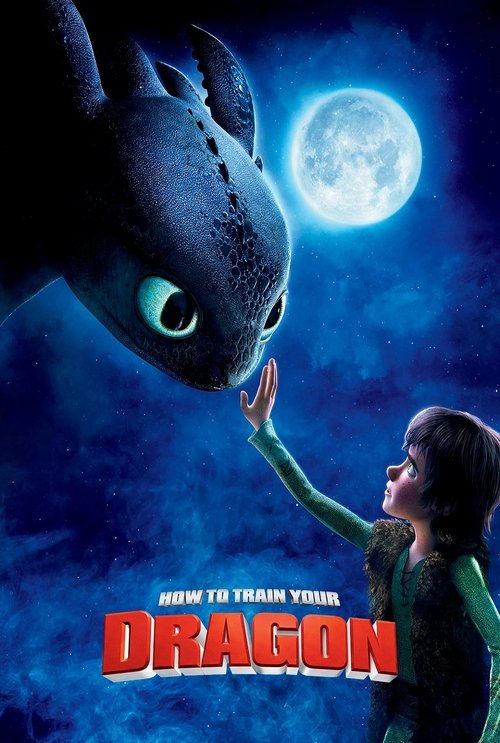
"One adventure will change two worlds."
How to Train Your Dragon - Symbolism & Philosophy
Symbols & Motifs
Toothless's Injured Tail Fin
The damaged tail fin symbolizes vulnerability and the need for connection and trust. It represents Toothless's initial helplessness and Hiccup's capacity for empathy and ingenuity. Their ability to fly together, with Hiccup operating the prosthetic, is a powerful visual metaphor for their symbiotic relationship and mutual dependence.
Toothless's tail is injured when Hiccup shoots him down. Hiccup later crafts a prosthetic fin and harness, which he must actively control for them to fly. This device is central to their bonding, particularly in the iconic "Test Drive" sequence.
Hiccup's Prosthetic Leg
Hiccup's lost leg at the end of the film is a profound symbol of sacrifice and the cost of change. It creates a physical parallel between him and Toothless, forever linking them through their shared disability. This shared vulnerability reinforces their equality and the depth of their bond, showing that scars do not weaken but can represent strength and connection.
In the final battle against the Red Death, Hiccup is knocked off Toothless and loses his lower left leg. He wakes up in the film's epilogue with a metal prosthetic forged by Gobber, mirroring the prosthetic fin he made for his dragon.
The Dragon's Nest / The Red Death
The dragons' nest and its tyrannical ruler, the Red Death, symbolize a larger, oppressive system that forces individuals to commit harmful acts against their nature. The smaller dragons don't attack Berk out of malice, but to feed the giant queen to avoid being eaten themselves. This reveals that the perceived "enemy" is often a victim of circumstances, challenging the Vikings' black-and-white view of the conflict. The Red Death embodies the true source of fear and violence that must be confronted.
Hiccup and Astrid discover the nest during their first long flight on Toothless. They witness the colossal Red Death dragon consuming the other dragons' offerings. This discovery is the key to understanding the dragons' motivation for raiding the village.
Philosophical Questions
Is tradition always worth upholding?
The film deeply explores the conflict between tradition and progress. Berk's tradition is a 300-year war with dragons, a custom passed down through generations without question. Hiccup is the first to challenge this tradition, not out of rebellion, but through discovery and experience. The film suggests that while traditions can provide identity and structure, they should be re-examined and even discarded when they are based on fear, ignorance, or prejudice. It poses the question of whether loyalty to one's culture requires blind adherence to its past or the courage to guide it toward a better future.
What is the nature of an 'enemy'?
How to Train Your Dragon philosophically deconstructs the concept of an enemy. The Vikings see dragons as monolithic, evil beasts. However, Hiccup learns they are complex individuals with their own fears and motivations. The discovery of the Red Death reveals that the dragons are not raiding out of malice but are themselves victims of an oppressive force. The film argues that what we perceive as an enemy is often a product of misunderstanding and that seeking to understand our adversaries can reveal a common ground, or a common enemy, transforming conflict into cooperation.
Core Meaning
The core meaning of How to Train Your Dragon revolves around the power of empathy and understanding to overcome prejudice and generational conflict. The film posits that true strength lies not in conforming to societal expectations of aggression and violence, but in compassion, intelligence, and the courage to challenge the status quo. Director Dean DeBlois and his team wanted to tell a story where the bond between a boy and a dragon could end an age-old war, showcasing that fear is often born from misunderstanding. Hiccup's journey is a message that leadership can be defined by compassion rather than dominance, and that accepting those who are different can lead to a more harmonious world.