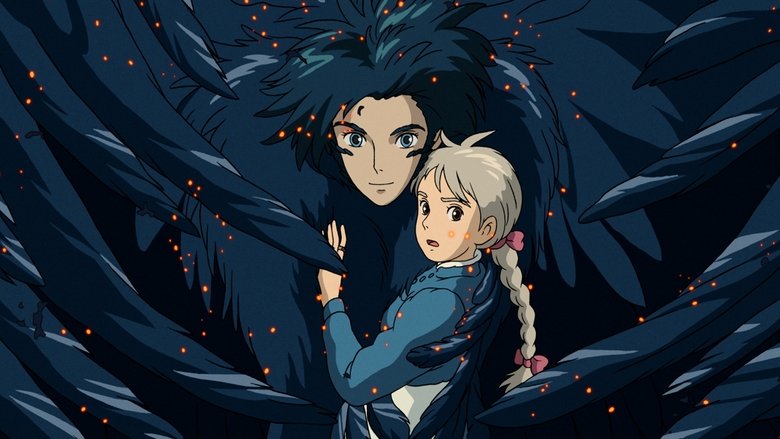
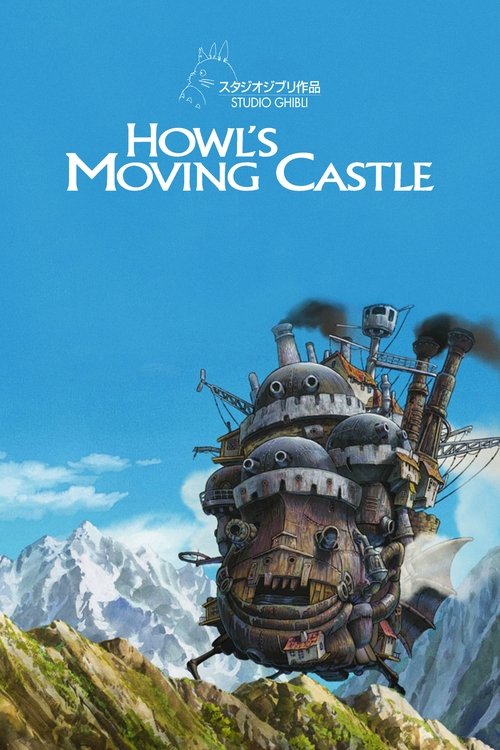
ハウルの動く城
"The two lived there."
Howl's Moving Castle - Symbolism & Philosophy
Symbols & Motifs
Howl's Moving Castle
The castle symbolizes Howl's emotional state and his unwillingness to commit. Its chaotic and constantly changing exterior reflects his inner turmoil and desire to run from responsibility. As Sophie brings order and warmth to the castle's interior, it represents her grounding influence on Howl. The castle's ability to move also signifies a desire for freedom and escape.
The castle is a central element of the film, serving as the primary setting and a character in its own right. Its appearance evolves throughout the story, mirroring the development of the characters within it. The magical door with its various destinations represents Howl's different identities and his attempts to evade his obligations.
Howl's Heart (Calcifer)
Howl's heart, which he gave to the fire demon Calcifer, symbolizes his lost innocence and emotional vulnerability. Living without a heart has made Howl powerful but also emotionally detached and afraid of commitment. Calcifer, as the keeper of the heart, represents both Howl's life force and his emotional core.
The pact between Howl and Calcifer is a key plot point. Calcifer powers the castle with Howl's heart. Sophie's quest to break her own curse becomes intertwined with her promise to help Calcifer, leading her to uncover the truth about Howl's past. The return of Howl's heart at the end of the film signifies his emotional healing and ability to truly love.
Sophie's Changing Age
Sophie's physical age fluctuates throughout the film, often reflecting her emotional state and level of self-confidence. When she is assertive, passionate, or asleep, she often reverts to her younger self. This symbolizes that her curse is not merely a physical transformation but is also tied to her perception of herself. Her journey is about embracing her true self, regardless of her outward appearance.
Initially cursed into a 90-year-old woman, Sophie's appearance changes at various points in the narrative. These moments of de-aging often occur during emotionally significant scenes, highlighting her internal development. Even after the curse is broken, her silver hair remains as a symbol of the wisdom and experience she has gained.
The Scarecrow (Turnip Head)
Turnip Head symbolizes unwavering loyalty and kindness. Despite his comical appearance, he is a constant and helpful presence for Sophie, guiding her to the castle and always being there to support her. His transformation back into Prince Justin at the end reinforces the theme of looking beyond appearances to see the true character within.
Sophie first encounters the scarecrow in the wastelands and affectionately names him "Turnip Head." He follows her throughout her journey, offering assistance whenever he can. His true identity as the missing prince, whose disappearance sparked the war, is a significant revelation in the film's climax.
Philosophical Questions
What is the true nature of beauty and self-worth?
The film challenges conventional notions of beauty through Sophie's transformation. Her journey as an elderly woman forces her to look beyond her physical appearance and discover her inner strength and value. This raises questions about whether beauty is merely skin-deep and how self-worth is constructed and maintained in a society that often prioritizes youth and physical attractiveness.
Can one remain compassionate in the face of conflict and cruelty?
"Howl's Moving Castle" explores the theme of compassion through Sophie's actions. Despite being cursed by the Witch of the Waste, Sophie chooses to care for her after she becomes vulnerable. This prompts reflection on the capacity for empathy and forgiveness, even towards those who have wronged us, and whether it is possible to maintain one's humanity amidst the brutality of war and personal grievances.
What is the meaning of home and family?
The film presents a non-traditional family unit that finds a home in a constantly moving and chaotic castle. This challenges the conventional idea of a stable, rooted home and a family defined by blood ties. It raises questions about what truly constitutes a home and a family, suggesting that they are built on love, acceptance, and mutual support rather than physical location or biological connections.
Core Meaning
At its heart, "Howl's Moving Castle" is a profound anti-war film that director Hayao Miyazaki created in response to his opposition to the 2003 invasion of Iraq. The film carries a strong pacifist message, portraying war as a destructive and senseless force that consumes humanity. Beyond its anti-war stance, the film explores the idea that life is worth living and encourages finding hope and courage in a world filled with unhappiness. It is a story about compassion, self-love, and the formation of a chosen family. The narrative also delves into the complexities of identity, suggesting that one's true self is not defined by external appearances but by inner strength and character.