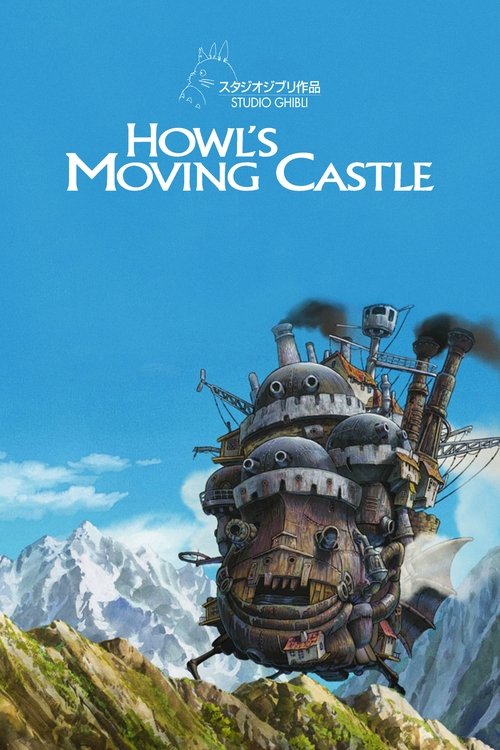
Howl's Moving Castle
ハウルの動く城
"The two lived there."
Overview
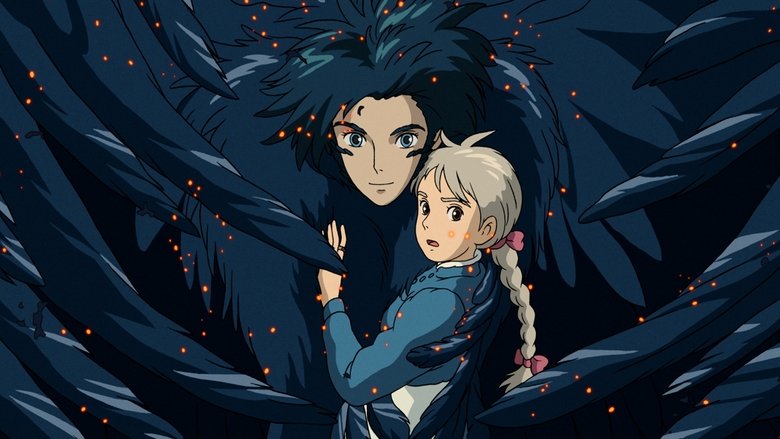
"Howl's Moving Castle" tells the story of Sophie, a quiet and unassuming young hat maker who leads a mundane life. Her world is turned upside down when she is cursed by the jealous Witch of the Waste and transformed into a 90-year-old woman. Ashamed of her appearance, Sophie flees her home and finds refuge in the strange, walking castle of the infamous and flamboyant wizard, Howl.
She takes on the role of a cleaning lady in the castle, which is powered by a sarcastic fire demon named Calcifer. The castle is a chaotic and magical place with doors that open to different locations. Sophie befriends Howl's young apprentice, Markl, and becomes entangled in Howl's life as he resists the king's demand for him to participate in a raging war. As Sophie navigates her new life, she discovers a world of magic, friendship, and love, all while trying to find a way to break her curse.
Core Meaning
At its heart, "Howl's Moving Castle" is a profound anti-war film that director Hayao Miyazaki created in response to his opposition to the 2003 invasion of Iraq. The film carries a strong pacifist message, portraying war as a destructive and senseless force that consumes humanity. Beyond its anti-war stance, the film explores the idea that life is worth living and encourages finding hope and courage in a world filled with unhappiness. It is a story about compassion, self-love, and the formation of a chosen family. The narrative also delves into the complexities of identity, suggesting that one's true self is not defined by external appearances but by inner strength and character.
Thematic DNA
The Destructive Nature of War
The film presents a powerful anti-war message, influenced by Hayao Miyazaki's opposition to the Iraq War. The war is depicted as a devastating force that brings about mass destruction and suffering, with scenes of cities in flames. The narrative emphasizes the futility of conflict and promotes a pacifist ideology. Howl's personal struggle against being used as a weapon of war highlights the theme of resisting violence and its dehumanizing effects.
Self-Acceptance and Inner Beauty
Sophie's transformation into an old woman serves as a catalyst for her journey of self-discovery and acceptance. Initially insecure, her new form paradoxically liberates her to speak her mind and act with more confidence. The film suggests that true beauty is not about physical appearance but about one's character and inner spirit. Sophie's changing appearance throughout the film often reflects her emotional state and growing self-assurance.
The Power of Love and Compassion
Love and compassion are portrayed as transformative forces in the film. Sophie's kindness towards others, including the Witch of the Waste who cursed her, demonstrates the power of empathy. The love that blossoms between Sophie and Howl helps them both to overcome their personal struggles and fears. The film emphasizes the importance of emotional connection and personal loyalty over conflict and hatred.
The Concept of a Found Family
The inhabitants of Howl's castle form an unconventional but loving family unit. Sophie, Howl, Markl, and Calcifer, later joined by the Witch of the Waste and Heen, create a supportive and caring environment for each other. This found family provides a sense of belonging and protection from the outside world's chaos and war, highlighting the idea that family is not solely defined by blood relations.
Character Analysis
Sophie Hatter
Chieko Baisho
Motivation
Initially, Sophie's motivation is to find a way to break the curse placed upon her. However, as she becomes part of the castle's found family, her motivation shifts to protecting her new friends and helping Howl confront his past and his role in the war.
Character Arc
Sophie begins as a shy and self-doubting young woman who feels trapped by her circumstances. After being cursed into an old woman, she embarks on a journey that forces her to become more assertive and courageous. Her experiences in Howl's castle and her growing love for Howl help her to discover her inner strength and self-worth. By the end of the film, she is a confident and compassionate individual who has found her place in the world.
Howl
Takuya Kimura
Motivation
Howl's primary motivation at the beginning of the film is to maintain his freedom and avoid being drawn into the war. He is also driven by a deep-seated fear stemming from the pact he made as a child. As the story progresses, his motivation becomes the protection of Sophie and his found family.
Character Arc
Howl is initially portrayed as a vain, reclusive, and cowardly wizard who avoids responsibility and conflict. He uses his magic to maintain his freedom and beauty. Through his relationship with Sophie, he learns to confront his fears and to fight for something he believes in. His arc is about moving from a self-centered existence to one of love, courage, and sacrifice.
Calcifer
Tatsuya Gashûin
Motivation
Calcifer's main motivation is to be freed from his contract with Howl. This desire for freedom drives his initial interactions with Sophie. However, he also has a vested interest in keeping Howl alive, as their lives are magically linked.
Character Arc
Calcifer starts as a grumpy and sarcastic fire demon bound to Howl's hearth. He is initially self-serving, making a deal with Sophie to break their respective curses. Over time, he develops a genuine affection for the inhabitants of the castle, especially Sophie. His journey is one of learning to care for others and finding a sense of belonging within the family.
Witch of the Waste
Akihiro Miwa
Motivation
Her initial motivation is her obsessive and unrequited love for Howl, which manifests as jealousy and a desire to possess his heart. After losing her magic, her motivations become simpler, centered around her immediate comforts and her attachment to Howl's heart.
Character Arc
The Witch of the Waste is introduced as a powerful and vengeful villain who curses Sophie out of jealousy. After being stripped of her powers by Madame Suliman, she reverts to a harmless and senile old woman. She is taken in by Sophie and becomes a part of the castle's household. Her arc is a journey from a menacing antagonist to a pitiable and ultimately redeemed figure.
Symbols & Motifs
Howl's Moving Castle
The castle symbolizes Howl's emotional state and his unwillingness to commit. Its chaotic and constantly changing exterior reflects his inner turmoil and desire to run from responsibility. As Sophie brings order and warmth to the castle's interior, it represents her grounding influence on Howl. The castle's ability to move also signifies a desire for freedom and escape.
The castle is a central element of the film, serving as the primary setting and a character in its own right. Its appearance evolves throughout the story, mirroring the development of the characters within it. The magical door with its various destinations represents Howl's different identities and his attempts to evade his obligations.
Howl's Heart (Calcifer)
Howl's heart, which he gave to the fire demon Calcifer, symbolizes his lost innocence and emotional vulnerability. Living without a heart has made Howl powerful but also emotionally detached and afraid of commitment. Calcifer, as the keeper of the heart, represents both Howl's life force and his emotional core.
The pact between Howl and Calcifer is a key plot point. Calcifer powers the castle with Howl's heart. Sophie's quest to break her own curse becomes intertwined with her promise to help Calcifer, leading her to uncover the truth about Howl's past. The return of Howl's heart at the end of the film signifies his emotional healing and ability to truly love.
Sophie's Changing Age
Sophie's physical age fluctuates throughout the film, often reflecting her emotional state and level of self-confidence. When she is assertive, passionate, or asleep, she often reverts to her younger self. This symbolizes that her curse is not merely a physical transformation but is also tied to her perception of herself. Her journey is about embracing her true self, regardless of her outward appearance.
Initially cursed into a 90-year-old woman, Sophie's appearance changes at various points in the narrative. These moments of de-aging often occur during emotionally significant scenes, highlighting her internal development. Even after the curse is broken, her silver hair remains as a symbol of the wisdom and experience she has gained.
The Scarecrow (Turnip Head)
Turnip Head symbolizes unwavering loyalty and kindness. Despite his comical appearance, he is a constant and helpful presence for Sophie, guiding her to the castle and always being there to support her. His transformation back into Prince Justin at the end reinforces the theme of looking beyond appearances to see the true character within.
Sophie first encounters the scarecrow in the wastelands and affectionately names him "Turnip Head." He follows her throughout her journey, offering assistance whenever he can. His true identity as the missing prince, whose disappearance sparked the war, is a significant revelation in the film's climax.
Memorable Quotes
A heart's a heavy burden.
— Sophie Hatter
Context:
Spoken by Sophie towards the end of the film after she returns Howl's heart to his chest. Howl awakens and complains about a heavy feeling, to which Sophie responds with this profound statement.
Meaning:
This metaphorical line signifies the weight of emotions and responsibilities that come with having a heart and truly caring for others. It reflects Howl's journey of regaining his heart and learning to embrace the emotional weight he has been avoiding.
They say that the best blaze burns brightest when circumstances are at their worst.
— Sophie Hatter
Context:
Sophie says this to Calcifer as she encourages him to burn brighter to power the castle through a difficult situation. It is a moment that showcases Sophie's growing confidence and her ability to inspire others.
Meaning:
This quote encapsulates the theme of finding strength and hope in times of adversity. It serves as an encouragement to Calcifer and is a metaphor for the resilience of the characters in the face of their struggles.
I've had enough of running away, Sophie. Now I've got something I want to protect. It's you.
— Howl
Context:
Howl says this to Sophie before he goes to confront the dangers of the war. It is a declaration of his love for her and his commitment to protecting their shared home and future.
Meaning:
This line marks a significant turning point in Howl's character development. It signifies his decision to stop evading his responsibilities and to actively fight for the person he loves, demonstrating his newfound courage.
Here's another curse for you - may all your bacon burn.
— Calcifer
Context:
Calcifer exclaims this to Sophie after she forces him to cook breakfast. It's a lighthearted moment that establishes the dynamic between the two characters early in the film.
Meaning:
This humorous line perfectly captures Calcifer's sassy and dramatic personality. While seemingly a curse, it is delivered in a playful manner that highlights his begrudging affection for Sophie and his role as the comedic relief in the castle.
Philosophical Questions
What is the true nature of beauty and self-worth?
The film challenges conventional notions of beauty through Sophie's transformation. Her journey as an elderly woman forces her to look beyond her physical appearance and discover her inner strength and value. This raises questions about whether beauty is merely skin-deep and how self-worth is constructed and maintained in a society that often prioritizes youth and physical attractiveness.
Can one remain compassionate in the face of conflict and cruelty?
"Howl's Moving Castle" explores the theme of compassion through Sophie's actions. Despite being cursed by the Witch of the Waste, Sophie chooses to care for her after she becomes vulnerable. This prompts reflection on the capacity for empathy and forgiveness, even towards those who have wronged us, and whether it is possible to maintain one's humanity amidst the brutality of war and personal grievances.
What is the meaning of home and family?
The film presents a non-traditional family unit that finds a home in a constantly moving and chaotic castle. This challenges the conventional idea of a stable, rooted home and a family defined by blood ties. It raises questions about what truly constitutes a home and a family, suggesting that they are built on love, acceptance, and mutual support rather than physical location or biological connections.
Alternative Interpretations
One popular fan theory suggests that Sophie's curse is not just a magical affliction but a physical manifestation of her own self-perception. Her age fluctuates based on her confidence and emotional state, implying that she has some unconscious control over the curse. Another interpretation views the film through a nihilistic lens, where the characters are initially helpless individuals crushed by a world they cannot control, who then find meaning and agency by forming their own small, supportive community. Some analyses also propose that Sophie may possess latent magical abilities, as hinted at in the original novel, and that her actions, such as talking life into objects, are not mere coincidences. The ambiguous nature of Sophie's curse and the film's subtle storytelling have led to various discussions and theories among fans and critics.
Cultural Impact
"Howl's Moving Castle" was a major box office success in Japan and received critical acclaim worldwide, including an Academy Award nomination for Best Animated Feature. The film further solidified Hayao Miyazaki's reputation as a master storyteller and animator. Its anti-war message, born from Miyazaki's opposition to the Iraq War, resonated with audiences and critics, adding a layer of contemporary political commentary to the fantasy narrative. The movie also contributed to the growing international popularity of anime and Studio Ghibli's works. The film's unique blend of European-inspired aesthetics with Japanese storytelling sensibilities has been a subject of cultural analysis, showcasing Miyazaki's ability to create a universally appealing narrative from a Western source material while infusing it with his own distinct cultural and philosophical perspectives.
Audience Reception
Audiences have generally praised "Howl's Moving Castle" for its stunning animation, imaginative world-building, and endearing characters. The voice acting in both the original Japanese and the English dub has been widely acclaimed. Many viewers connect with the film's heartfelt story and its positive messages of love, self-acceptance, and peace. However, some critics and viewers have pointed out that the plot can be convoluted and the ending feels somewhat rushed. Despite some criticism of its narrative complexity, the film is often regarded as a timeless classic and one of Miyazaki's best works, leaving a lasting impression on its audience.
Interesting Facts
- The film was originally set to be directed by Mamoru Hosoda, but he left the project due to creative differences, leading Hayao Miyazaki to take over as director.
- Christian Bale, who voiced Howl in the English dub, was a huge fan of Miyazaki's previous film, "Spirited Away," and agreed to take on any role in "Howl's Moving Castle."
- The design of the city where Sophie lives was inspired by Colmar, France.
- In the original Japanese version, the same actress, Chieko Baisho, voices both young and old Sophie. In the English dub, two different actresses, Emily Mortimer and Jean Simmons, were cast for the roles.
- Hayao Miyazaki was so intrigued by the concept of a moving castle from the novel that he was determined to figure out how it would move, which was not explained in the book.
- The film's strong anti-war themes were a direct reflection of Miyazaki's opposition to the 2003 invasion of Iraq.
Easter Eggs
A small plaque with the Studio Ghibli logo can be seen on the side of a ship in 'From Up on Poppy Hill' and a clock in 'Whisper of the Heart' is engraved with 'Porco Rosso'. While not a direct Easter egg within 'Howl's Moving Castle', this demonstrates a tradition of inter-film references in Studio Ghibli's works.
These kinds of references serve as fun nods for dedicated fans of Studio Ghibli's filmography, creating a sense of a shared universe and acknowledging the studio's rich history of storytelling.
⚠️ Spoiler Analysis
Click to reveal detailed analysis with spoilers
Frequently Asked Questions
Explore More About This Movie
Dive deeper into specific aspects of the movie with our detailed analysis pages
Comments (0)
No comments yet. Be the first to share your thoughts!