I Am Not an Animal
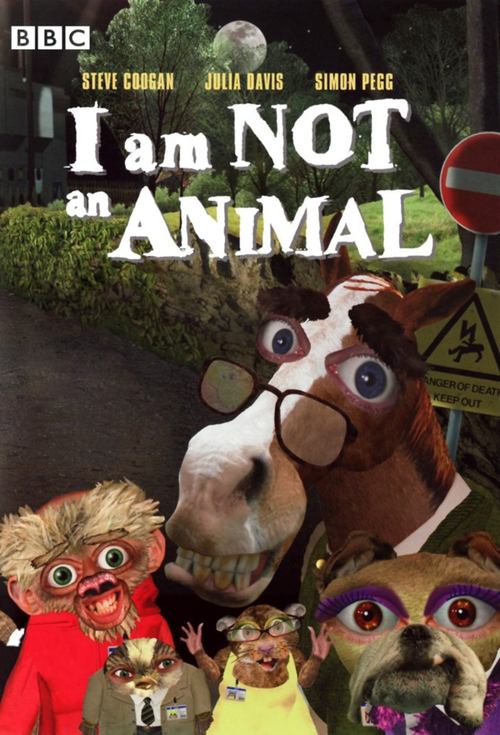
A darkly comedic satire where pampered, anthropomorphic naivety collides with the harsh, bewildering reality of the human world, framed by a unique photo-collage animation style.
I Am Not an Animal
I Am Not an Animal
10 May 2004 — 19 October 2004 1 season 6 episode Ended ⭐ 8.6 (785)
Cast: Steve Coogan, Julia Davis, Simon Pegg, Kevin Eldon, Amelia Bullmore
Animation Comedy
Nature vs. Nurture Satire of Class and Intellectualism The Ambiguity of Freedom Critique of Media and Celebrity Culture

I Am Not an Animal - Ending Explained

⚠️ Spoiler Analysis

I Am Not an Animal follows a complete and self-contained arc across its six episodes. The central plot twist is the animals' slow and painful realization that their entire existence was a lie. They were not a naturally evolved superior species, but subjects in 'Project S', an experiment at a vivisection laboratory named Vivi-Sec UK.

A major plot turn involves Kieron, the cat voiced by Simon Pegg. Left for dead in the lab, his severed head is kept alive and then grotesquely grafted onto the body of a gorilla, turning him into a relentless, tragicomic assassin sent to eliminate the other animals. This transforms the narrative from a simple survival story into a bizarre chase thriller.

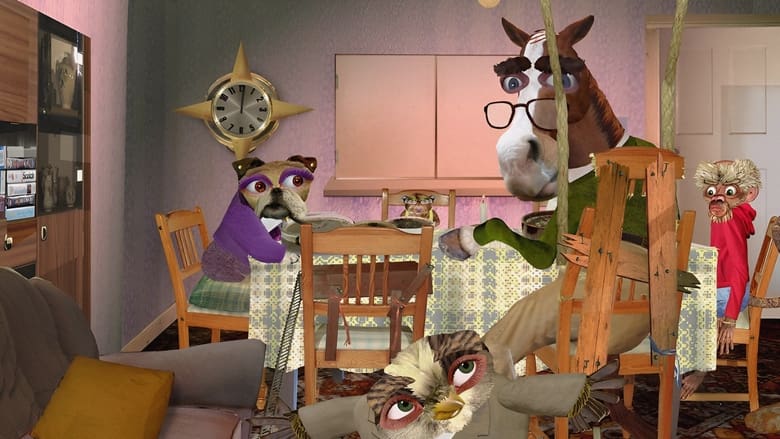
The series finale delivers the most significant spoiler and the story's poignant emotional climax. After enduring the harsh realities of the outside world, the animals decide their only option is to return to the lab, the only home they've known. In a devastating turn, they successfully break back in only to discover that 'Project S' has moved on. They find their replacements: a new group of talking animals who are more successful versions of themselves. The new horse is a published author, and the new pit bull has a litter of puppies, fulfilling Winona's deepest desire. This discovery is the ultimate rejection. Realizing they have no place in the lab and no place in the world, they abandon their struggle and return to the quiet, empty house of an elderly woman they had previously occupied, resigning themselves to a life of obscurity and irrelevance. The final shot implies a quiet, melancholic end to their journey, trapped not by fences, but by their own obsolescence.

Alternative Interpretations

One interpretation of the series views it as an allegory for the British class system. The animals represent a cloistered, clueless upper class, whose refined education and sensibilities are utterly useless outside of their privileged bubble. Their liberation into the 'real world' is a confrontation with the working class and the harsh realities of life, for which their upbringing has left them totally unprepared. Their eventual retreat into quiet domesticity can be seen as the upper class becoming obsolete, unable to adapt to a changing world and ultimately finding themselves with no real purpose or place.

Another reading focuses on the psychological trauma of displacement. The animals can be seen as refugees or exiles, violently uprooted from the only home they've ever known. Their bizarre 'Planet of the Apes' theory is not just a joke but a coping mechanism—a way to make sense of a terrifying and incomprehensible new world. The finale, where they discover their 'replacements', speaks to the trauma of being rendered irrelevant and the painful realization that the home you long for no longer exists for you.