君の膵臓をたべたい
"This is a story about an unforgettable spring..."
I Want to Eat Your Pancreas - Symbolism & Philosophy
Symbols & Motifs
The Title: "I Want to Eat Your Pancreas"
The striking title carries multiple layers of meaning. On one level, it refers to an ancient belief that eating the organ of an animal could cure the same afflicted organ in oneself. On a deeper, more emotional level, it's connected to the idea that consuming a part of a loved one allows their soul to live on inside you. Within the film, the phrase evolves into a profound and intimate expression of love and admiration, signifying a desire to have the other person's soul become a part of one's own, accepting everything about them, including their illness.
Sakura first explains the title's origins to the protagonist early in their friendship. It later becomes their unique way of expressing their deep connection. The most poignant use is when Haruki texts the phrase to Sakura, intending it as the highest form of compliment and affection, just before she is tragically killed. She leaves the same message for him in her diary, solidifying it as the ultimate symbol of their bond.
Cherry Blossoms (Sakura)
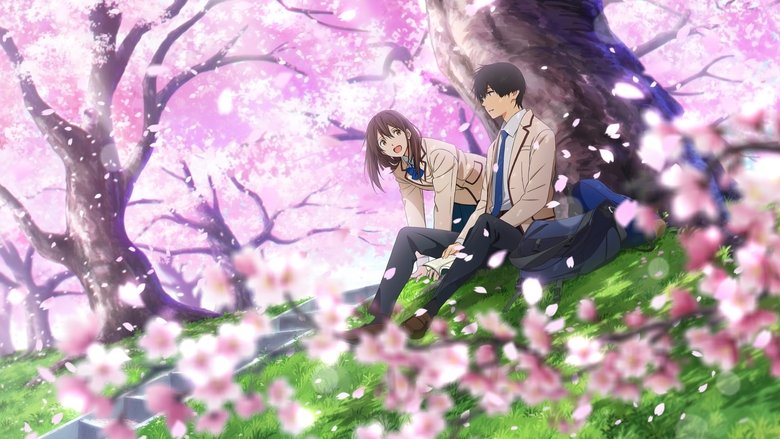
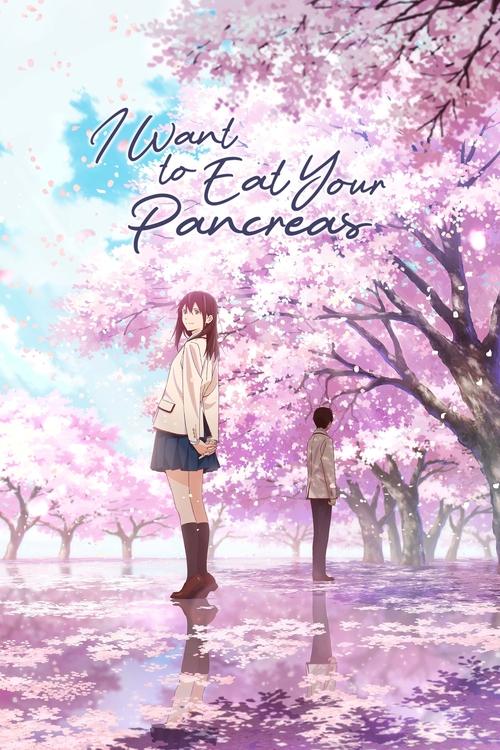
Sakura's name itself means "cherry blossom," a powerful symbol in Japanese culture representing the beautiful, transient nature of life. Cherry blossoms are known for their stunning but brief blooming period, a direct metaphor for Sakura's own vibrant but short life. They symbolize her philosophy of living brilliantly and fully in the moment, acknowledging that life's beauty is intertwined with its impermanence.
Cherry blossoms are a recurring visual motif throughout the film, often appearing in scenes with Sakura or during moments of reflection about her. The film's color palette is dominated by the pastel pinks associated with the blossoms, visually linking Sakura's presence to this theme of ephemeral beauty. Haruki's name, meaning "spring trees," further connects him to Sakura, suggesting that she was the blossom that bloomed from his once-barren branches.
The Diary ("Living with Dying")
The diary, which Sakura titles "Living with Dying," represents the bridge between her inner world and the outer world, and the catalyst for her relationship with Haruki. It symbolizes her secret, her fears, and her conscious choice to engage with life despite her impending death. It is not a journal of dying, but of living *with* dying, highlighting her active choice to embrace life.
The film's entire plot is set in motion when Haruki finds the diary in a hospital waiting room. It becomes the primary means of communication and understanding between him and Sakura. After her death, the diary is bequeathed to Haruki, and it contains her final messages to him and her best friend, Kyoko, serving as a final tool for connection and healing even after she is gone.
The Little Prince
The film subtly references Antoine de Saint-Exupéry's "The Little Prince," which explores themes of love, loss, and the importance of seeing with the heart. Sakura can be seen as the rose that the protagonist must learn to care for, who teaches him about connection and responsibility. The reference adds a layer of literary depth, suggesting that the most important things in life are invisible to the eye.
The connection is most evident in Sakura's character and her relationship with the withdrawn protagonist. Like the Little Prince learning to love his rose, Haruki learns to value his unique connection with Sakura. Critics have noted the story is loosely based on or shares strong thematic similarities with "The Little Prince."
Philosophical Questions
What does it truly mean to be alive?
The film explores this question through the contrast between its two protagonists. Haruki is physically healthy but emotionally detached and isolated, arguably not truly 'living.' Sakura, despite her terminal illness, engages with the world passionately and forms deep connections. The film concludes that being alive is not merely about biological existence, but about forming bonds with others. It is through relationships that we recognize our own existence and find meaning.
Is life determined by fate or by our own choices?
"I Want to Eat Your Pancreas" champions the idea that our lives are the product of our choices. Sakura explicitly rejects the notion that her meeting with Haruki was a coincidence, instead framing it as the culmination of every choice they had both made. This perspective empowers the individual, suggesting that we are active participants in creating our own realities and relationships, rather than passive subjects of fate.
How should one confront the inevitability of death?
The film presents a perspective on mortality that emphasizes life rather than death. Sakura's approach is not to dwell on her limited time but to fill it with as much life as possible. She rejects the traditional 'sick role' and chooses joy. The story's shocking twist further argues that death's unpredictability is precisely why one must live fully in the present, as no one is guaranteed a tomorrow. It suggests that the proper response to mortality is not fear, but a courageous embrace of the now.
Core Meaning
The central message of "I Want to Eat Your Pancreas" is a profound celebration of life and the significance of human connection in the face of mortality. The film posits that to live is to form bonds with others; our relationships and shared experiences are what give life meaning and define who we are. It challenges the audience to appreciate the present moment and find joy in everyday interactions, suggesting that life's value is not determined by its length but by the depth of its connections. The narrative ultimately argues that death is an indiscriminate and often random event, reinforcing the urgency of living authentically and cherishing the people who come into our lives, as they are the ones who shape our existence.