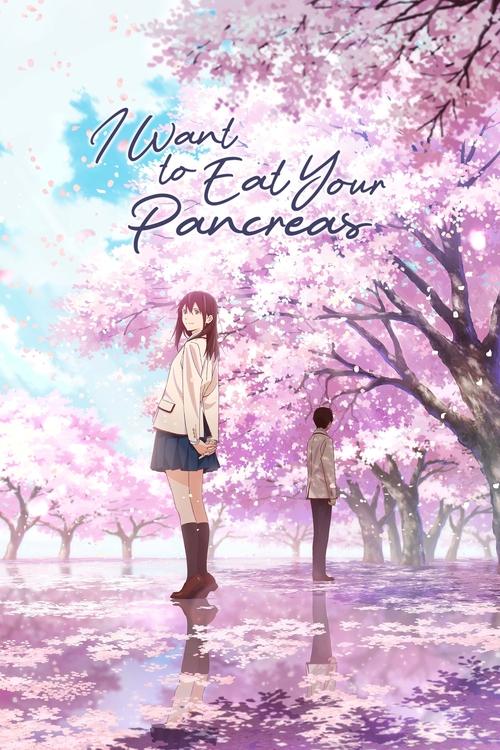
I Want to Eat Your Pancreas
A poignant, bittersweet animated drama that delicately explores the fragility of life and the profound impact of human connection through a heart-wrenching visual metaphor of ephemeral cherry blossoms.
I Want to Eat Your Pancreas

I Want to Eat Your Pancreas

君の膵臓をたべたい

"This is a story about an unforgettable spring..."

01 September 2018 Japan 108 min ⭐ 8.2 (1,673)
Director: Shinichiro Ushijima
Cast: Mahiro Takasugi, Lynn, Yukiyo Fujii, Yuma Uchida, Jun Fukushima
Drama Animation Romance
The Value and Meaning of Life Connection and Friendship Mortality and the Acceptance of Death Fate vs. Choice
Box Office: $33,748,006

Overview

"I Want to Eat Your Pancreas" tells the story of a reserved, unnamed high school boy who prefers the company of books to people. His solitary world is turned upside down when he stumbles upon a diary titled "Living with Dying" and discovers it belongs to his popular and vivacious classmate, Sakura Yamauchi. The diary reveals a secret she has told no one else at school: she is suffering from a terminal pancreatic illness and has only a limited time left to live.

Drawn to his unfazed reaction, Sakura decides to spend her remaining days with him, pulling him into her whirlwind of bucket-list adventures and challenging his isolated perspective on life. As their unlikely friendship blossoms, they navigate the complexities of life, death, and what it truly means to connect with another person. The film explores their deepening bond, built on a shared secret and a mutual desire to understand the meaning of existence, all while grappling with the impending reality of Sakura's mortality.

Core Meaning

The central message of "I Want to Eat Your Pancreas" is a profound celebration of life and the significance of human connection in the face of mortality. The film posits that to live is to form bonds with others; our relationships and shared experiences are what give life meaning and define who we are. It challenges the audience to appreciate the present moment and find joy in everyday interactions, suggesting that life's value is not determined by its length but by the depth of its connections. The narrative ultimately argues that death is an indiscriminate and often random event, reinforcing the urgency of living authentically and cherishing the people who come into our lives, as they are the ones who shape our existence.

Thematic DNA

The Value and Meaning of Life 35%
Connection and Friendship 30%
Mortality and the Acceptance of Death 25%
Fate vs. Choice 10%

The Value and Meaning of Life

The film's foremost theme is the exploration of what it means to truly live. Sakura, despite her terminal diagnosis, embraces every day with infectious enthusiasm, determined to live her life to the fullest rather than being defined by her illness. Through her actions and philosophy, she teaches the protagonist—and the audience—that the worth of a day isn't changed by what one does or doesn't do. The film suggests that living is about forming connections, acknowledging others, and allowing those relationships to shape one's identity.

Connection and Friendship

The narrative is driven by the unlikely and transformative friendship between the introverted protagonist and the extroverted Sakura. Initially a relationship of convenience and shared secrecy, it evolves into a deep, meaningful bond that changes both of their perspectives. The film posits that our existence is validated and defined through our interactions with others. Sakura helps the protagonist, Haruki, understand that being alone prevents one from recognizing their own existence, and their connection becomes the catalyst for his emotional growth.

Mortality and the Acceptance of Death

The film confronts the theme of mortality head-on through Sakura's illness. However, it subverts expectations by focusing not on the sorrow of dying, but on the beauty of living with the knowledge of one's limited time. Sakura's cheerful demeanor is a coping mechanism, but she also has moments of profound fear and vulnerability. The story's shocking twist—Sakura's death from a random act of violence rather than her illness—powerfully underscores the theme that death is unpredictable and can come for anyone at any time, reinforcing her message to live life without regrets.

Fate vs. Choice

A recurring philosophical question in the film is whether life is governed by fate or the culmination of individual choices. Sakura articulates the belief that all relationships and circumstances are the results of the choices people have made. She argues that she and Haruki didn't meet by chance, but because they both made a series of decisions that led them to that specific moment in the hospital. This theme empowers the characters, suggesting that they are the architects of their own connections and, therefore, their own meaning in life.

Character Analysis

Haruki Shiga ("Me")

Mahiro Takasugi

Archetype: The Loner / The Everyman
Key Trait: Introverted

Motivation

Initially, his motivation is simply to fulfill his promise to Sakura to keep her secret. This passive motivation evolves as he spends more time with her. He becomes motivated by a genuine desire to be with her and, eventually, to understand and embrace her philosophy of life. After her death, his motivation is to honor her memory by living fully and connecting with others.

Character Arc

Haruki begins the film as an unnamed, withdrawn and introverted high school student who believes he has no need for other people. His chance encounter with Sakura and her diary forces him out of his self-imposed isolation. Throughout their time together, Sakura's vibrant personality challenges his worldview, and he slowly learns the value of human connection, friendship, and vulnerability. By the end of the film, after grappling with profound grief, he is transformed. He learns to open up, forms a friendship with Sakura's best friend Kyoko, and chooses to live a life engaged with the world, fully embracing the lessons Sakura taught him. His name, revealed late in the film, means "spring trees," symbolizing his potential for growth, which Sakura helped realize.

Sakura Yamauchi

Lynn

Archetype: Manic Pixie Dream Girl / The Catalyst
Key Trait: Vivacious

Motivation

Her primary motivation is to live a normal life and experience as much as she can in the time she has left. She is driven by a desire to form a genuine connection with someone who knows her secret but doesn't treat her differently because of it. She wants to ensure her life has meaning, which she finds through her relationships.

Character Arc

Sakura is presented as a cheerful, popular, and endlessly energetic girl. However, her outward personality is a conscious choice to live fully despite her terminal illness, which she keeps secret from her friends. Her arc is not one of drastic change, but of finding a unique and honest connection with Haruki, who allows her to be herself without the pity or special treatment she would receive from others. He becomes the sole keeper of her secret, and in their friendship, she finds a unique solace. While she is the one teaching Haruki to live, he, in turn, gives her a sense of normalcy and a companion with whom she can be vulnerable. Her final diary entries reveal the profound impact Haruki had on her, showing that their relationship was mutually transformative.

Kyoko Takimoto

Yukiyo Fujii

Archetype: The Best Friend / The Skeptic
Key Trait: Protective

Motivation

Her motivation is her deep love and protectiveness for Sakura. She wants to ensure her best friend is happy and safe, which fuels her initial suspicion of Haruki. After learning the truth, her motivation shifts to understanding and honoring Sakura's memory.

Character Arc

Kyoko is Sakura's best friend, fiercely protective and initially hostile towards Haruki, whom she sees as an unworthy and strange companion for Sakura. Unaware of Sakura's illness, she misinterprets Haruki's closeness to her as him taking advantage of her. Her arc is one of grief, denial, and eventual acceptance. After Sakura's death, Haruki shares the diary with her, revealing the truth. This painful revelation allows her to truly understand Sakura's final months and Haruki's role in them. Overcoming her anger, she forms a friendship with Haruki, and they bond over their shared love for Sakura, visiting her grave together a year later.

Symbols & Motifs

The Title: "I Want to Eat Your Pancreas"

Meaning:

The striking title carries multiple layers of meaning. On one level, it refers to an ancient belief that eating the organ of an animal could cure the same afflicted organ in oneself. On a deeper, more emotional level, it's connected to the idea that consuming a part of a loved one allows their soul to live on inside you. Within the film, the phrase evolves into a profound and intimate expression of love and admiration, signifying a desire to have the other person's soul become a part of one's own, accepting everything about them, including their illness.

Context:

Sakura first explains the title's origins to the protagonist early in their friendship. It later becomes their unique way of expressing their deep connection. The most poignant use is when Haruki texts the phrase to Sakura, intending it as the highest form of compliment and affection, just before she is tragically killed. She leaves the same message for him in her diary, solidifying it as the ultimate symbol of their bond.

Cherry Blossoms (Sakura)

Meaning:

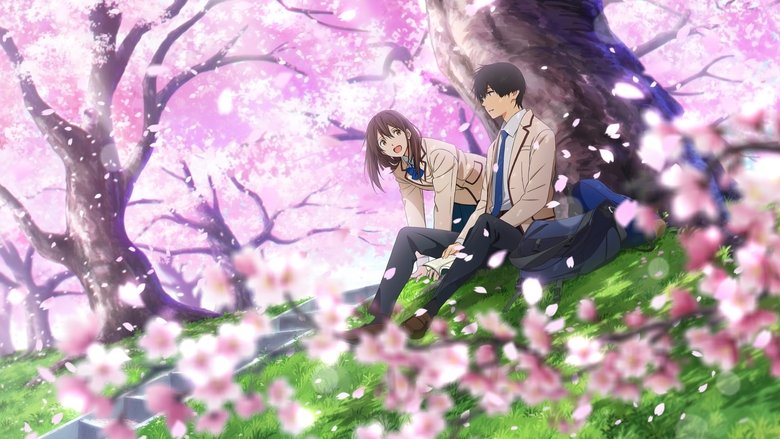
Sakura's name itself means "cherry blossom," a powerful symbol in Japanese culture representing the beautiful, transient nature of life. Cherry blossoms are known for their stunning but brief blooming period, a direct metaphor for Sakura's own vibrant but short life. They symbolize her philosophy of living brilliantly and fully in the moment, acknowledging that life's beauty is intertwined with its impermanence.

Context:

Cherry blossoms are a recurring visual motif throughout the film, often appearing in scenes with Sakura or during moments of reflection about her. The film's color palette is dominated by the pastel pinks associated with the blossoms, visually linking Sakura's presence to this theme of ephemeral beauty. Haruki's name, meaning "spring trees," further connects him to Sakura, suggesting that she was the blossom that bloomed from his once-barren branches.

The Diary ("Living with Dying")

Meaning:

The diary, which Sakura titles "Living with Dying," represents the bridge between her inner world and the outer world, and the catalyst for her relationship with Haruki. It symbolizes her secret, her fears, and her conscious choice to engage with life despite her impending death. It is not a journal of dying, but of living *with* dying, highlighting her active choice to embrace life.

Context:

The film's entire plot is set in motion when Haruki finds the diary in a hospital waiting room. It becomes the primary means of communication and understanding between him and Sakura. After her death, the diary is bequeathed to Haruki, and it contains her final messages to him and her best friend, Kyoko, serving as a final tool for connection and healing even after she is gone.

The Little Prince

Meaning:

The film subtly references Antoine de Saint-Exupéry's "The Little Prince," which explores themes of love, loss, and the importance of seeing with the heart. Sakura can be seen as the rose that the protagonist must learn to care for, who teaches him about connection and responsibility. The reference adds a layer of literary depth, suggesting that the most important things in life are invisible to the eye.

Context:

The connection is most evident in Sakura's character and her relationship with the withdrawn protagonist. Like the Little Prince learning to love his rose, Haruki learns to value his unique connection with Sakura. Critics have noted the story is loosely based on or shares strong thematic similarities with "The Little Prince."

Memorable Quotes

君の膵臓をたべたい (Kimi no suizō o tabetai)

— Haruki Shiga and Sakura Yamauchi

Context:

The phrase is first introduced by Sakura. It reaches its emotional peak when Haruki texts it to Sakura as his ultimate compliment, just before her death. Sakura also leaves the same message for him in her final diary entry, sealing its significance as the ultimate testament to their relationship.

Meaning:

This quote, the film's title, encapsulates the central theme of connection and love. It signifies a desire to keep a part of a loved one with you forever, allowing their soul to live on. It evolves from a quirky reference to a folk belief into the most profound expression of their unique bond, meaning "I love you" in their own special language.

生きるってのはね、きっと誰かと心を通わせること。そのことを指して、生きるって呼ぶんだよ。(Ikiru tte no wa ne, kitto dareka to kokoro o kayowaseru koto. Sono koto o sashite, ikiru tte yobu n da yo.)

— Sakura Yamauchi

Context:

Sakura shares this wisdom with Haruki as she explains her worldview to him. This conversation is a pivotal moment in his character development, planting the seed for his eventual transformation and his understanding of the importance of connecting with others.

Meaning:

Translated as "Living means having a bond with others. I think that's what it means to live," this quote is the philosophical core of the film. Sakura explains that our existence and identity are defined by our relationships—the people we love, dislike, enjoy, and avoid. It's a direct counter to Haruki's initial belief in self-sufficient isolation.

偶然じゃない。私達は、皆、自分で選んでここに来たの。(Gūzen janai. Watashitachi wa, minna, jibun de erande koko ni kita no.)

— Sakura Yamauchi

Context:

Sakura says this to Haruki during one of their trips together, likely the one to Fukuoka. It reframes their entire relationship, not as an accident, but as a destined outcome of their own actions, empowering both of them and deepening the significance of their bond.

Meaning:

This quote, meaning "It wasn't chance. Everyone is where they are because of the choices they've made," reflects the theme of choice over fate. Sakura insists that their meeting wasn't a random coincidence but the inevitable result of all the conscious and unconscious choices they had both made throughout their lives. It gives their relationship a sense of purpose and meaning.

本当は、死ぬのがものすごく怖いって言ったら…どうする? (Hontōwa, shinu no ga monosugoku kowai tte ittara... dō suru?)

— Sakura Yamauchi

Context:

During their trip to Fukuoka, while playing a game of truth or dare in their hotel room, Sakura poses this question to Haruki. It's an intimate and emotionally charged moment that deepens their bond and allows Haruki to see the true weight of her burden.

Meaning:

"If I told you that I'm actually really scared of dying, what would you do?" This quote reveals the vulnerability beneath Sakura's cheerful and brave exterior. It's a rare moment where she lets her guard down and admits her profound fear, making her character more relatable and human. It highlights the immense courage it takes for her to live so joyfully every day.

Philosophical Questions

What does it truly mean to be alive?

The film explores this question through the contrast between its two protagonists. Haruki is physically healthy but emotionally detached and isolated, arguably not truly 'living.' Sakura, despite her terminal illness, engages with the world passionately and forms deep connections. The film concludes that being alive is not merely about biological existence, but about forming bonds with others. It is through relationships that we recognize our own existence and find meaning.

Is life determined by fate or by our own choices?

"I Want to Eat Your Pancreas" champions the idea that our lives are the product of our choices. Sakura explicitly rejects the notion that her meeting with Haruki was a coincidence, instead framing it as the culmination of every choice they had both made. This perspective empowers the individual, suggesting that we are active participants in creating our own realities and relationships, rather than passive subjects of fate.

How should one confront the inevitability of death?

The film presents a perspective on mortality that emphasizes life rather than death. Sakura's approach is not to dwell on her limited time but to fill it with as much life as possible. She rejects the traditional 'sick role' and chooses joy. The story's shocking twist further argues that death's unpredictability is precisely why one must live fully in the present, as no one is guaranteed a tomorrow. It suggests that the proper response to mortality is not fear, but a courageous embrace of the now.

Alternative Interpretations

While the central interpretation of the film is a story about celebrating life through connection, some viewers and critics have offered alternative readings. One perspective is that the film is a critique of the "Manic Pixie Dream Girl" trope. Sakura's character, who exists primarily to pull the brooding male protagonist out of his shell, could be seen as fitting this stereotype. However, this is often countered by the argument that the story is told from Haruki's perspective, and her character is given depth through her own fears and motivations revealed in her diary, suggesting a mutually transformative relationship rather than a one-sided one.

Another point of discussion is the controversial ending. Sakura's sudden, random murder, rather than her succumbing to her illness, has been interpreted in different ways. The intended interpretation is that it reinforces the theme that death is arbitrary and unpredictable for everyone, not just the terminally ill. However, some critics argue this twist feels like a cheap emotional shock that trivializes her struggle with her illness and undermines the central premise of her "living with dying." This alternative view suggests the ending detracted from the narrative's emotional core by shifting the focus away from the intimate journey of her illness to a random, external act of violence.

Cultural Impact

Upon its release, "I Want to Eat Your Pancreas" was met with positive reviews from critics and audiences, both in Japan and internationally, who praised its heartfelt story, emotional depth, and poignant message about life. The film was often compared to other popular tearjerkers like "Your Lie in April" and "A Silent Voice," as well as Western films like "The Fault in Our Stars," for its handling of themes of youth, illness, and romance. The shockingly unconventional title drew significant attention, initially causing confusion but ultimately becoming a memorable and meaningful part of the film's identity.

The film, along with the novel and live-action adaptation, contributed to a wave of 'sekai-kei' (world-type) stories in Japanese pop culture that focus on a relationship's impact on a character's personal world, often against a backdrop of life-or-death stakes. It resonated deeply with audiences for its realistic portrayal of teenage social dynamics and its profound, philosophical take on living and dying. The story's success across multiple media formats solidified its place as a significant coming-of-age story in modern Japanese fiction. The movie received nominations at several international film festivals, including the Sitges Film Festival, and won the Audience Award at the Scotland Loves Anime festival.

Audience Reception

Audiences generally responded very positively to "I Want to Eat Your Pancreas," often describing it as a beautiful, touching, and emotionally powerful film. Many praised the compelling and heartfelt story, the development of the relationship between the two main characters, and the film's poignant message about life and friendship. It is widely regarded as a "certified tear-jerker," successfully moving viewers to tears with its emotional weight and heartbreaking conclusion. The animation by Studio VOLN was also frequently complimented for its beautiful backgrounds and use of a vibrant, pastel color palette, particularly the stunning fireworks scene.

The main point of criticism for some viewers was that the film could be heavy-handed and melodramatic in its delivery. Some found the dialogue too on-the-nose, which made certain emotional moments feel forced. The most controversial aspect was the plot twist surrounding Sakura's death. While many found it to be a shocking and effective reinforcement of the film's themes, a portion of the audience felt it was an unnecessary and frustrating deviation that undermined the emotional core of her battle with her illness.

Interesting Facts

  • The film is based on the web novel of the same name by Yoru Sumino, which was first serialized in 2014 on a user-generated novel submission site.
  • Before the anime film was released in 2018, the story was also adapted into a manga series and a successful live-action film in 2017.
  • The animation was produced by Studio VOLN, a relatively new studio at the time, for whom this was one of their first major film projects.
  • First-time feature film director Shinichiro Ushijima also wrote the screenplay for the movie.
  • The author of the original novel, Yoru Sumino, reportedly gave the anime adaptation a "mixed review," stating that it had "good parts, but honestly there are also unsatisfying parts."
  • The rock band Sumika provided the opening theme, ending theme, and an insert song for the film.

⚠️ Spoiler Analysis

Click to reveal detailed analysis with spoilers

Frequently Asked Questions

Explore More About This Movie

Dive deeper into specific aspects of the movie with our detailed analysis pages

Comments (0)

Leave a comment

No comments yet. Be the first to share your thoughts!