The core message of "Ikiru" is a powerful meditation on the meaning of life and the inevitability of death. Kurosawa suggests that a truly fulfilled life is not measured by longevity or material possessions, but by purposeful action and selfless contribution to the well-being of others. The film argues that confronting one's own mortality can be a catalyst for profound personal transformation, awakening an individual from a passive existence to a life of active engagement and meaning. Watanabe's final act of creating a park demonstrates that even one small, altruistic achievement can redeem a lifetime of monotony and provide a lasting, positive legacy.
A profound, existential drama where a man, facing the shadow of death, discovers the vibrant meaning of life in a single, selfless act.
Ikiru
生きる
"A big story of a little man which will grip your soul..."
09 October 1952
Japan
143 min
8.3
(1,241)
Director: Akira Kurosawa
Cast: Takashi Shimura, Haruo Tanaka, Nobuo Kaneko, Bokuzen Hidari, Miki Odagiri
Drama
The Search for Meaning
Mortality and the Human Condition
Critique of Bureaucracy
Family and Generational Disconnect
Box Office:
$55,240
Ikiru — Symbolism & Philosophy
Symbols & Motifs
The Swing in the Park
Meaning:
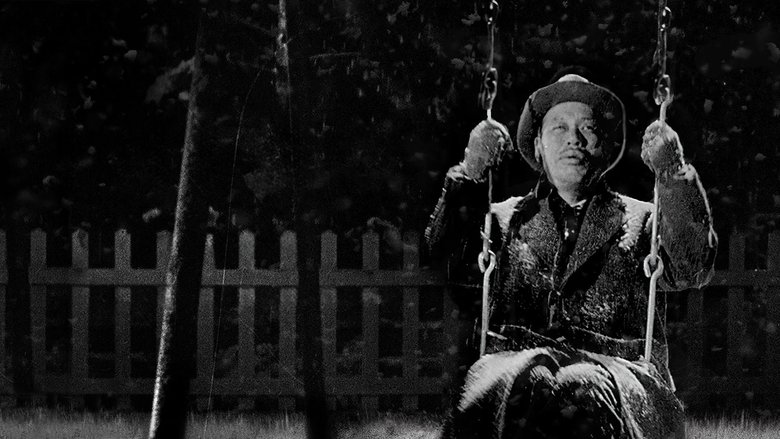
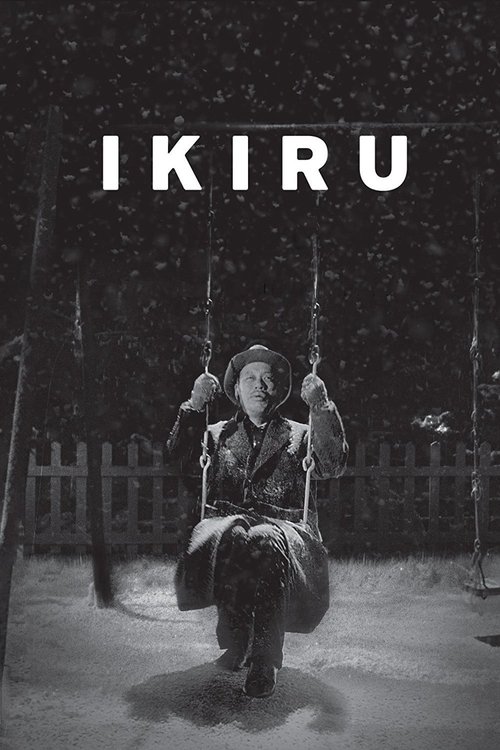
The swing symbolizes Watanabe's rebirth, his brief moment of pure joy, and the successful culmination of his life's purpose. It represents a return to a childlike innocence and a peaceful acceptance of his life and impending death. His gentle swaying while singing in the snow is an image of serene fulfillment.
Context:
The most iconic scene of the film shows Watanabe sitting on the swing in the park he helped build, in the middle of a snowy night, shortly before his death. He is singing "Gondola no Uta," a song about the brevity of life, but now with contentment instead of despair. The empty, swaying swings at the end of the film can be seen as an invitation for the audience to find their own purpose.
Watanabe's Hat
Meaning:
The hat serves as a symbol of Watanabe's transformation. His old, worn-out hat represents his former, lifeless self. After his diagnosis, he buys a new, more modern hat, symbolizing his attempt at a rebirth and his decision to live differently.
Context:
Watanabe's old hat is shown during his anxious moments at the doctor's office. He later loses it during his night of debauchery. The purchase of the new hat marks a turning point, a conscious decision to break from his past and embrace a new, albeit short, life.
The Cesspool / The Park
Meaning:
The stagnant, polluted cesspool represents Watanabe's own life—stale, meaningless, and a source of harm (like the mosquitoes sickening the children). Its transformation into a vibrant children's playground symbolizes his own redemption and the creation of a meaningful, life-affirming legacy out of his formerly wasted existence.
Context:
A group of mothers initially petitions Watanabe's office to have the cesspool cleaned up, but their request is lost in bureaucratic shuffling. After his awakening, Watanabe makes it his sole mission to overcome all obstacles and turn this wasteland into a place of joy and life, which he ultimately achieves.
Toyo's Mechanical Rabbits
Meaning:
The simple mechanical rabbits symbolize finding joy and purpose in small, creative acts. Toyo's happiness in making toys that will bring joy to children helps Watanabe realize that meaning can be found in making things for others, inspiring his own project.
Context:
When Watanabe presses his young friend Toyo for her secret to being so alive, she tells him about her new job in a factory making toy rabbits. She explains, "Making these, I feel like I'm playing with every baby in Japan." This simple statement is a moment of epiphany for Watanabe.
Philosophical Questions
What does it mean 'to live'?
The film's title translates to "To Live," and the entire narrative is an exploration of this question. It contrasts mere existence—Watanabe's 30 years of monotonous work—with a life of purpose. The film suggests that living is not about the passage of time but about conscious, meaningful action. It rejects hedonism as a path to fulfillment and instead posits that a true life is found in creation, altruism, and connecting with others, even if it's only for a short time.
Can one person make a difference against an inert system?
"Ikiru" explores the struggle of the individual against a faceless, inefficient bureaucracy. Watanabe, a single man with no power and limited time, manages to push through a project that multiple departments had ignored for years. His success affirms the power of individual will and perseverance. However, the ending, where his colleagues revert to their old ways, complicates this, suggesting that while one person can achieve a specific goal, changing the system itself is a far more difficult, perhaps impossible, task.
Is the awareness of death necessary to live authentically?
The film strongly argues that it is. Watanabe is spiritually dead for decades and is only 'reborn' when he learns of his impending death. This existential shock is the sole catalyst for his transformation. The film poses the question to the audience: must we wait for a terminal diagnosis to examine our own lives? It serves as a powerful piece of Memento mori, urging viewers to find purpose before it's too late.
Core Meaning
Explore More About This Movie
Dive deeper into specific aspects of the movie with our detailed analysis pages