
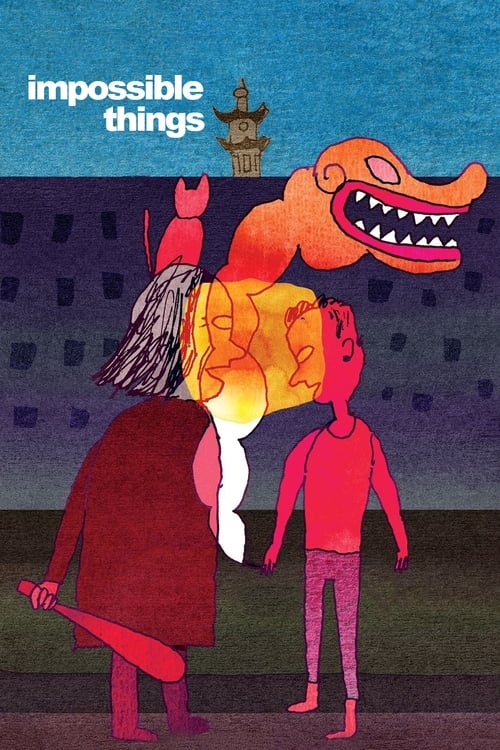
Cosas imposibles
"There are encounters that change your life"
Impossible Things - Symbolism & Philosophy
Symbols & Motifs
The Ghost of Porfirio
Porfirio's ghost is not a literal supernatural entity but a powerful symbol of Matilde's post-traumatic stress disorder (PTSD) and the enduring psychological chains of domestic abuse. He represents her fear, her internalized feelings of worthlessness, and the ingrained habits of a lifetime of subjugation. His presence is a constant, tangible manifestation of her memory and trauma.
He appears throughout the film within Matilde's apartment, verbally abusing her and criticizing her every move, just as he did in life. He is confined to the apartment, symbolizing that the trauma is tied to that space. Her final confrontation with him is her act of reclaiming her mind and her home.
The Apartment
Matilde's apartment symbolizes her prison. It is both a physical and psychological space of confinement. For years, it was the primary scene of her husband's abuse, and after his death, it becomes the place where his memory continues to trap her. Her journey into the outside world with Miguel is a crucial step towards breaking free from this confinement.
The film visually contrasts the often dark, cluttered, and oppressive atmosphere of the apartment with the more open, vibrant, and sometimes overwhelming spaces of the city that she begins to explore with Miguel. Her eventual ability to be at peace within the apartment signifies her ultimate liberation.
Marijuana
Marijuana serves as a symbolic catalyst for change and liberation. It represents a break from a lifetime of rigid control and fear. For Matilde, trying it for the first time is not merely about getting high; it is an act of rebellion against her husband's memory and the strict, joyless life he imposed on her. It opens a door to new experiences and helps her lower her inhibitions.
Miguel, who sells marijuana, introduces it to Matilde to help her sleep and forget her troubles. Sharing a joint becomes a ritual that solidifies their bond and allows for moments of genuine, carefree laughter and connection, something long absent from Matilde's life.
Philosophical Questions
To what extent does our past define our present reality?
The film explores this question through Matilde, whose present is almost entirely consumed by the memory of her abusive husband. Her every action is dictated by the fear and routine he instilled in her. The narrative investigates whether it is possible to break free from such a deeply ingrained past. Miguel's presence suggests that new relationships and experiences can create a new present reality, one that can eventually overwrite the traumas of the past.
What constitutes a meaningful friendship?
"Impossible Things" challenges conventional definitions of friendship. The bond between Matilde and Miguel is devoid of common ground in terms of age, life experience, or social circles. The film posits that true friendship is based on a deeper level of shared emotional vulnerability and mutual empathy. It explores the idea that the most meaningful connections are those that help us become better versions of ourselves, regardless of how they appear to the outside world.
Can a person truly reinvent themselves at any age?
Matilde's journey is a case study in late-life reinvention. After living nearly seventy years in a state of oppression, she begins to explore her own identity, desires, and capacity for joy. The film philosophically argues against the notion that identity is fixed by a certain age, suggesting instead that the human capacity for growth and change is lifelong, provided the right catalyst—in this case, friendship—appears.
Core Meaning
The core meaning of "Impossible Things" is a profound exploration of liberation and the healing power of human connection. Director Ernesto Contreras conveys that it is never too late to reclaim one's life from the grip of past trauma. The film posits that friendship can be found in the most unexpected places and that these relationships, free from societal judgment, can provide the strength needed to face deep-seated fears. It is a hopeful message that even after a lifetime of abuse and isolation, a person can find the courage to experience joy, independence, and self-worth—achieving things that once seemed impossible.