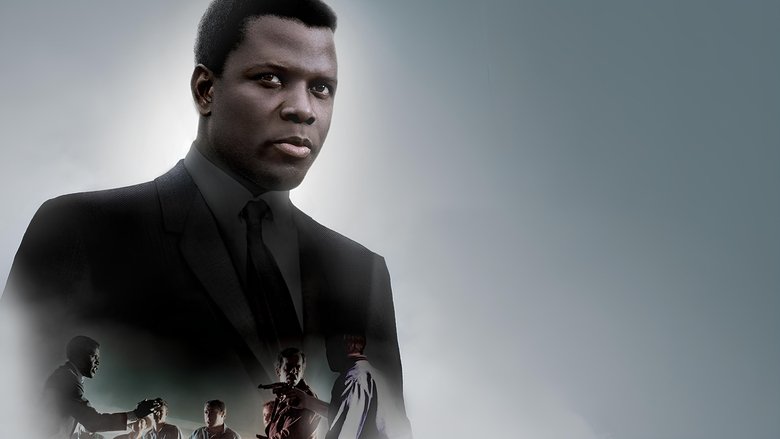
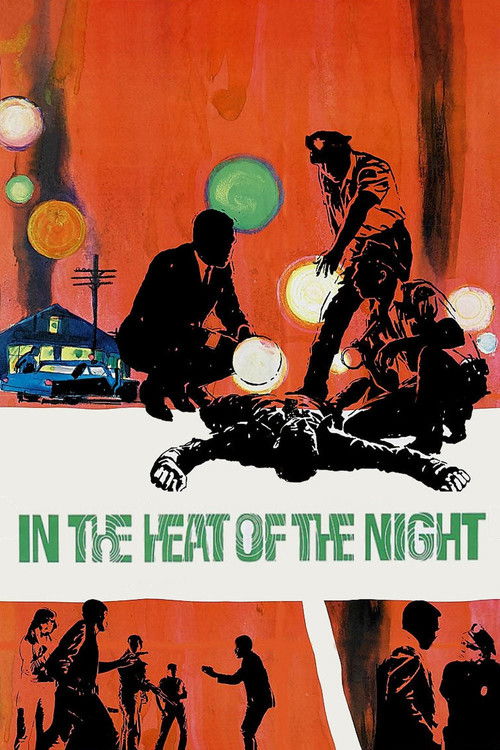
In the Heat of the Night
A searing, sweaty murder mystery set in the sweltering deep South. Boiling over with racial tension, it uses a literal and metaphorical heat wave to explore prejudice, yielding grudging respect across a fractured cultural divide.
In the Heat of the Night

"They got a murder on their hands. They don’t know what to do with it."

02 August 1967 United States of America 109 min ⭐ 7.7 (1,206)
Director: Norman Jewison
Cast: Sidney Poitier, Rod Steiger, Warren Oates, Peter Whitney, Lee Grant
Drama Crime Thriller Mystery
RacismandPrejudice Justice and the Law Dignity and Pride Unlikely Brotherhood
Budget: $2,000,000
Box Office: $27,379,978

In the Heat of the Night - Ending Explained

⚠️ Spoiler Analysis

The central mystery of In the Heat of the Night is filled with red herrings, designed to expose the prejudices of the local police. The victim, wealthy industrialist Philip Colbert, is found murdered in the street. Chief Gillespie initially suspects Virgil Tibbs simply for being Black and having money. After Tibbs is cleared, Gillespie hastily arrests Harvey Oberst, a local thief caught with Colbert's wallet. Tibbs clears Oberst by proving the killer was right-handed, whereas Oberst is left-handed.

Later, Gillespie arrests his own deputy, Sam Wood, because Sam had paid off a large mortgage in cash, and a young local woman, Delores Purdy, falsely accuses Sam of getting her pregnant. Tibbs, remaining objective, deduces that Sam is innocent and that Delores is actually covering for her real lover to get money for an illegal abortion.

The Final Twist: Tibbs tracks the abortion arrangement to a local underground clinic. Delores arrives, but is followed by the true killer: Ralph Henshaw, the unassuming, racist counterman at the local diner. Ralph confesses that he was Delores's secret lover and needed money to pay for her abortion. He hitchhiked with Colbert, attempted to rob him for the abortion funds, and ended up bludgeoning him to death. The brilliance of the ending lies in the fact that the murder had absolutely nothing to do with race, integration, or Colbert's new factory—it was a desperate crime of passion and greed committed by a minor character, subverting the audience's expectation of a grand, racially motivated conspiracy.

Alternative Interpretations

While widely celebrated as a triumph of liberal, anti-racist cinema, In the Heat of the Night has been subject to multiple, sometimes conflicting, interpretations by critics and scholars over the decades.

The Assimilationist Critique: Some scholars and critics, most notably James Baldwin, interpreted Virgil Tibbs not as a radical hero, but as a safe, sanitized fantasy designed to comfort white liberal audiences. In this reading, Tibbs is an impeccably dressed paragon of middle-class respectability who upholds the very law and order system that oppresses Black Americans. Baldwin likened the final amicable parting between Tibbs and Gillespie to a classic Hollywood fade-out kiss, arguing that it falsely implied systemic racism could be neatly resolved through individual interpersonal breakthroughs.

A Subversive Christian Allegory: Another fascinating interpretation posits the film as a subversive Christian allegory. Screenwriter Stirling Silliphant subtly framed Virgil Tibbs as a countercultural Christ-figure descending into the hell of the racist American South. Like Jesus, Tibbs is a misunderstood outsider bringing a message of truth, who is unjustly persecuted, nearly martyred by a local mob, and protected by a Pilate-like authority figure (Gillespie) before completing his mission and ascending via the train.

A Deconstruction of White Masculinity: Feminist and gender scholars have read the film as an exploration of threatened white masculinity. The white men of Sparta are highly insecure about their power, relying on the subjugation of others. Tibbs’s arrival—wielding superior intellect and demonstrating absolute competence—completely castrates the myth of white supremacy, forcing Gillespie to surrender to a superior masculine authority.