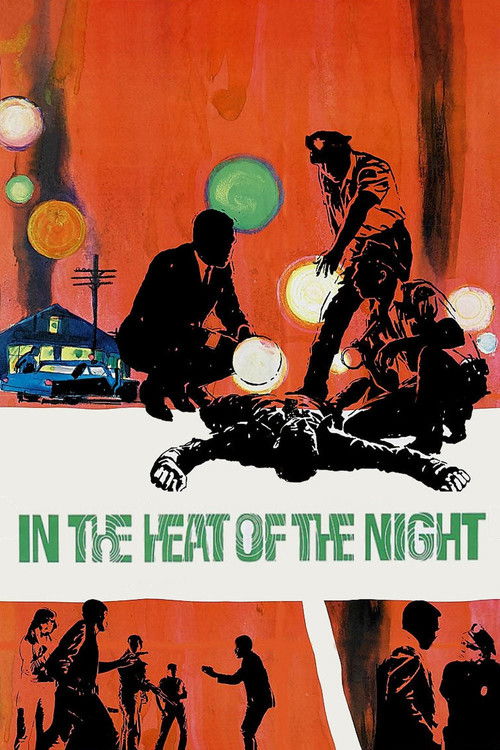
In the Heat of the Night
A searing, sweaty murder mystery set in the sweltering deep South. Boiling over with racial tension, it uses a literal and metaphorical heat wave to explore prejudice, yielding grudging respect across a fractured cultural divide.
In the Heat of the Night

In the Heat of the Night

"They got a murder on their hands. They don’t know what to do with it."

02 August 1967 United States of America 109 min ⭐ 7.7 (1,206)
Director: Norman Jewison
Cast: Sidney Poitier, Rod Steiger, Warren Oates, Peter Whitney, Lee Grant
Drama Crime Thriller Mystery
RacismandPrejudice Justice and the Law Dignity and Pride Unlikely Brotherhood
Budget: $2,000,000
Box Office: $27,379,978

Overview

In the sweltering, racially segregated town of Sparta, Mississippi, a wealthy Northern industrialist is found murdered in the dead of night. Local police chief Bill Gillespie, a prejudiced and stubborn man, immediately rounds up the most obvious suspect: a well-dressed Black stranger waiting at the local train station.

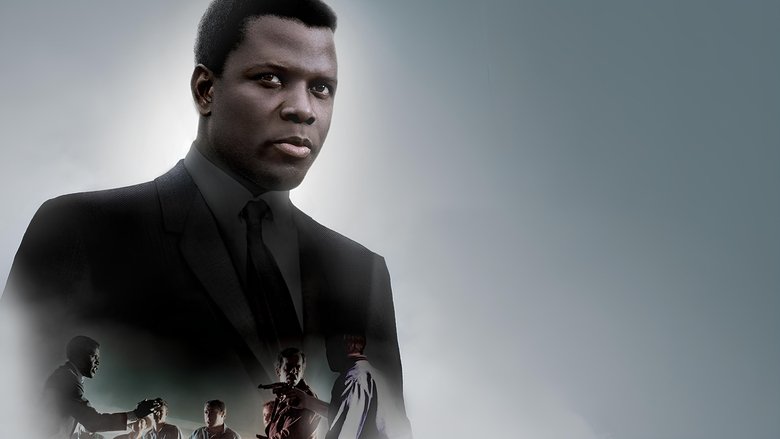
This stranger turns out to be Virgil Tibbs, a highly skilled homicide detective from Philadelphia. After his identity is confirmed, Tibbs is reluctantly enlisted by his own chief and the victim's widow to stay in Sparta and assist the local police in solving the crime.

As Tibbs and Gillespie are forced into an uneasy alliance, they must navigate a hostile town filled with bigoted locals and red herring suspects. Their investigation becomes less about the murder itself and more about the deeply ingrained prejudices they must overcome to find the truth, leading to a profound exploration of dignity, justice, and mutual respect.
Core Meaning

Director Norman Jewison, alongside screenwriter Stirling Silliphant, sought to dismantle the deep-rooted bigotry of the 1960s American South by forcing a confrontation between two vastly different men. The core message is that prejudice is a blinding force, not just socially, but practically. True justice and progress can only be achieved when individuals strip away their preconceived racial biases and recognize their shared humanity. The film serves as a powerful Civil Rights-era allegory, demonstrating that dignity and competence are not bound by race, and that even the most stubborn prejudices can be chipped away through forced cooperation and mutual understanding.

Thematic DNA

RacismandPrejudice 40%
Justice and the Law 25%
Dignity and Pride 20%
Unlikely Brotherhood 15%

RacismandPrejudice

RevealedthroughtheimmediatearrestofTibbssolelybasedonhisrace, theconstantslursusedbythetownspeople, andthestructuralinequalityofSparta[1.3]. The hostile environment forces Tibbs to navigate a landscape where his authority is constantly undermined by white supremacy.

Justice and the Law

Explored through the contrast between Tibbs's meticulous, scientific policing methods and Gillespie's hasty, bias-driven arrests of innocent people. Tibbs insists on objective facts over the town's rushed desire for a scapegoat.

Dignity and Pride

Embodied by Virgil Tibbs, who refuses to be demeaned. The iconic quote demanding respect and the historic slap scene highlight his unwavering demand for basic human dignity in a society determined to degrade him.

Unlikely Brotherhood

Seen in the evolving dynamic between Tibbs and Gillespie. They begin with mutual contempt but slowly develop a bond forged in shared professional pursuit and human vulnerability, ending in a state of grudging respect.

Character Analysis

VirgilTibbs

SidneyPoitier

Archetype: TheVirtuousOutsider/BrilliantDetective
Key Trait: Unwavering dignity and intellectual brilliance

Motivation

To solve the murder using undeniable facts, while simultaneously asserting his dignity and proving the incompetence of the racist local authorities.

Character Arc

Hearrivesasareluctantvictimofprejudice, almostfleesoutofself-preservation, butchoosestostaytoprovehissuperiorityandsecurejustice, ultimatelyleavingwiththerespectofhisgreatestdetractor[1.1].

Bill Gillespie

Rod Steiger

Archetype: The Prejudiced Authority Figure
Key Trait: Stubbornness masking deep loneliness

Motivation

To maintain order in his town and solve the high-profile murder quickly to appease the locals and the victim's wealthy widow.

Character Arc

Starts as an arrogant, deeply racist police chief. Through working with Tibbs, he is humbled by Tibbs's expertise, questions his own biases, and ends up defending Tibbs, carrying his suitcase in a gesture of respect.

Sam Wood

Warren Oates

Archetype: The Flawed Subordinate
Key Trait: Ignorance mixed with defensive pride

Motivation

To do his job as a night patrolman, though he is easily distracted and defensive about his personal life.

Character Arc

He discovers the body and exhibits standard local racism. He later becomes a prime suspect himself, experiencing what it feels like to be wrongly accused, before being cleared by Tibbs.

Eric Endicott

Larry Gates

Archetype: The Aristocratic Bigot
Key Trait: Paternalistic arrogance

Motivation

To maintain the socio-economic status quo and his absolute paternalistic authority over the Black population in Sparta.

Character Arc

Remains static; he is a wealthy, powerful plantation owner who represents the old, institutionalized racism of the South, violently reacting when his superiority is challenged.

Symbols & Motifs

TheSlap

Meaning:

SymbolizestheimmediateandforcefuldemandforracialequalityandtheshatteringofthetraditionalSouthernracialhierarchy[1.7].

Context:

When aristocratic plantation owner Endicott slaps Tibbs during an interrogation, Tibbs instantly slaps him back, a groundbreaking moment in cinema history.

The Heat

Meaning:

Symbolizes the suffocating, inescapable atmosphere of racial tension and hostility.

Context:

The physical sweating of the characters throughout the sweltering Mississippi September mirrors their psychological discomfort and the boiling point of societal unrest.

Epiphytic Orchids

Meaning:

Symbolizes the deeply patronizing, paternalistic racism of the Southern aristocracy, who view Black people as fragile dependents requiring control.

Context:

Endicott explicitly compares these orchids to Black people while tending to them in his greenhouse, just moments before the physical confrontation with Tibbs.

The Hands of Virgil Tibbs

Meaning:

Symbolizes the shifting of power and the dismantling of white authority.

Context:

Highlighted by tight cinematography, Tibbs's dark hands methodically examining the dead white flesh of the victim signify that justice for a white man now rests securely in a Black man's hands.

Memorable Quotes

TheycallmeMISTERTibbs!

— VirgilTibbs

Context:

Gillespie mocks Tibbs's name, condescendingly asking what they call a boy like him back in Philadelphia.

Meaning:

Apowerfuldeclarationofdignityandademandforbasichumanrespectinthefaceofsystemicracialdegradation[1.3].

There was a time when I could've had you shot.

— Eric Endicott

Context:

Said to Tibbs with venomous disbelief immediately after Tibbs slaps Endicott across the face in the greenhouse.

Meaning:

Highlights the horrific history of extrajudicial violence, white supremacy, and lynching in the American South.

Take care, y'hear?

— Bill Gillespie

Context:

Spoken in the final scene, as Gillespie carries Tibbs's suitcase and sees him off at the train station.

Meaning:

A subtle but profound expression of genuine care, newfound brotherhood, and mutual respect.

Philosophical Questions

Canindividualrelationshipsovercomesystemicbigotry?

Thefilmexploreswhetherthedeep-rooted, institutionalizedracismofSpartacanbedismantledbytheforcedproximityandeventualmutualrespectbetweentwoindividuals[1.4]. While Tibbs and Gillespie find common ground, the town itself remains largely unchanged, questioning the limits of personal enlightenment in the face of structural prejudice.

Is true justice blind, or is it inherently shaped by the biases of those who enforce it?

Gillespie repeatedly attempts to arrest innocent people purely based on circumstantial evidence colored by his own biases. Tibbs represents cold, objective scientific justice, raising the philosophical question of whether the law can ever be truly neutral when administered by flawed humans.

Does maintaining one's dignity require stoicism or retaliation?

Throughout the film, Tibbs maintains a cool, stoic professionalism. However, the famous slap scene poses a philosophical dilemma: does true dignity in the face of violent oppression require turning the other cheek, or does it demand answering aggression with equal force to establish a baseline of human equality?

Alternative Interpretations

While widely celebrated as a triumph of liberal, anti-racist cinema, In the Heat of the Night has been subject to multiple, sometimes conflicting, interpretations by critics and scholars over the decades.

The Assimilationist Critique: Some scholars and critics, most notably James Baldwin, interpreted Virgil Tibbs not as a radical hero, but as a safe, sanitized fantasy designed to comfort white liberal audiences. In this reading, Tibbs is an impeccably dressed paragon of middle-class respectability who upholds the very law and order system that oppresses Black Americans. Baldwin likened the final amicable parting between Tibbs and Gillespie to a classic Hollywood fade-out kiss, arguing that it falsely implied systemic racism could be neatly resolved through individual interpersonal breakthroughs.

A Subversive Christian Allegory: Another fascinating interpretation posits the film as a subversive Christian allegory. Screenwriter Stirling Silliphant subtly framed Virgil Tibbs as a countercultural Christ-figure descending into the hell of the racist American South. Like Jesus, Tibbs is a misunderstood outsider bringing a message of truth, who is unjustly persecuted, nearly martyred by a local mob, and protected by a Pilate-like authority figure (Gillespie) before completing his mission and ascending via the train.

A Deconstruction of White Masculinity: Feminist and gender scholars have read the film as an exploration of threatened white masculinity. The white men of Sparta are highly insecure about their power, relying on the subjugation of others. Tibbs’s arrival—wielding superior intellect and demonstrating absolute competence—completely castrates the myth of white supremacy, forcing Gillespie to surrender to a superior masculine authority.

Cultural Impact

Released in August 1967, at the absolute boiling point of the American Civil Rights Movement, In the Heat of the Night was a cinematic earthquake. The film arrived during a period marked by devastating race riots and political assassinations. Against this volatile historical context, the film became one of the first major Hollywood productions to confront the ugly realities of systemic Southern racism head-on, abandoning the sanitized portrayals of race relations seen in earlier decades.

The film's cultural impact was monumental, cemented forever by the slap heard 'round the world. When Sidney Poitier's Virgil Tibbs retaliated against a wealthy white plantation owner, it sent shockwaves through theaters. Never before had mainstream American cinema shown a Black man physically defending his dignity against white supremacy with such unapologetic authority. This moment revolutionized the representation of Black masculinity on screen, positioning Black characters as active, highly competent heroes demanding equality.

Critically and commercially, the film was a massive triumph, winning five Academy Awards, including Best Picture. Its success inspired two sequels and a television series. Furthermore, cinematographer Haskell Wexler's groundbreaking lighting techniques for Poitier's skin tone permanently changed how Hollywood photographed Black actors. Ultimately, the film left an indelible mark on pop culture, with its themes and iconic quotes continuing to resonate in discussions of race and justice.

Audience Reception

Upon its release, In the Heat of the Night was met with rapturous applause from both critics and general audiences, though its reception was sharply divided along racial and geographical lines. In Northern and progressive circles, the film was hailed as a courageous, electrifying masterpiece that captured the zeitgeist of the Civil Rights Movement. Audiences reportedly cheered and gave standing ovations during the famous slap scene, viewing Virgil Tibbs as a long-overdue cinematic hero.

However, the film faced intense controversy and pushback in the American South, where local authorities bristled at the depiction of Southern police as ignorant and bigoted, a fear that almost prevented the studio from greenlighting the project. Meanwhile, within the Black community, reception was complex. While many celebrated Poitier's dignified performance, more radical factions criticized the film for being too accommodating to white audiences, viewing Tibbs's eventual friendship with the racist Gillespie as an overly optimistic Hollywood fairy tale.

Today, the aggregated verdict is overwhelmingly positive. Modern audiences and critics revere the film as a tightly wound, brilliantly acted police procedural and a vital historical document, consistently praising the masterclass chemistry between Sidney Poitier and Rod Steiger, as well as its unflinching cinematography.

Interesting Facts

  • TheiconicscenewhereTibbsslapsEndicottbackwasnotintheoriginalJohnBallnovel.SidneyPoitierinsistedontheretaliation, demandingitbewrittenintohiscontractthatthestudiocouldnotcutthesceneinSoutherndistributions[1.3].
  • Due to an incident where Sidney Poitier and Harry Belafonte were chased and threatened by the Ku Klux Klan in Mississippi years prior, Poitier refused to film south of the Mason-Dixon line. Thus, Sparta, Mississippi was mostly recreated in Sparta, Illinois.
  • Cinematographer Haskell Wexler made history with this film by properly lighting a Black actor in a major color motion picture, turning down the key lights to capture Poitier's facial expressions clearly without glare.
  • Rod Steiger chewed through exactly 263 packs of gum during the production, an acting choice he initially resisted but later embraced to flesh out Gillespie's anxious energy.
  • The 1968 Academy Awards ceremony, where the film won five Oscars including Best Picture, had to be postponed for two days due to the assassination of Martin Luther King Jr..

Easter Eggs

The Town's Name (Sparta)

The name Sparta is a hidden thematic detail, referencing the ancient Greek city known for its harsh, militaristic, and unforgiving society, perfectly mirroring the town's brutal law enforcement and hostility toward outsiders [2.10].

Gillespie's Chewing Gum

Rod Steiger's constant gum-chewing wasn't just a nervous habit; director Norman Jewison suggested it to simulate the rhythm of a slow, Southern heartbeat, masking the character's internal tension.

⚠️ Spoiler Analysis

Click to reveal detailed analysis with spoilers

Frequently Asked Questions

Explore More About This Movie

Dive deeper into specific aspects of the movie with our detailed analysis pages

Comments (0)

Leave a comment

No comments yet. Be the first to share your thoughts!