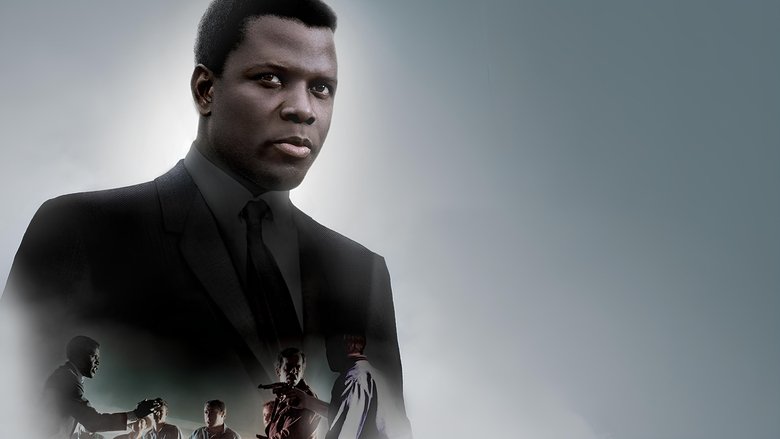
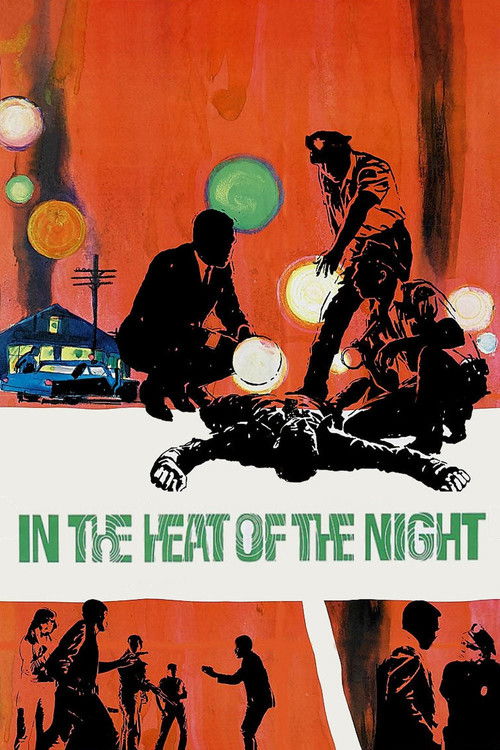
"They got a murder on their hands. They don’t know what to do with it."
In the Heat of the Night - Symbolism & Philosophy
Symbols & Motifs
TheSlap
SymbolizestheimmediateandforcefuldemandforracialequalityandtheshatteringofthetraditionalSouthernracialhierarchy[1.7].
When aristocratic plantation owner Endicott slaps Tibbs during an interrogation, Tibbs instantly slaps him back, a groundbreaking moment in cinema history.
The Heat
Symbolizes the suffocating, inescapable atmosphere of racial tension and hostility.
The physical sweating of the characters throughout the sweltering Mississippi September mirrors their psychological discomfort and the boiling point of societal unrest.
Epiphytic Orchids
Symbolizes the deeply patronizing, paternalistic racism of the Southern aristocracy, who view Black people as fragile dependents requiring control.
Endicott explicitly compares these orchids to Black people while tending to them in his greenhouse, just moments before the physical confrontation with Tibbs.
The Hands of Virgil Tibbs
Symbolizes the shifting of power and the dismantling of white authority.
Highlighted by tight cinematography, Tibbs's dark hands methodically examining the dead white flesh of the victim signify that justice for a white man now rests securely in a Black man's hands.
Philosophical Questions
Canindividualrelationshipsovercomesystemicbigotry?
Thefilmexploreswhetherthedeep-rooted, institutionalizedracismofSpartacanbedismantledbytheforcedproximityandeventualmutualrespectbetweentwoindividuals[1.4]. While Tibbs and Gillespie find common ground, the town itself remains largely unchanged, questioning the limits of personal enlightenment in the face of structural prejudice.
Is true justice blind, or is it inherently shaped by the biases of those who enforce it?
Gillespie repeatedly attempts to arrest innocent people purely based on circumstantial evidence colored by his own biases. Tibbs represents cold, objective scientific justice, raising the philosophical question of whether the law can ever be truly neutral when administered by flawed humans.
Does maintaining one's dignity require stoicism or retaliation?
Throughout the film, Tibbs maintains a cool, stoic professionalism. However, the famous slap scene poses a philosophical dilemma: does true dignity in the face of violent oppression require turning the other cheek, or does it demand answering aggression with equal force to establish a baseline of human equality?
Core Meaning
Director Norman Jewison, alongside screenwriter Stirling Silliphant, sought to dismantle the deep-rooted bigotry of the 1960s American South by forcing a confrontation between two vastly different men. The core message is that prejudice is a blinding force, not just socially, but practically. True justice and progress can only be achieved when individuals strip away their preconceived racial biases and recognize their shared humanity. The film serves as a powerful Civil Rights-era allegory, demonstrating that dignity and competence are not bound by race, and that even the most stubborn prejudices can be chipped away through forced cooperation and mutual understanding.