花樣年華
"Feel the heat, keep the feeling burning, let the sensation explode."
In the Mood for Love - Symbolism & Philosophy
Symbols & Motifs
Cheongsams (Qipaos)
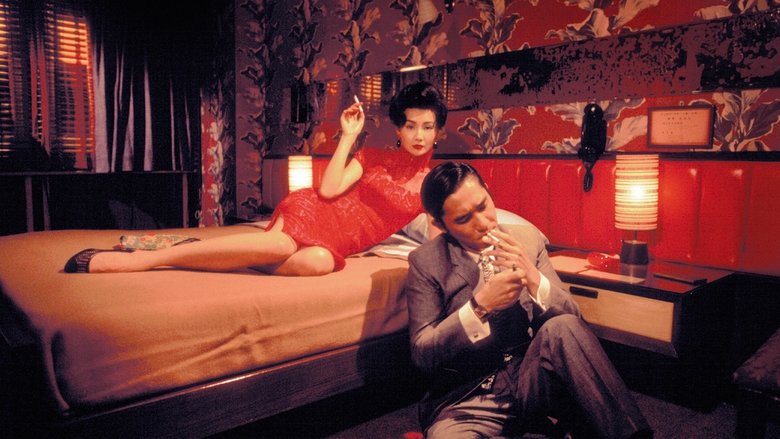
Su Li-zhen's many beautiful and form-fitting cheongsams symbolize her state of mind, her elegance, and her confinement. The vibrant patterns and colors often contrast with her restrained demeanor, hinting at the passionate emotions she keeps hidden. The dresses also serve as a temporal marker, with their changing styles reflecting the passage of time and the evolution of her emotional journey.
Su wears a different cheongsam in almost every scene, each one meticulously chosen. The dresses are a constant visual focus, accentuating her graceful movements as she navigates the narrow corridors and stairways of her apartment building. They represent a kind of beautiful armor, presenting a composed exterior that masks her inner turmoil.
Clocks
Clocks are a recurring motif that underscores the themes of time, missed opportunities, and the characters' feeling of being trapped. The camera often lingers on clocks in Su's office or in their rooms, marking the slow passage of time and the minutes they spend waiting or apart. This persistent reminder of time's relentless march highlights the fleeting nature of their moments together.
Large clocks are prominently featured in the background of many scenes, particularly when Su and Chow are communicating. The visual emphasis on time creates a sense of pressure and foreshadows their eventual separation, highlighting how their potential future is slipping away with every tick.
Food and Dining
Shared meals, particularly trips to the noodle stall, represent the initial, tentative steps of Su and Chow's relationship. These moments of dining together offer them a brief respite from their loneliness and a space for their emotional connection to grow in a seemingly innocuous setting.
Initially, Su and Chow frequently pass each other on their solitary trips to buy noodles for dinner, highlighting their mutual loneliness. Later, they begin to share meals, and these scenes become central to their developing intimacy. The act of eating together becomes a substitute for the domestic companionship they lack in their marriages.
Room 2046
Room 2046, the hotel room where Chow writes his martial arts serials and where he and Su spend time together, becomes a sanctuary for their relationship, a private space away from the judging eyes of their neighbors. The number itself becomes significant, as it is the title of Wong Kar-wai's sequel, representing a place of memories and lost love.
Chow rents Room 2046 to have a quiet place to work with Su. It is within these walls that their bond deepens and they confront their feelings. The room is a liminal space where they can momentarily escape their realities. Chow later revisits the room, which has become a repository of his memories of Su.
Angkor Wat
The ancient temple of Angkor Wat serves as the final repository for Chow's unspoken secrets and unfulfilled love. Whispering his secret into a hole in the temple wall is a symbolic act of catharsis and eternal preservation. It allows him to unburden himself of his memories and feelings for Su, leaving them buried in the timeless ruins.
At the end of the film, Chow travels to Angkor Wat. He recalls an old fable about whispering a secret into a tree hollow and sealing it forever. He finds a cavity in the temple's stone wall, whispers into it, and plugs it with mud, signifying his decision to entomb his love and memory of Su, letting go of the past while ensuring it is never truly forgotten.
Philosophical Questions
Is love a choice or an uncontrollable feeling?
The film delves into this question by presenting two characters who develop a powerful, seemingly inevitable emotional connection. However, they consistently make the conscious choice not to act on their feelings in a physical sense. Their story suggests that while the 'mood for love' may arise uncontrollably, the actions one takes are a matter of moral and personal choice, shaped by duty, fear, and circumstance.
Can one truly know the past, or is memory just a subjective reconstruction?
Through its fragmented narrative, recurring motifs, and final, poignant statement about memory, the film argues that the past is not an objective reality but a deeply personal, emotional landscape. The story is presented as a recollection, 'blurred and indistinct,' suggesting that memory is selective, colored by longing and regret. The past is something that can be felt and revisited in the mind, but never truly grasped or changed.
What is the relationship between personal desire and societal responsibility?
In the Mood for Love places the intense personal desires of Su and Chow in direct conflict with the strict social expectations of their community. Their struggle illustrates the immense pressure of conformity and the personal sacrifices made to maintain one's honor and social standing. The film asks whether adherence to a moral code, even when it leads to personal unhappiness, is a form of strength or a tragic concession to external pressures.
Core Meaning
At its heart, In the Mood for Love is a profound meditation on the nature of memory, longing, and the agonizing beauty of what might have been. Director Wong Kar-wai was less interested in depicting a simple affair and more focused on exploring how individuals behave and relate to one another under the weight of secrets and societal expectations. The film poignantly captures the ephemeral nature of a particular time and place—1960s Hong Kong—and the quiet desperation of two souls who find solace in each other but are ultimately constrained by their circumstances and their own moral codes. It is a story about the love that exists in the spaces between glances, gestures, and unspoken words, a love that is perpetually 'in the mood' but never fully realized.