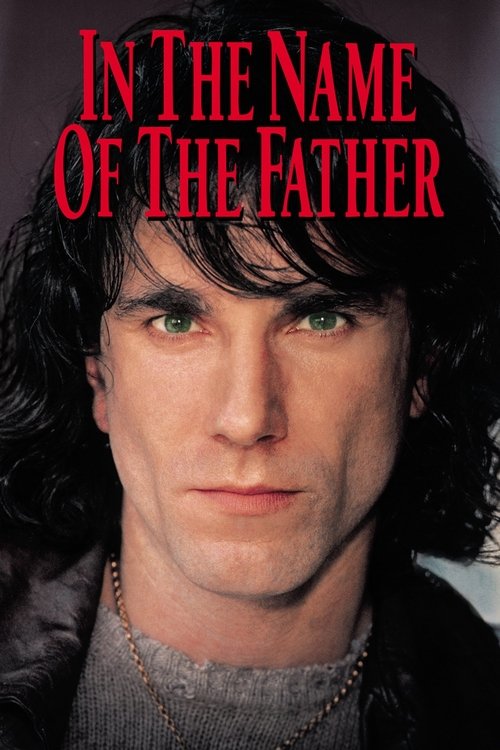
In the Name of the Father
A harrowing biographical drama where a son's rebellious fire is forged into a righteous inferno within the cold confines of injustice, illuminating a father's unwavering light.
In the Name of the Father

"In the name of truth... In the name of justice... In the name of love."

12 December 1993 United Kingdom 133 min ⭐ 7.9 (1,860)
Director: Jim Sheridan
Cast: Daniel Day-Lewis, Pete Postlethwaite, Emma Thompson, John Lynch, Corin Redgrave
Drama
Injustice and Systemic Corruption Father-Son Relationship Transformation and Redemption The Nature of Truth
Budget: $13,000,000
Box Office: $65,796,862

In the Name of the Father - Ending Explained

⚠️ Spoiler Analysis

The central twist of In the Name of the Father is not a sudden plot revelation, but the gradual and horrifying confirmation of a systemic conspiracy. While the audience knows the Guildford Four are innocent from the start, the full extent of the injustice is revealed late in the film. The climax of this reveal occurs when solicitor Gareth Peirce discovers a hidden police file containing the testimony of Charles Burke, a homeless man who provided Gerry Conlon with a rock-solid alibi for the night of the bombing. The file is damningly marked with a handwritten note: "Not to be shown to the Defence." This document is the 'smoking gun' that proves the police and prosecution knowingly suppressed evidence to secure a conviction.

A key subplot involves the real bomber, a fictionalized IRA member named Joe McAndrew (a composite of the real Balcombe Street Gang members), who confesses his guilt to Gerry and Giuseppe in prison. He even tells the authorities, but the police bury his confession to protect their original case. This reinforces that the authorities were not interested in the truth, only in maintaining the convictions they had already secured. Gerry's initial fascination with Joe's hardened persona and subsequent revulsion after Joe burns a guard alive marks his definitive moral turning point, aligning himself completely with his father's non-violent principles.

The film's tragic culmination is the death of Giuseppe Conlon in prison from his lung illness before his name could be cleared. This elevates the stakes of Gerry's fight beyond his own freedom, transforming it into a sacred mission to posthumously exonerate his father. The film ends with Gerry's triumphant release, but it is a bittersweet victory. His final speech on the courthouse steps, vowing to continue the fight to clear his father's name, makes it clear that the battle for complete justice is not over. The closing text informs the audience that no police officers were ever convicted for their actions in the case, leaving a lingering sense of outrage and highlighting that even in victory, the scars of such profound injustice remain.

Alternative Interpretations

The primary point of alternative interpretation revolves around the film's relationship with historical fact versus emotional truth. While the film presents itself as a true story, critics and historians have pointed out numerous significant deviations from the actual events.

One interpretation is that the film is less a historical document and more of a political allegory. By compressing characters (like the lawyer Gareth Peirce representing the work of several legal professionals) and creating composite figures (like the IRA man Joe McAndrew), Sheridan crafts a more streamlined, mythic narrative of Irish suffering and resilience against a monolithic and corrupt British state. In this view, the inaccuracies are deliberate choices to serve a thematic and political purpose.

Another reading, offered by the director himself, is that the film should be interpreted primarily as a universal story about a father and son. Sheridan argued, "I was accused of lying in In the Name of the Father, but the real lie was saying it was a film about the Guildford Four when really it was about a non-violent parent." This interpretation suggests that the political context, while essential, is the backdrop for a more intimate, personal drama about reconciliation, redemption, and filial duty. The 'Father' in the title becomes not just Giuseppe, but a wider symbol of patriarchal legacy and the moral principles one inherits and fights for.