In the Name of the Father
A harrowing biographical drama where a son's rebellious fire is forged into a righteous inferno within the cold confines of injustice, illuminating a father's unwavering light.
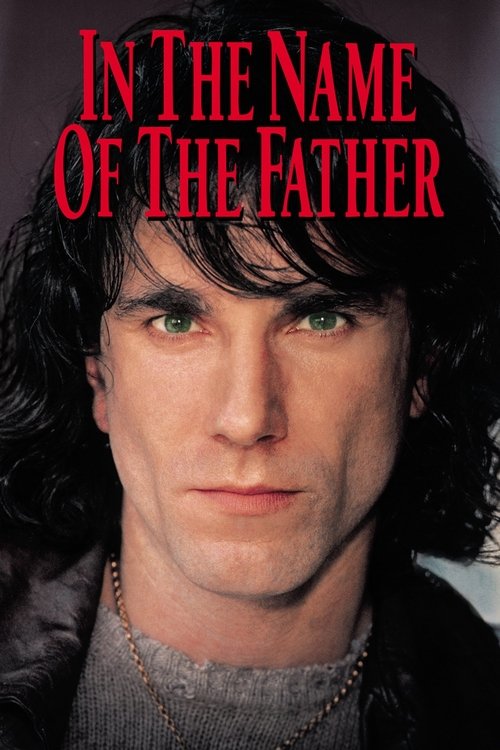
In the Name of the Father

In the Name of the Father

"In the name of truth... In the name of justice... In the name of love."

12 December 1993 United Kingdom 133 min ⭐ 7.9 (1,860)
Director: Jim Sheridan
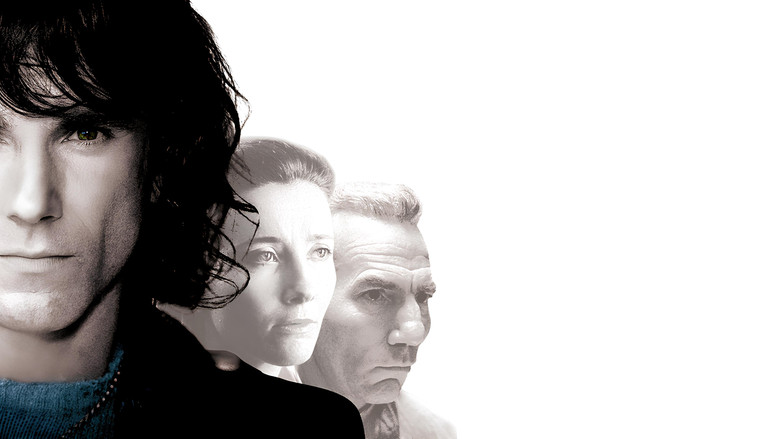
Cast: Daniel Day-Lewis, Pete Postlethwaite, Emma Thompson, John Lynch, Corin Redgrave
Drama
Injustice and Systemic Corruption Father-Son Relationship Transformation and Redemption The Nature of Truth
Budget: $13,000,000
Box Office: $65,796,862

Overview

In the Name of the Father is a powerful 1993 biographical drama directed by Jim Sheridan, based on the true story of the Guildford Four. The film centers on Gerry Conlon (Daniel Day-Lewis), a young, apolitical petty thief from Belfast whose carefree life is shattered when he and his friends are wrongfully arrested for a deadly 1974 IRA pub bombing in Guildford, England.

Coerced into a false confession through brutal police interrogation, Gerry is sentenced to life imprisonment. In a devastating turn of events, his frail but principled father, Giuseppe (Pete Postlethwaite), is also arrested and imprisoned as part of the supposed conspiracy. The narrative follows their harrowing 15-year ordeal in prison, exploring the evolution of their strained father-son relationship amidst the brutality and hopelessness of their incarceration. While Gerry initially sinks into despair and rage, Giuseppe's quiet strength and unwavering faith inspire him to begin a long and arduous fight for justice, aided by a tenacious lawyer, Gareth Peirce (Emma Thompson), who uncovers a vast conspiracy of suppressed evidence.
Core Meaning

The core meaning of In the Name of the Father transcends a simple wrongful conviction narrative; it is a profound exploration of the father-son bond and the transformative power of fighting for truth against systemic corruption. Director Jim Sheridan has stated that while the film is framed by the Guildford Four case, its true subject is the story of a "non-violent parent." The film's message is that personal integrity and moral strength, as embodied by Giuseppe, can ultimately inspire a lost soul like Gerry to find a purpose greater than himself. It is a testament to the idea that even in the face of overwhelming state-sanctioned injustice, the fight for one's name and for the truth—especially in the name of a loved one—is a redemptive and defining human struggle. The film argues that while the legal system can be fallible and corrupt, the human spirit's demand for justice is indomitable.

Thematic DNA

Injustice and Systemic Corruption 35%
Father-Son Relationship 35%
Transformation and Redemption 20%
The Nature of Truth 10%

Injustice and Systemic Corruption

The film's central theme is the catastrophic miscarriage of justice perpetrated by the British police and legal system. Desperate to secure a conviction for the Guildford pub bombings, the police resort to torture and intimidation to coerce false confessions from Gerry Conlon and the others. The prosecution then knowingly withholds crucial alibi evidence, marked "Not to be shown to the Defence," to ensure their conviction. This theme is portrayed not as the failure of a few individuals, but as a systemic rot fueled by anti-Irish prejudice and political pressure to quell public fear of terrorism.

Father-Son Relationship

At its heart, the film is an intimate story about the evolution of the relationship between Gerry and Giuseppe Conlon. Initially, Gerry is rebellious and resents his father's quiet, principled nature. Incarceration forces them together, transitioning their dynamic from conflict to a deep, mutual respect and love. As Giuseppe's health fails, Gerry transforms from a self-pitying youth into a devoted son, eventually taking up his father's fight for justice. His final, triumphant exit from the courthouse is a fulfillment of his promise to clear his father's name.

Transformation and Redemption

Gerry Conlon undergoes a profound character arc from a petty thief to a crusader for justice. Prison, a place meant for punishment, becomes the crucible for his moral development. Initially consumed by anger and despair, he is influenced by two father figures: the quiet, resilient Giuseppe and the violent IRA operative Joe McAndrew. Gerry's ultimate rejection of Joe's violent methods and his embrace of his father's peaceful, legal fight signifies his maturation and redemption. He finds his purpose not in rebellion, but in the determined pursuit of truth.

The Nature of Truth

The film relentlessly questions the concept of truth within a legal framework. Gerry is forced to sign a false confession, a document that becomes his official "truth" for 15 years. The British government constructs a narrative of guilt, suppressing the actual truth to maintain public order and save face. The entire legal battle waged by Gareth Peirce is a struggle to replace a state-sanctioned lie with the factual truth. The film's title itself suggests a higher form of truth—the truth of a father's innocence and a son's love—that ultimately motivates the final victory.

Character Analysis

Gerry Conlon

Daniel Day-Lewis

Archetype: Anti-hero to Hero
Key Trait: Resilient

Motivation

Initially, his motivation is survival and a sense of profound, personal injustice. After his father's death, his motivation becomes singular and pure: to posthumously prove Giuseppe's innocence and honor his memory, a quest he pursues "in the name of the father."

Character Arc

Gerry begins as a directionless petty criminal in Belfast, resentful of his father and interested only in hedonistic pursuits. His wrongful imprisonment shatters him, initially turning his anger inward and lashing out at his father. Over 15 years, influenced by Giuseppe's quiet dignity and the stark brutality of IRA operative Joe McAndrew, he matures. He educates himself, takes over his father's legal campaign after his death, and transforms into a determined, articulate activist who vows to clear his father's name.

Giuseppe Conlon

Pete Postlethwaite

Archetype: The Mentor / The Martyr
Key Trait: Principled

Motivation

His motivations are clear and constant: to protect his son, to prove their innocence through legal and peaceful means, and to live with honesty and integrity, even within the corrupt prison system. He is driven by a deep sense of paternal duty and faith.

Character Arc

Giuseppe is a static character whose unwavering morality serves as the film's anchor. He is introduced as a gentle, devout, and honest man who is deeply concerned for his wayward son. Despite being unjustly imprisoned and suffering from a fatal lung condition, his faith in justice and his love for Gerry never waver. He tirelessly works on their legal appeal. His arc is one of tragic martyrdom; he dies in prison, but his spirit and principles are what ultimately redeem his son and lead to their exoneration.

Gareth Peirce

Emma Thompson

Archetype: The Crusader
Key Trait: Tenacious

Motivation

Gareth is motivated by a powerful belief in justice and a deep-seated outrage at the evidence of a state cover-up. She is driven to uncover the truth and rectify a profound wrong, not for personal glory, but because it is the right thing to do.

Character Arc

Gareth Peirce is a tenacious and compassionate solicitor who takes on the Conlons' case. She is initially drawn in by Giuseppe's quiet determination. Her arc is one of discovery, as she peels back layers of police and government corruption. She transforms from a lawyer handling a seemingly hopeless appeal into a crusading agent of truth who exposes the conspiracy at the highest levels, embodying the ideal of what the legal system should be.

Symbols & Motifs

The Prison Cell

Meaning:

The shared prison cell (a dramatic liberty, as they were mostly in separate prisons) symbolizes a crucible for the father-son relationship. It is a space of both confinement and intimacy, forcing Gerry and Giuseppe to confront their differences and forge a bond that was impossible in the outside world. It represents the idea that true understanding can be found in the most oppressive of circumstances.

Context:

Throughout the middle act of the film, Gerry and Giuseppe are depicted sharing a cell. Their arguments, conversations, and moments of quiet support within these four walls chart the complete arc of their relationship's transformation from estrangement to deep devotion.

Giuseppe's Rosary Beads and Inhaler

Meaning:

Giuseppe's rosary beads symbolize his unwavering faith, not just in God, but in the ultimate triumph of justice and truth. His ever-present inhaler is a constant symbol of his physical frailty and vulnerability, which stands in stark contrast to his immense moral strength. Together, they represent a quiet, resilient form of power that Gerry initially scorns but eventually inherits.

Context:

Giuseppe is frequently seen praying with his rosary beads, a quiet act of defiance and hope. His worsening cough and reliance on the inhaler mark the passage of time and the physical toll of imprisonment, heightening the urgency of their legal fight and Gerry's eventual protective role.

The Burning Blanket

Meaning:

The blanket Gerry uses to save a hated prison guard from being burned alive by Joe McAndrew symbolizes Gerry's moral turning point. It represents his definitive rejection of the IRA's violent methods and his embrace of his father's compassionate, non-violent principles. He chooses to save a life rather than stand by and watch an act of vengeful "justice."

Context:

During a prison riot started by IRA operative Joe McAndrew, a guard is set on fire. While other inmates cheer, Gerry, having been influenced by his father, grabs a blanket and smothers the flames, saving the man's life and physically confronting McAndrew afterward.

Memorable Quotes

I'm an innocent man. I spent 15 years in prison for something I didn't do. I watched my father die in a British prison for something he didn't do. And this government still says he's guilty. I want to tell them that until my father is proved innocent, until all the people involved in this case are proved innocent, until the guilty ones are brought to justice, I will fight on. In the name of my father and of the truth!

— Gerry Conlon

Context:

Delivered on the steps of the courthouse immediately after his conviction is overturned. Surrounded by press and supporters, Gerry expresses not just relief but a renewed sense of purpose, vowing to continue the campaign.

Meaning:

This is Gerry's triumphant and defiant victory speech, encapsulating the entire emotional and political thrust of the film. It signifies his complete transformation and dedication to his father's legacy, asserting that the legal victory is only the beginning of the fight for the whole truth.

What I remember most about my childhood is holding your hand. My wee hand in your big hand, and the smell of tobacco. I remember, I could smell the tobacco in the palm of your hand. When I want to feel happy, I try to remember the smell of tobacco.

— Gerry Conlon

Context:

Spoken to Giuseppe as he lies dying in the prison infirmary. It is the culmination of their reconciliation, where all anger and resentment have finally dissolved, leaving only love and memory.

Meaning:

This poignant quote reveals the deep, buried love Gerry has always had for his father, hidden beneath years of rebellion. It's a moment of pure, childlike vulnerability and a confession of the powerful, positive influence Giuseppe has always been in his life, symbolizing safety and happiness.

All they done was block out the light. They can't block out the light in here.

— Giuseppe Conlon

Context:

Giuseppe says this to Gerry in their prison cell, responding to Gerry's despair about spending the rest of his life there. It is a key moment of Giuseppe trying to impart his strength and perspective to his son.

Meaning:

This line, spoken as Giuseppe points to his head, encapsulates his philosophy of resilience. He acknowledges the physical reality of their imprisonment but asserts that their minds, spirits, and hope cannot be caged. It's a powerful statement about inner freedom and mental fortitude.

It's not the stairs that are killing your father. It's your lack of faith. [...] In yourself.

— Gareth Peirce

Context:

Gareth says this to Gerry during a prison visit, after Gerry complains about his father's deteriorating health being exacerbated by having to climb stairs for their legal meetings. It's a pivotal moment that helps spur Gerry into action.

Meaning:

Gareth challenges Gerry's cynical and self-pitying attitude, identifying it as the true destructive force. She astutely points out that his despair is a greater obstacle than his father's physical illness, urging him to believe in his own ability to fight for their cause.

Philosophical Questions

Does an unjust legal process invalidate the concept of law itself?

The film portrays a legal system that is not just flawed but actively corrupt, where evidence is fabricated and suppressed to achieve a desired outcome. This raises the question of whether 'the law' has any inherent moral authority when its instruments—police, prosecutors, and even judges—act unjustly. Giuseppe maintains faith in the system's potential for self-correction, while Gerry's initial (and the film's ultimate) stance suggests that when the system is so thoroughly compromised, it loses its legitimacy and becomes merely an instrument of state power.

Can true freedom be found within physical confinement?

While imprisoned, both Gerry and Giuseppe embark on paths to different kinds of freedom. Giuseppe, despite his physical frailty and imprisonment, is morally and spiritually free due to his clear conscience and unwavering faith. Gerry, on the other hand, was 'free' but aimless in the outside world. He only finds true purpose, maturity, and a form of inner freedom by taking up his father's fight while incarcerated. The film explores the paradox that the oppressive environment of the prison is what ultimately liberates Gerry from his own immaturity and self-destruction.

Is personal truth more important than factual accuracy in storytelling?

Through its own controversial production history, the film poses this question to the audience. Director Jim Sheridan consciously altered facts to heighten the emotional drama of the father-son relationship. This forces the viewer to consider whether the 'truth' of Gerry's emotional journey and Giuseppe's moral strength—the core of the film's human story—is a more vital narrative to tell than a precise, moment-by-moment historical account. It questions whether art's primary responsibility is to facts or to deeper, emotional, and thematic truths.

Alternative Interpretations

The primary point of alternative interpretation revolves around the film's relationship with historical fact versus emotional truth. While the film presents itself as a true story, critics and historians have pointed out numerous significant deviations from the actual events.

One interpretation is that the film is less a historical document and more of a political allegory. By compressing characters (like the lawyer Gareth Peirce representing the work of several legal professionals) and creating composite figures (like the IRA man Joe McAndrew), Sheridan crafts a more streamlined, mythic narrative of Irish suffering and resilience against a monolithic and corrupt British state. In this view, the inaccuracies are deliberate choices to serve a thematic and political purpose.

Another reading, offered by the director himself, is that the film should be interpreted primarily as a universal story about a father and son. Sheridan argued, "I was accused of lying in In the Name of the Father, but the real lie was saying it was a film about the Guildford Four when really it was about a non-violent parent." This interpretation suggests that the political context, while essential, is the backdrop for a more intimate, personal drama about reconciliation, redemption, and filial duty. The 'Father' in the title becomes not just Giuseppe, but a wider symbol of patriarchal legacy and the moral principles one inherits and fights for.

Cultural Impact

In the Name of the Father had a significant cultural and political impact upon its release in 1993. It brought the story of the Guildford Four and Maguire Seven—one of the most infamous miscarriages of justice in British history—to a global audience, generating widespread discussion about the flaws within the British legal system during 'The Troubles'.

The film was met with both critical acclaim for its powerful performances and intense controversy for its historical inaccuracies. British critics and politicians, in particular, took issue with the dramatic liberties taken, such as the fictionalized courtroom scenes and the portrayal of Gerry and Giuseppe sharing a cell. However, director Jim Sheridan consistently defended his focus on the emotional core of the story, arguing that the 'real lie' was the injustice itself, not his cinematic interpretation.

The film's success, including seven Oscar nominations, solidified Daniel Day-Lewis's reputation as a leading actor of his generation and brought international recognition to Pete Postlethwaite. It is considered a landmark of Irish cinema, representing a wave of filmmaking that confronted the political complexities of 'The Troubles' with a deeply human focus. The film's raw depiction of injustice and its exploration of the father-son relationship have ensured its lasting legacy as a powerful and emotionally resonant political drama.

Audience Reception

Audience reception for In the Name of the Father has been overwhelmingly positive since its release. Viewers consistently praise the powerhouse performances of Daniel Day-Lewis and Pete Postlethwaite, often citing the emotional depth of their father-son relationship as the film's greatest strength. The narrative is widely regarded as gripping, intense, and profoundly moving, with many considering it an inspiring story of resilience against overwhelming injustice. Audiences polled by CinemaScore gave the film an average grade of 'A' on an A+ to F scale, indicating strong popular appeal.

The main points of criticism from some viewers echo those of professional critics, focusing on the historical inaccuracies and dramatic liberties taken with the true story. Some familiar with the case find the simplification of the legal process and the composite characters to be a drawback. However, for the majority of the audience, the emotional impact of the story and the strength of the acting tend to override concerns about strict historical fidelity. It remains a highly regarded and frequently recommended film for its powerful storytelling and exceptional performances.

Interesting Facts

  • To prepare for the role, Daniel Day-Lewis lost over 50 pounds. He also spent three days and nights in a real jail cell without food or water, and was subjected to interrogation by real police officers.
  • Pete Postlethwaite, who played Giuseppe, received an Academy Award nomination for Best Supporting Actor for his role.
  • The film sparked considerable controversy upon its release, particularly in the UK, for its historical inaccuracies. Director Jim Sheridan defended these changes, arguing the film's emotional truth about the father-son relationship was more important than strict factual adherence.
  • Key dramatic liberties include Gerry and Giuseppe sharing a prison cell (they were mostly in different prisons) and the creation of the composite IRA character Joe McAndrew.
  • The real Gerry Conlon was actively involved in the production of the film, providing insights to ensure its emotional accuracy.
  • The real perpetrators of the Guildford pub bombings, the Balcombe Street Gang, had confessed to the crimes, but this information was withheld by the police.
  • The film was nominated for seven Academy Awards, including Best Picture, Best Director, Best Actor (Day-Lewis), Best Supporting Actor (Postlethwaite), and Best Supporting Actress (Thompson), but won none.

Easter Eggs

Use of Real News Footage

The film incorporates real news footage from the 1970s. This isn't a hidden 'easter egg' in the fictional sense, but a deliberate directorial choice by Jim Sheridan to ground the dramatized story in historical reality and enhance the film's authenticity and political weight.

Filming in Kilmainham Gaol

Several prison scenes were filmed in Dublin's historic Kilmainham Gaol. This location is deeply significant in Irish history as the site where many leaders of Irish rebellions were imprisoned and executed. Using this location adds a layer of historical resonance, symbolically linking the Conlons' struggle against British justice with Ireland's longer history of rebellion and political imprisonment.

⚠️ Spoiler Analysis

Click to reveal detailed analysis with spoilers

Frequently Asked Questions

Explore More About This Movie

Dive deeper into specific aspects of the movie with our detailed analysis pages

Comments (0)

Leave a comment

No comments yet. Be the first to share your thoughts!