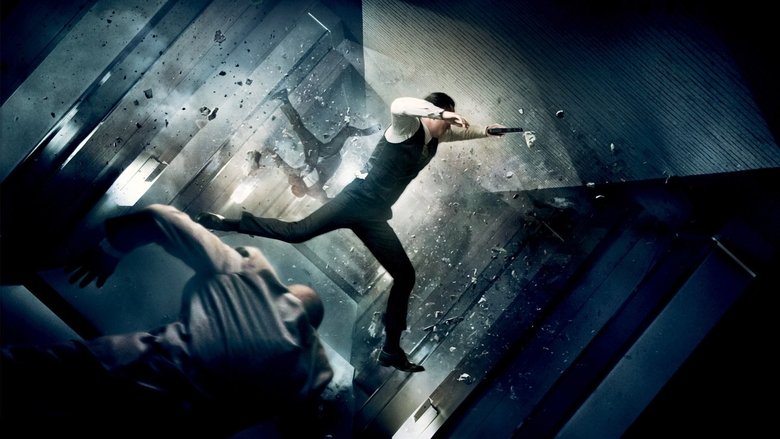
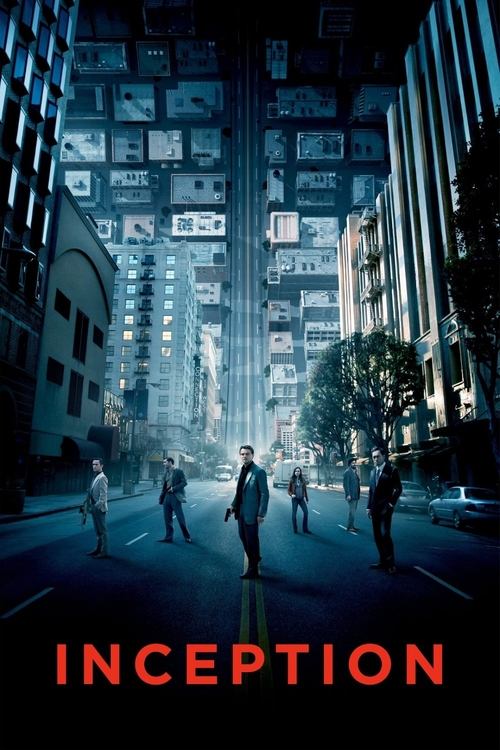
"Your mind is the scene of the crime."
Inception - Symbolism & Philosophy
Symbols & Motifs
The Spinning Top
The spinning top symbolizes the ambiguous boundary between dream and reality. It is a "totem," an object used to determine if one is in another person's dream. In the dream world, the top will spin indefinitely, while in reality, it will eventually topple.
Originally Mal's totem, Cobb adopts it after her death. He uses it throughout the film to check his own perception of reality. The film's iconic and highly debated final shot focuses on the top spinning on a table, cutting to black before the audience can see if it falls, leaving Cobb's ultimate fate open to interpretation.
Trains
Trains represent the unstoppable and destructive force of Cobb's subconscious guilt and memories of Mal. They are a direct link to the way he and Mal chose to escape limbo—by lying on train tracks.
A freight train unexpectedly plows through the city streets in the first dream level, a powerful intrusion of Cobb's mind into a shared dream. The recurring image signifies how his unresolved trauma can derail his plans and endanger his team at any moment.
Water
Water functions as a transitional element and a method for waking up from a dream. It symbolizes the barrier between dream states and the shock of returning to consciousness.
The film opens with Cobb washed up on a shore. Characters are frequently submerged in water or hit by waves to initiate a "kick" and awaken them. The heavy rain in the first dream level, caused by Yusuf the chemist's full bladder in the level above, also highlights the interconnectedness of the dream layers.
Mazes and Labyrinths
Mazes and labyrinths symbolize the complex architecture of the mind and the intricate nature of the subconscious. They represent the challenge of navigating another person's psyche without getting lost.
Ariadne, whose name is a direct reference to the Greek myth of the labyrinth, is hired to design the dream levels as complex mazes. This is necessary to trap the target's consciousness and protect the team from the target's mental projections. Cobb's own mind is a dangerous labyrinth haunted by the memory of Mal.
Philosophical Questions
How can we distinguish reality from a dream?
This is the central epistemological question of the film, echoing philosophical inquiries from Plato's Allegory of the Cave to René Descartes' Dream Argument. "Inception" explores this through the concept of totems, personal objects that behave differently in dreams versus reality. However, the film ultimately suggests that our perception of reality is subjective. As one character notes in a dream den, "The dream has become their reality. Who are you to say otherwise?" The movie posits that the emotional conviction in one's world may be more important than its objective truth.
To what extent are our choices and beliefs our own?
The film delves into the question of free will versus determinism. The very concept of inception—planting an idea so subtly that a person believes it is their own—challenges the notion of authentic thought and inspiration. If an external force can manipulate our subconscious to alter our fundamental decisions, it raises questions about the origins of our motivations and whether true inspiration can be faked. The mission to make Robert Fischer dissolve his father's empire is a large-scale experiment in manipulating free will for corporate gain.
Can we ever truly escape our past and guilt?
"Inception" uses the dream world as a metaphor for the inescapable nature of memory and trauma. Cobb's guilt over Mal's death physically manifests as a hostile projection he cannot control. His journey suggests that you cannot simply run from or imprison guilt; it must be confronted directly. The film explores different types of guilt—moral and existential—and posits that true resolution comes not from changing the past, but from accepting it and taking responsibility, which allows one to move forward.
Core Meaning
The core meaning of "Inception" revolves around the concepts of catharsis, guilt, and the subjective nature of reality. The intricate heist plot serves as a vehicle to explore Dom Cobb's deep-seated guilt and grief over his wife's death. His journey is about finding psychological closure and forgiving himself, allowing him to finally move on.
Director Christopher Nolan examines how a single idea can define a person and how reality itself can be a matter of perception. The film suggests that the emotional reality we create for ourselves is ultimately what matters most. Cobb's final choice—to join his children without confirming if he is in the real world—underscores the theme that finding peace and being present is more important than the objective nature of one's surroundings.