Inception
"Your mind is the scene of the crime."
Overview
"Inception" stars Leonardo DiCaprio as Dom Cobb, an expert thief specializing in "extraction": the art of stealing valuable secrets from deep within the subconscious during the dream state, when the mind is at its most vulnerable. Cobb's rare ability has made him a coveted player in the treacherous world of corporate espionage, but it has also cost him everything he has ever loved and made him an international fugitive.
Cobb is offered a chance at redemption. A powerful businessman, Mr. Saito (Ken Watanabe), presents him with an impossible task: not to steal an idea, but to plant one. This act, known as "inception," could allow Cobb to reclaim his life and return to his children. To succeed, he assembles a team of specialists: his point man Arthur (Joseph Gordon-Levitt), architect Ariadne (Elliot Page), forger Eames (Tom Hardy), and chemist Yusuf (Dileep Rao).
Together, they must navigate the dangerous and surreal landscape of a multi-layered dream world constructed within the mind of their target, Robert Fischer (Cillian Murphy). However, their mission is complicated by the projection of Cobb's deceased wife, Mal (Marion Cotillard), a manifestation of his guilt that threatens to sabotage their every move. As they descend deeper into the subconscious, the lines between dream and reality blur, and the team must confront not only the target's defenses but also Cobb's own inner demons.
Core Meaning
The core meaning of "Inception" revolves around the concepts of catharsis, guilt, and the subjective nature of reality. The intricate heist plot serves as a vehicle to explore Dom Cobb's deep-seated guilt and grief over his wife's death. His journey is about finding psychological closure and forgiving himself, allowing him to finally move on.
Director Christopher Nolan examines how a single idea can define a person and how reality itself can be a matter of perception. The film suggests that the emotional reality we create for ourselves is ultimately what matters most. Cobb's final choice—to join his children without confirming if he is in the real world—underscores the theme that finding peace and being present is more important than the objective nature of one's surroundings.
Thematic DNA
Guilt, Grief, and Memory
The emotional heart of the film is Cobb's struggle with the memory of his deceased wife, Mal. His guilt over his role in her suicide manifests as a hostile projection in the dream world, constantly sabotaging his efforts. The film portrays memory not as a reliable record, but as a fallible and emotionally charged construct that can be both a prison and a place of solace. Cobb's character arc is driven by the need to confront his grief, let go of this idealized yet dangerous memory of Mal, and find catharsis.
The Nature of Reality and Dreams
"Inception" constantly blurs the line between dreams and reality, prompting characters and the audience to question what is real. Dreams in the film feel completely real to those inside them, and it's only upon waking that strangeness is perceived. This theme is central to the film's ambiguous ending and is explored through the concept of "totems," objects used to test one's state of consciousness. The film suggests that reality might be subjective and that the world we choose to accept becomes our own truth.
Ideas and Corporate Power
The film's premise is built on the idea that an idea is the "most resilient parasite." Once planted in the mind, it can grow to define or destroy a person. This concept is weaponized in the world of corporate espionage, where Saito hires Cobb's team to perform inception on his business rival, Robert Fischer, in order to dissolve a competing energy empire. This theme explores the ethics of mental manipulation and illustrates how intangible concepts can wield immense power, shaping individuals and the world.
Time and Architecture
Time is malleable in the dream world; it slows down exponentially with each deeper dream level. This allows for complex, multi-layered heists but also carries the risk of being trapped for decades in limbo. The theme is intertwined with architecture, as Ariadne, the architect, designs the dreamscapes. These environments are described as mazes, essential for navigating the subconscious while containing the target's mind. The architecture reflects the film's intricate, layered narrative structure.
Character Analysis
Dominic "Dom" Cobb
Leonardo DiCaprio
Motivation
Cobb's primary motivation is to have his criminal record erased so he can return home to his children in the United States. This deep-seated desire drives him to accept Saito's dangerous and seemingly impossible mission of performing inception.
Character Arc
Cobb begins as a brilliant but broken man, haunted by guilt over his wife Mal's death and unable to return to his children. His journey is one of emotional catharsis. By descending into the depths of the subconscious, he is forced to confront the projection of Mal, accept his responsibility for planting the idea that led to her suicide, and forgive himself. He learns to let go of his past, overcoming his inner demon, which ultimately allows him to reunite with his children, free from the torment that had defined him.
Ariadne
Elliot Page
Motivation
Initially driven by intellectual curiosity and the limitless potential of designing dream worlds, Ariadne's motivation shifts to helping Cobb overcome his inner demons and ensuring the safety of the team. Her name is a nod to the Greek mythological figure who helped Theseus navigate the labyrinth.
Character Arc
Ariadne starts as a brilliant but naive architecture student, quickly drawn into the world of dream-sharing by its creative possibilities. She serves as the audience's surrogate, learning the rules of this complex world. Her role evolves as she becomes Cobb's confidante and therapist, bravely venturing into his subconscious to understand the danger Mal's projection poses. She pushes Cobb to confront his guilt and is instrumental in the success of the mission, demonstrating immense courage and intellectual prowess.
Mal Cobb
Marion Cotillard
Motivation
As a projection, Mal's motivation is to make Cobb stay in the dream world with her forever. She believes they can be reunited in the subconscious and uses emotional manipulation and violence to try and convince him that his reality is a lie and he should abandon his mission.
Character Arc
Mal exists in the film primarily as a projection of Cobb's subconscious, the embodiment of his guilt. She serves as the primary antagonist, actively sabotaging the team's mission. Through flashbacks, we learn she was once Cobb's beloved wife who became lost in the dream world. After Cobb incepted her to return to reality, the idea that her world wasn't real festered, leading to her suicide. Mal's arc is seen through Cobb's perception; he must defeat this shade of her to complete his own emotional journey.
Arthur
Joseph Gordon-Levitt
Motivation
Arthur is motivated by professionalism and loyalty to Cobb. He is focused on the successful execution of the mission, from planning and research to managing the logistics of the multi-layered dream. He is skeptical of inception but commits fully to the job once the team is assembled.
Character Arc
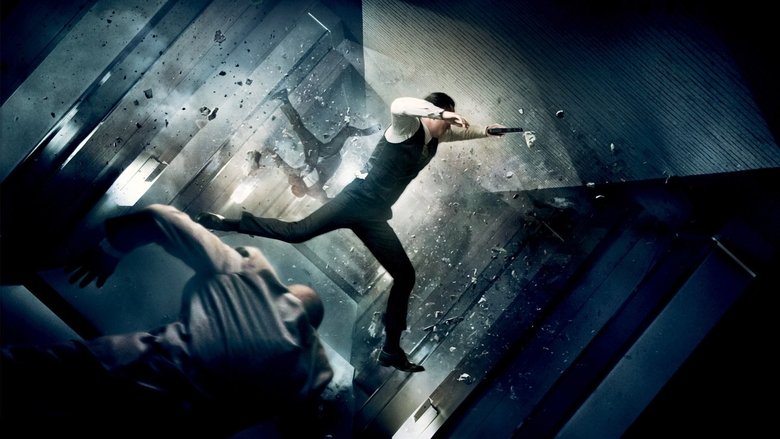
Arthur is Cobb's loyal and highly competent partner. He is meticulous, organized, and grounded, often acting as the voice of reason. He does not have a significant personal arc but demonstrates incredible resourcefulness and resilience, particularly during the iconic zero-gravity fight scene in the hotel level. His character remains consistent: the reliable professional who ensures the mechanics of the heist run smoothly while Cobb handles the emotional complexities.
Eames
Tom Hardy
Motivation
Eames is motivated by the challenge and the financial reward of the job. He is a skilled professional who enjoys the artistry of his work, particularly the act of impersonation and forgery within the dreamscape to manipulate the target.
Character Arc
Eames is a charming and pragmatic forger who can impersonate others within the dream world. He has a playful rivalry with Arthur but is a crucial and creative member of the team. Like Arthur, Eames doesn't undergo a major personal transformation but is essential to the plot. His ability to think on his feet and his more imaginative, less rigid approach to problem-solving contrasts with Arthur's by-the-book style, as shown by his line, "You mustn't be afraid to dream a little bigger, darling."
Symbols & Motifs
The Spinning Top
The spinning top symbolizes the ambiguous boundary between dream and reality. It is a "totem," an object used to determine if one is in another person's dream. In the dream world, the top will spin indefinitely, while in reality, it will eventually topple.
Originally Mal's totem, Cobb adopts it after her death. He uses it throughout the film to check his own perception of reality. The film's iconic and highly debated final shot focuses on the top spinning on a table, cutting to black before the audience can see if it falls, leaving Cobb's ultimate fate open to interpretation.
Trains
Trains represent the unstoppable and destructive force of Cobb's subconscious guilt and memories of Mal. They are a direct link to the way he and Mal chose to escape limbo—by lying on train tracks.
A freight train unexpectedly plows through the city streets in the first dream level, a powerful intrusion of Cobb's mind into a shared dream. The recurring image signifies how his unresolved trauma can derail his plans and endanger his team at any moment.
Water
Water functions as a transitional element and a method for waking up from a dream. It symbolizes the barrier between dream states and the shock of returning to consciousness.
The film opens with Cobb washed up on a shore. Characters are frequently submerged in water or hit by waves to initiate a "kick" and awaken them. The heavy rain in the first dream level, caused by Yusuf the chemist's full bladder in the level above, also highlights the interconnectedness of the dream layers.
Mazes and Labyrinths
Mazes and labyrinths symbolize the complex architecture of the mind and the intricate nature of the subconscious. They represent the challenge of navigating another person's psyche without getting lost.
Ariadne, whose name is a direct reference to the Greek myth of the labyrinth, is hired to design the dream levels as complex mazes. This is necessary to trap the target's consciousness and protect the team from the target's mental projections. Cobb's own mind is a dangerous labyrinth haunted by the memory of Mal.
Memorable Quotes
What is the most resilient parasite? Bacteria? A virus? An intestinal worm? An idea. Resilient... highly contagious.
— Dom Cobb
Context:
Cobb says this to Saito near the beginning of the film, explaining the concept of extraction and setting up the far more dangerous possibility of inception.
Meaning:
This quote establishes the film's central premise. It explains the power and danger of an idea, suggesting that once an idea takes root in the mind, it is nearly impossible to remove. It foreshadows both the team's mission to plant an idea and the destructive idea that has taken hold of Cobb's own mind regarding Mal.
Dreams feel real while we're in them. It's only when we wake up that we realize something was actually strange.
— Dom Cobb
Context:
Cobb explains this to Ariadne during her introduction to the concept of dream-sharing, as she learns to build and navigate dreamscapes for the first time.
Meaning:
This line encapsulates the film's exploration of the subjective nature of reality. It highlights how immersive and convincing the dream state can be, making it difficult for the characters (and the audience) to distinguish it from the real world without a reference point like a totem.
You're waiting for a train. A train that will take you far away. You know where you hope this train will take you, but you can't be sure. But it doesn't matter - because we'll be together.
— Mal Cobb
Context:
Mal says a version of this to Cobb in his memories and her projections repeat it to him in the dream world, trying to convince him to stay with her and abandon reality.
Meaning:
This recurring line represents the seductive and dangerous allure of the dream world and Cobb's shared past with Mal. The train symbolizes their method of suicide to escape limbo, but for Mal's projection, it becomes a metaphor for a leap of faith into a shared, permanent dream reality she desperately wants Cobb to choose.
You mustn't be afraid to dream a little bigger, darling.
— Eames
Context:
During the first dream level, Arthur is engaged in a gunfight with projections. Eames, seeing Arthur is using a relatively small gun, says this line before revealing a much more powerful grenade launcher to easily dispatch the enemies.
Meaning:
This quote reflects Eames's imaginative and audacious personality, contrasting with Arthur's more cautious and pragmatic approach. It speaks to the limitless possibilities within the dream world, where the only constraints are one's own creativity.
An idea can grow to define or destroy you.
— Dom Cobb
Context:
Cobb elaborates on the power of an idea to Saito, explaining the gravity and the personal stakes involved in their mission of inception.
Meaning:
A crucial extension of the 'idea as a parasite' concept, this quote underscores the profound and transformative power of a single thought. It applies directly to Robert Fischer, whose entire identity is about to be reshaped by inception, and to Cobb himself, who has been nearly destroyed by the guilt stemming from the idea he planted in Mal's mind.
Philosophical Questions
How can we distinguish reality from a dream?
This is the central epistemological question of the film, echoing philosophical inquiries from Plato's Allegory of the Cave to René Descartes' Dream Argument. "Inception" explores this through the concept of totems, personal objects that behave differently in dreams versus reality. However, the film ultimately suggests that our perception of reality is subjective. As one character notes in a dream den, "The dream has become their reality. Who are you to say otherwise?" The movie posits that the emotional conviction in one's world may be more important than its objective truth.
To what extent are our choices and beliefs our own?
The film delves into the question of free will versus determinism. The very concept of inception—planting an idea so subtly that a person believes it is their own—challenges the notion of authentic thought and inspiration. If an external force can manipulate our subconscious to alter our fundamental decisions, it raises questions about the origins of our motivations and whether true inspiration can be faked. The mission to make Robert Fischer dissolve his father's empire is a large-scale experiment in manipulating free will for corporate gain.
Can we ever truly escape our past and guilt?
"Inception" uses the dream world as a metaphor for the inescapable nature of memory and trauma. Cobb's guilt over Mal's death physically manifests as a hostile projection he cannot control. His journey suggests that you cannot simply run from or imprison guilt; it must be confronted directly. The film explores different types of guilt—moral and existential—and posits that true resolution comes not from changing the past, but from accepting it and taking responsibility, which allows one to move forward.
Alternative Interpretations
The Ending: Dream or Reality?
The most debated aspect of "Inception" is its final scene. One interpretation is that Cobb is finally back in reality. Proponents point to several clues: he is not wearing his wedding ring, his children are wearing slightly different clothes and are played by older actors, and the top begins to wobble just before the cut to black. Actor Michael Caine, who plays Cobb's father-in-law, has stated that Christopher Nolan told him any scene he is in is reality, and he appears in the final sequence.
Another popular interpretation is that Cobb is still dreaming, trapped in a state of limbo he has constructed for his own happiness. The top never definitively falls, and the entire reunion could be an elaborate wish-fulfillment. A more nuanced version of this theory suggests that the entire film, from the very beginning, is Cobb's dream as he attempts to perform inception on himself to resolve his own guilt.
A third, more philosophical interpretation argues that it doesn't matter whether the ending is a dream or reality. The crucial point is that Cobb makes a conscious choice to walk away from the spinning top and join his children. He has overcome his obsession with distinguishing between the two worlds and has chosen his emotional reality, achieving peace and catharsis regardless of his physical state. His emotional journey is complete, which is the true resolution of the film.
Cultural Impact
Released in 2010, "Inception" was a landmark film that proved a complex, original, and thought-provoking blockbuster could achieve massive commercial success, grossing over $800 million worldwide. It challenged the Hollywood trend of sequels, remakes, and adaptations, demonstrating a strong audience appetite for intelligent, filmmaker-driven stories. The film's influence trickled down through the decade, inspiring more nuanced and layered narratives in mainstream cinema and elevating audience expectations for blockbusters.
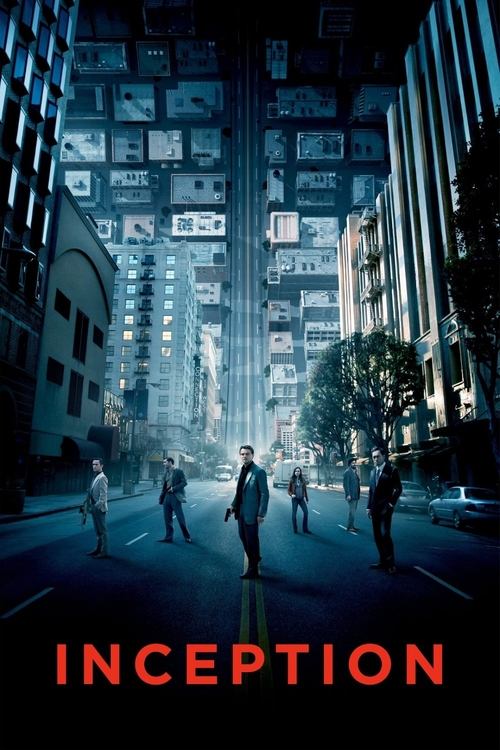
"Inception" had a significant impact on popular culture. The term "inception" itself entered the lexicon to describe the layering of one thing inside another, often humorously (e.g., a "taco-ception"). The film's ambiguous ending sparked years of intense debate and analysis among fans and critics, cementing its place as a modern classic that demands repeat viewings. Its visual style, particularly the city-bending sequence and the zero-gravity hallway fight, has been widely imitated and parodied. Furthermore, Hans Zimmer's powerful, horn-heavy score became highly influential, with its signature "BRAAAM" sound becoming a staple in movie trailers for years to come.
Audience Reception
Audiences overwhelmingly praised "Inception" for its originality, intelligence, and breathtaking visuals. Viewers lauded the film as a complex and thought-provoking blockbuster that respected their intelligence, a stark contrast to many formulaic summer movies. The intricate plot, while confusing to some, was largely seen as a compelling puzzle that rewarded attentive viewing. The performances of the ensemble cast, particularly Leonardo DiCaprio, were highly acclaimed, as were the groundbreaking practical effects like the rotating hallway sequence.
The main points of criticism, though minor for most, centered on the film's perceived lack of emotional depth beyond Cobb's storyline and its heavy reliance on exposition to explain the complex rules of the dream world. Some viewers found the characters other than Cobb to be underdeveloped. The most controversial and discussed aspect was the ambiguous ending, which left audiences debating for years. Overall, the verdict was that "Inception" was a modern sci-fi masterpiece, a rare film that succeeded as both a spectacular action-heist thriller and a profound exploration of the human mind.
Interesting Facts
- Christopher Nolan first pitched the idea for 'Inception' to Warner Bros. in 2001 but felt he needed more experience with large-scale films before tackling it. He wrote the script over a period of eight years.
- The roles of the main team members were based on the roles of a film crew: Cobb is the Director, Arthur is the Producer, Ariadne is the Production Designer, Eames is the Actor, Saito is the Studio, and Fischer is the Audience.
- Despite the film's surreal visuals, Christopher Nolan insisted on using practical effects over CGI whenever possible. The famous zero-gravity hallway fight was shot in a large, rotating centrifuge set, and Joseph Gordon-Levitt performed most of his own stunts.
- The film's runtime of 2 hours and 28 minutes is a deliberate nod to the Edith Piaf song "Non, je ne regrette rien," which is used as the musical cue for the kick and has a runtime of 2 minutes and 28 seconds.
- Hans Zimmer's iconic, booming score was derived from slowing down the Edith Piaf song, reflecting the theme of time dilation within the dream levels.
- Nolan did not hire a second unit director, personally overseeing every single shot in the film to maintain his specific vision.
- The Penrose stairs, an impossible object, were built as a practical set for the scene where Arthur demonstrates dream architecture to Ariadne.
- Leonardo DiCaprio's involvement helped shape the emotional core of the film; Nolan rewrote the script to make it more focused on Cobb's personal journey after casting him.
- The snowy fortress sequence was filmed in Calgary, Canada, and the production had to wait for a real snowstorm, which fortuitously arrived just a day before shooting was scheduled to begin.
Easter Eggs
The first letters of the main characters' names—Dom, Robert, Eames, Arthur, Mal, and Saito—spell out the word 'DREAMS'.
This acronym serves as a clever nod to the film's central subject matter. Some fans extend this by including Peter (Browning), Ariadne, and Yusuf to spell 'DREAMS PAY,' reflecting the characters' profession of profiting from dream infiltration.
Cobb's wedding ring appears on his finger only when he is in a dream.
This is a subtle but consistent visual clue for the audience to distinguish between dream and reality. Many viewers believe the ring, not the spinning top, is Cobb's true totem. In the final scene, he is not wearing the ring, suggesting he has made it back to the real world.
License plates on cars in the first dream level have the motto 'The Alternate State.'
This small detail in the production design reinforces the idea that the characters are in an altered reality, a different state of consciousness, rather than the real world.
The number on the front of the freight train that crashes through the street is 3502.
The number is the reverse of the number on the taxi the team uses (2053) and is also the number of the hotel room Robert Fischer is in. This interconnectedness of numbers across different scenes and dream layers subtly reinforces the constructed nature of the dream world.
⚠️ Spoiler Analysis
Click to reveal detailed analysis with spoilers
Frequently Asked Questions
Explore More About This Movie
Dive deeper into specific aspects of the movie with our detailed analysis pages
Comments (0)
No comments yet. Be the first to share your thoughts!