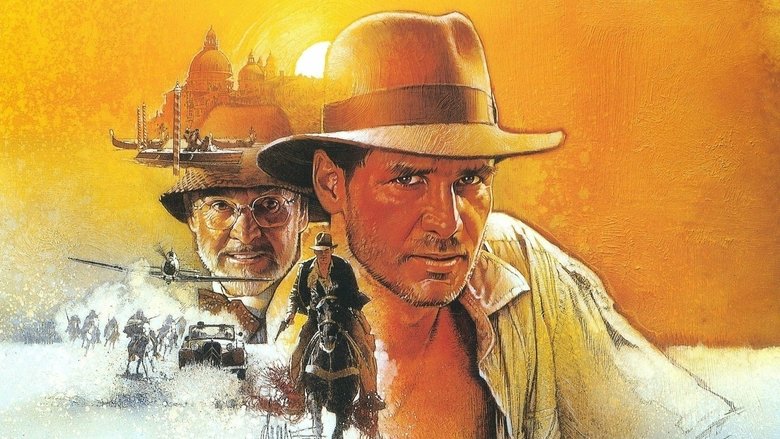
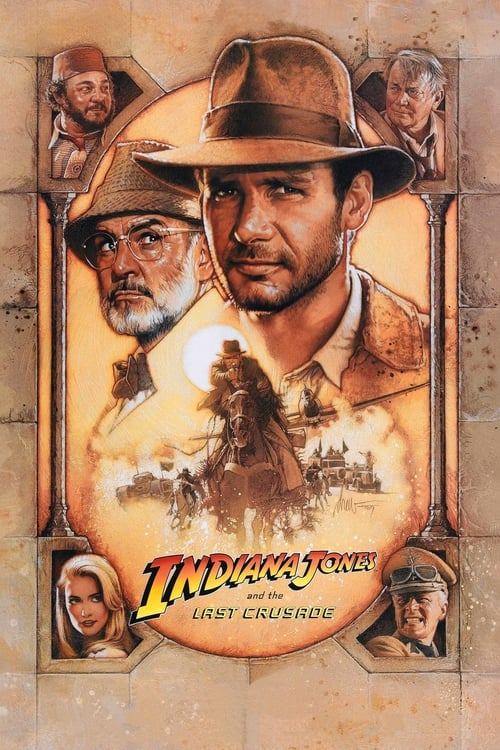
"Have the adventure of your life keeping up with the Joneses."
Indiana Jones and the Last Crusade - Symbolism & Philosophy
Symbols & Motifs
The Holy Grail
The Holy Grail symbolizes multiple concepts. On the surface, it represents faith, eternal life, and divine power. More deeply, it serves as a metaphor for the reconciliation between father and son; the true "Grail" is their mended relationship. It also represents the choice between spiritual humility (the simple carpenter's cup) and materialistic greed (the ornate, false grails).
The Grail is the central object of the quest. The choice of the true Grail—a humble clay cup—in the final scenes is the ultimate test of character. Donovan fails by choosing a golden chalice, while Indy succeeds by recognizing that a carpenter's cup would be plain and simple.
Henry's Grail Diary
The diary symbolizes Henry's lifelong obsession, which initially created the rift with his son. It contains his knowledge and research, representing the intellectual and spiritual aspects of the quest. However, it also becomes the key to their collaboration and survival, symbolizing the bond and shared passion that ultimately reunites them.
The diary is a crucial plot device sought by both the heroes and the villains. It holds the map and the solutions to the three trials. Indy's quest to retrieve it from Berlin underscores its importance, and its contents are essential for him to save his father's life in the temple.
Indiana's Fedora and Whip
The fedora and bullwhip are iconic symbols of Indiana Jones's identity as a rugged, self-reliant adventurer. The prologue reveals their origins: he receives the fedora from a treasure hunter who, despite being an adversary, respects Indy's spirit. This moment represents a passing of the torch and the birth of his persona.
The film opens with a 1912 prologue where a young Indy (played by River Phoenix) acquires his signature traits. He first uses a whip on a circus train, accidentally scarring his chin (an explanation for Harrison Ford's real-life scar). He is given the fedora by the lead treasure hunter after failing to secure the Cross of Coronado.
Philosophical Questions
What is the true nature of faith, and can it coexist with science and reason?
The film directly contrasts Indiana's empirical, evidence-based worldview with the Grail's requirement for pure faith. The three trials are puzzles that cannot be solved with archaeology but with an understanding of religious tenets and, ultimately, a blind 'leap of faith.' The film suggests that faith is not the rejection of facts, but a different kind of knowledge—a trust in things unseen. It argues that for life's ultimate challenges, reason alone is insufficient, and a degree of belief is necessary for salvation and enlightenment.
What is the value of a finite life in the face of potential immortality?
The Holy Grail offers the ultimate prize: eternal life. However, the film portrays this 'gift' as a trap. The Grail Knight is bound to the temple, and the price of immortality is isolation. The villains who seek it for power are destroyed by their greed. By the end, Henry and Indy choose their mortal, finite relationship over the eternal life offered by the Grail. The film concludes that a life with love, connection, and eventual closure is more valuable than an endless, solitary existence.
Core Meaning
The core meaning of Indiana Jones and the Last Crusade revolves around the idea that the most valuable treasure is not a physical artifact but human connection and reconciliation. Director Steven Spielberg intended the quest for the Holy Grail to serve as a powerful metaphor for a son's search for reconciliation with his father. The film posits that true "illumination" and immortality are found not in mystical objects but in love, forgiveness, and the mending of familial bonds. Ultimately, the central message is that letting go of obsessive quests and personal grievances to embrace family is the greatest reward.