Indiana Jones and the Last Crusade
An action-adventure saga where a quest for eternal life becomes a poignant journey of paternal reconciliation, set against a backdrop of looming global conflict.
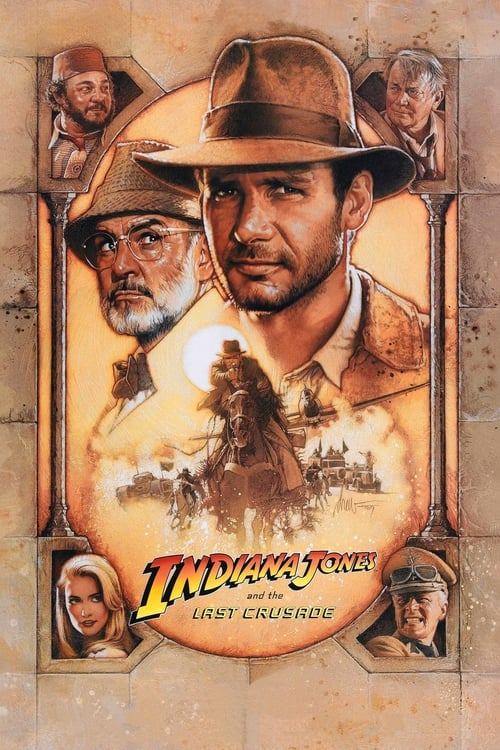
Indiana Jones and the Last Crusade

Indiana Jones and the Last Crusade

"Have the adventure of your life keeping up with the Joneses."

24 May 1989 United States of America 127 min ⭐ 7.8 (10,690)
Director: Steven Spielberg
Cast: Harrison Ford, Sean Connery, Denholm Elliott, Alison Doody, John Rhys-Davies
Action Adventure
Father-Son Reconciliation Faith vs. Empiricism The Corrupting Nature of Greed Mortality and Immortality
Budget: $48,000,000
Box Office: $474,171,806

Overview

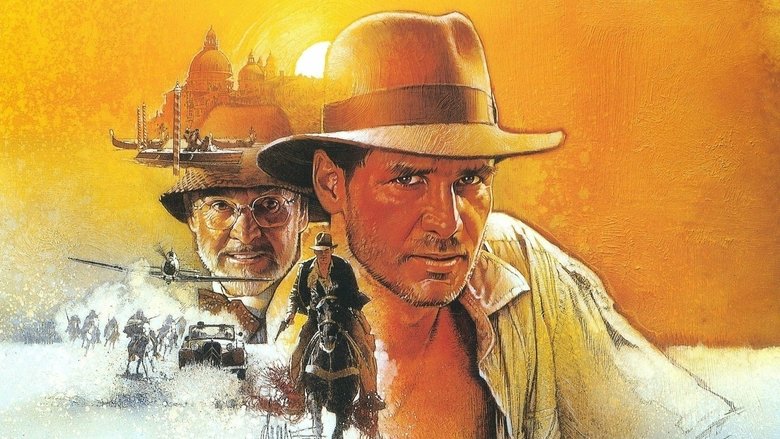
Set in 1938, archaeologist Indiana Jones is drawn into a perilous quest when his estranged father, Henry Jones, Sr., disappears while searching for the legendary Holy Grail. Teaming up with museum curator Marcus Brody, Indy follows clues from his father's detailed Grail diary, leading him from Venice's ancient libraries to a Nazi-controlled castle in Austria.

Along the way, he is aided by the enigmatic Austrian art professor Dr. Elsa Schneider, only to discover she and his wealthy sponsor, Walter Donovan, are secretly working with the Nazis to exploit the Grail's power of immortality. The adventure escalates into a desperate race against time, filled with thrilling chases, narrow escapes, and deadly traps, forcing a strained father and son to reconnect and rely on each other to prevent the sacred relic from falling into evil hands.

Core Meaning

The core meaning of Indiana Jones and the Last Crusade revolves around the idea that the most valuable treasure is not a physical artifact but human connection and reconciliation. Director Steven Spielberg intended the quest for the Holy Grail to serve as a powerful metaphor for a son's search for reconciliation with his father. The film posits that true "illumination" and immortality are found not in mystical objects but in love, forgiveness, and the mending of familial bonds. Ultimately, the central message is that letting go of obsessive quests and personal grievances to embrace family is the greatest reward.

Thematic DNA

Father-Son Reconciliation 40%
Faith vs. Empiricism 30%
The Corrupting Nature of Greed 20%
Mortality and Immortality 10%

Father-Son Reconciliation

The emotional heart of the film is the fractured, and ultimately restored, relationship between Indiana and Henry Jones, Sr. Their journey is not just for the Grail but for mutual understanding and respect. Henry's obsession with his quest made him an absent father, leading to Indy's lifelong resentment. Through their shared adventure, they are forced to confront their past, with Henry eventually choosing his son's life over the Grail, and calling him "Indiana" instead of "Junior" as a sign of respect. This reconciliation is the true treasure found at the end of their quest.

Faith vs. Empiricism

The film explores the tension between Indy's scientific, fact-based approach to archaeology and the faith required to attain the Holy Grail. Indy initially states, "Archaeology is the search for fact... not truth." However, to navigate the three trials guarding the Grail, he must abandon logic and embrace belief, culminating in a literal "leap of faith." His father, a man of deep faith in the Grail's lore, guides him, highlighting the idea that some truths transcend empirical evidence.

The Corrupting Nature of Greed

The pursuit of the Grail for selfish gain leads to destruction. Walter Donovan and Elsa Schneider embody this theme. Donovan seeks immortality for power and chooses a golden, ornate chalice, which leads to his gruesome death. His choice is a reflection of his avarice. Elsa, despite her knowledge, is ultimately consumed by her desire to possess the Grail, ignoring the Knight's warning and falling to her death while trying to retrieve it. Their fates serve as a cautionary tale about the perils of greed.

Mortality and Immortality

The central MacGuffin, the Holy Grail, promises eternal life, forcing the characters to confront their own mortality. The film ultimately suggests that true immortality is not about living forever but about the legacy left through relationships. Donovan's gruesome demise from the false Grail graphically illustrates the folly of seeking eternal life for selfish ends. In the end, Indy and Henry choose their mortal lives and their restored relationship over the Grail, accepting their finite existence.

Character Analysis

Indiana Jones

Harrison Ford

Archetype: The Hero
Key Trait: Resourceful

Motivation

Initially, Indy is motivated by the mission to find his missing father and the historical significance of the Grail. However, his primary motivation becomes protecting his father from the Nazis and, ultimately, saving his life, which forces him to confront his own beliefs and priorities.

Character Arc

Indiana begins the film still harboring deep-seated resentment toward his emotionally distant father. His initial motivation for the quest is professional duty and a reluctant sense of filial obligation. Throughout the journey, he is forced to protect his father, shifting from a resentful son to a protective one. His arc culminates in him choosing to save his father over retrieving the Grail, letting go of his obsession and healing the emotional wounds of his childhood.

Professor Henry Jones, Sr.

Sean Connery

Archetype: The Mentor/The Scholar
Key Trait: Scholarly

Motivation

Henry's lifelong obsession is to find the Holy Grail, a quest for spiritual and historical truth. This singular focus has defined his life, even at the expense of his family. He is driven by a deep-seated belief in the Grail's significance and a desire to complete his life's work.

Character Arc

Henry starts as an absent-minded professor, more concerned with his lifelong quest for the Grail than with his own son. He is a man of books, not action. As the adventure unfolds, he is pulled from his academic world and must participate in Indy's dangerous reality. His arc is one of "illumination"; he realizes that his relationship with his son is more important than the artifact he has pursued his entire life, culminating in the moment he urges Indy to "let it go."

Dr. Elsa Schneider

Alison Doody

Archetype: The Femme Fatale
Key Trait: Ambitious

Motivation

Elsa is motivated by a complex mix of professional ambition, misplaced patriotism, and an obsessive desire for the Grail. She is seduced by the power and prestige associated with the Nazis and the artifact, believing she can control the outcome for her own benefit, but ultimately her greed is her undoing.

Character Arc

Elsa is introduced as a sympathetic colleague, but is revealed to be a Nazi collaborator driven by ambition and a fascination with the Grail. Her allegiance is ultimately to herself and the prize. Her character arc is a tragic one; despite moments of remorse, her greed and obsession lead to her downfall. She cannot "let it go" and plummets to her death trying to recover the Grail, a victim of her own desires.

Walter Donovan

Julian Glover

Archetype: The Villain
Key Trait: Greedy

Motivation

Donovan's sole motivation is to obtain the Holy Grail to achieve immortality. He views it not as a spiritual relic but as a tool for ultimate power and control, willing to ally with any evil to achieve his goal.

Character Arc

Donovan presents himself as a benevolent philanthropist but is a ruthless industrialist allied with the Nazis. He has no arc; he is consistently driven by a singular, selfish desire for eternal life. He is a coward who manipulates others to do his dirty work, as seen when he shoots Henry to force Indy's hand. His demise is swift and poetic, as his greed leads him to choose the most ornate and incorrect Grail, resulting in rapid aging and death.

Symbols & Motifs

The Holy Grail

Meaning:

The Holy Grail symbolizes multiple concepts. On the surface, it represents faith, eternal life, and divine power. More deeply, it serves as a metaphor for the reconciliation between father and son; the true "Grail" is their mended relationship. It also represents the choice between spiritual humility (the simple carpenter's cup) and materialistic greed (the ornate, false grails).

Context:

The Grail is the central object of the quest. The choice of the true Grail—a humble clay cup—in the final scenes is the ultimate test of character. Donovan fails by choosing a golden chalice, while Indy succeeds by recognizing that a carpenter's cup would be plain and simple.

Henry's Grail Diary

Meaning:

The diary symbolizes Henry's lifelong obsession, which initially created the rift with his son. It contains his knowledge and research, representing the intellectual and spiritual aspects of the quest. However, it also becomes the key to their collaboration and survival, symbolizing the bond and shared passion that ultimately reunites them.

Context:

The diary is a crucial plot device sought by both the heroes and the villains. It holds the map and the solutions to the three trials. Indy's quest to retrieve it from Berlin underscores its importance, and its contents are essential for him to save his father's life in the temple.

Indiana's Fedora and Whip

Meaning:

The fedora and bullwhip are iconic symbols of Indiana Jones's identity as a rugged, self-reliant adventurer. The prologue reveals their origins: he receives the fedora from a treasure hunter who, despite being an adversary, respects Indy's spirit. This moment represents a passing of the torch and the birth of his persona.

Context:

The film opens with a 1912 prologue where a young Indy (played by River Phoenix) acquires his signature traits. He first uses a whip on a circus train, accidentally scarring his chin (an explanation for Harrison Ford's real-life scar). He is given the fedora by the lead treasure hunter after failing to secure the Cross of Coronado.

Memorable Quotes

He chose... poorly.

— Grail Knight

Context:

Spoken by the ancient Grail Knight after Walter Donovan drinks from a false Grail and rapidly decays into dust. The line is delivered with a calm, matter-of-fact tone that makes the moment both chilling and memorable.

Meaning:

This iconic line underscores the film's central theme that true worth is not found in outward appearances. Donovan's choice of a jewel-encrusted, golden chalice reflects his greed and misunderstanding of the Grail's nature, leading to his immediate and horrifying demise.

We named the dog Indiana.

— Professor Henry Jones, Sr.

Context:

At the very end of the film, Sallah asks why Henry keeps calling his son "Junior." Henry explains that his son's name is Henry Jones, Jr. When Indy insists he likes "Indiana," Henry reveals the name belonged to their beloved family dog, much to Sallah's and Marcus's amusement.

Meaning:

This quote provides a humorous and touching revelation about Indy's iconic name. It demystifies the heroic moniker while also hinting at the mundane, and often frustrating, family life that Indy sought to escape through his adventures. It's a moment of paternal teasing that brings the larger-than-life hero down to earth.

Archaeology is the search for fact... not truth. If it's truth you're looking for, Dr. Tyree's philosophy class is right down the hall.

— Indiana Jones

Context:

Indiana says this to his university students during a lecture at the beginning of the film, just before being approached by Walter Donovan for the Grail quest.

Meaning:

This line establishes Indy's empirical worldview at the start of the film, setting the stage for his character arc. He separates his scientific pursuit of tangible artifacts from the philosophical or spiritual "truth" they might represent. The entire film challenges this belief, forcing him to take a literal leap of faith to succeed.

Indiana... let it go.

— Professor Henry Jones, Sr.

Context:

As the temple collapses, the Grail falls into a chasm. Indy is dangling precariously, trying to reach it. Henry, holding his son's other hand, urges him to let go of the Grail, choosing to save his son over the relic.

Meaning:

This is the emotional climax of the film and the culmination of Henry's character arc. In this moment, he prioritizes his son's life over the artifact he has sought his entire life, showing he has found his true treasure. It is also the final lesson for Indy: to let go of obsessive quests and worldly treasures in favor of what truly matters.

Philosophical Questions

What is the true nature of faith, and can it coexist with science and reason?

The film directly contrasts Indiana's empirical, evidence-based worldview with the Grail's requirement for pure faith. The three trials are puzzles that cannot be solved with archaeology but with an understanding of religious tenets and, ultimately, a blind 'leap of faith.' The film suggests that faith is not the rejection of facts, but a different kind of knowledge—a trust in things unseen. It argues that for life's ultimate challenges, reason alone is insufficient, and a degree of belief is necessary for salvation and enlightenment.

What is the value of a finite life in the face of potential immortality?

The Holy Grail offers the ultimate prize: eternal life. However, the film portrays this 'gift' as a trap. The Grail Knight is bound to the temple, and the price of immortality is isolation. The villains who seek it for power are destroyed by their greed. By the end, Henry and Indy choose their mortal, finite relationship over the eternal life offered by the Grail. The film concludes that a life with love, connection, and eventual closure is more valuable than an endless, solitary existence.

Alternative Interpretations

While the film's primary interpretation focuses on father-son reconciliation, some analyses view the quest for the Grail through a more theological or philosophical lens. One interpretation sees Indy's journey as a religious allegory, charting a man of science's path toward accepting faith. His success in the trials is not due to his knowledge but his ability to embrace humility, wisdom, and belief, transforming him from a mere treasure hunter into a true 'knight'.

Another reading frames the entire Grail quest as an internal psychological journey. The obstacles and characters Indy encounters represent his own internal conflicts. Henry represents the past and tradition he has rejected, Elsa represents the temptation of using knowledge for selfish gain, and the Grail itself symbolizes self-acceptance and inner peace. His decision to 'let it go' is not just about the cup, but about letting go of his lifelong resentment and obsession with proving himself.

Cultural Impact

Released in 1989, Indiana Jones and the Last Crusade arrived as the third installment in a beloved franchise, serving as a course correction after the darker tone of 1984's Temple of Doom. Director Steven Spielberg consciously aimed to recapture the lighter, more adventurous spirit of Raiders of the Lost Ark. The film was a massive commercial success, becoming one of the highest-grossing films of the year and receiving critical acclaim, with many praising the addition of Sean Connery and the heartfelt father-son dynamic.

The film's influence is seen in its masterful blend of high-octane action, witty humor, and genuine emotional depth. The chemistry between Ford and Connery is often cited as one of the greatest on-screen pairings in cinema history and set a benchmark for buddy-adventure films. The movie solidified the Indiana Jones franchise as a cornerstone of pop culture, with its themes of faith, family, and adventure resonating widely. The final shot of the heroes literally riding off into the sunset was seen by many as a perfect conclusion to the trilogy, cementing its legacy as a classic of the adventure genre.

Audience Reception

Indiana Jones and the Last Crusade was overwhelmingly well-received by audiences upon its release and continues to be a fan favorite. Viewers widely praised the return to the lighter, more adventurous tone of Raiders of the Lost Ark after the darker and more controversial Temple of Doom. The single most praised aspect was the casting of Sean Connery as Indiana's father and the brilliant comedic and emotional chemistry between him and Harrison Ford. The witty banter, thrilling action sequences—particularly the tank chase—and the genuinely moving father-son story resonated strongly with the public. While some minor criticisms exist regarding the portrayal of Elsa's character or the occasional plot convenience, the general consensus is that the film is a masterful piece of blockbuster entertainment that provides a deeply satisfying emotional arc and a perfect concluding chapter for the original trilogy.

Interesting Facts

  • Sean Connery was Steven Spielberg's first choice to play Indy's father, partly as an inside joke that James Bond is the father of Indiana Jones. Connery is also only 12 years older than Harrison Ford.
  • River Phoenix was recommended by Harrison Ford to play the young Indiana, having previously played his son in 'The Mosquito Coast' (1986).
  • The famous line "She talks in her sleep" was improvised by Sean Connery. It got such a strong reaction from the cast and crew that Spielberg kept it in the film.
  • During the zeppelin scene, it became very hot on set. Sean Connery and Harrison Ford decided to take their pants off to be more comfortable, which isn't visible since they are seated behind a table.
  • The name 'Indiana' was famously taken from George Lucas's Alaskan malamute. The film incorporates this fact into the ending.
  • Celebrated playwright Tom Stoppard did uncredited rewrites on the script, particularly focusing on the dialogue between Indy and his father to add emotional depth.
  • For the scene in the Venetian catacombs, the production bred thousands of grey rats to use on screen.
  • The explanation for Indy's chin scar (getting hit by a whip as a teen) was written in to account for Harrison Ford's actual scar, which he got in a car accident.
  • The temple at the end of the film is the Al-Khazneh (The Treasury) in Petra, Jordan. While the exterior is real, the vast interior was created on a studio set.

Easter Eggs

In the catacombs beneath the Venetian library, an ancient carving on the wall depicts the Ark of the Covenant from 'Raiders of the Lost Ark'.

When Elsa points to a carving and asks about it, Indy briefly identifies it as the Ark of the Covenant. This is a direct visual callback to the artifact from the first film in the series, connecting the adventures.

During a scene in Walter Donovan's apartment, the 'Imperial March' (Darth Vader's theme) from 'Star Wars' can be faintly heard being played on a piano in the background.

This is a subtle nod to George Lucas's other major franchise. Julian Glover, who plays Donovan, also appeared in 'The Empire Strikes Back' as General Veers, adding another layer to the reference.

When Indy tells his class about the difference between archaeology and philosophy, he directs them to 'Dr. Tyree's' class down the hall.

This is a personal tribute from Harrison Ford to his real-life college philosophy mentor, Dr. William E. Tyree, from Ripon College.

On the ship at the beginning of the film, barrels marked 'Carboneto' are visible.

This is believed to be a subtle reference to 'Carbonite,' the substance Han Solo was frozen in during 'The Empire Strikes Back,' linking the two Harrison Ford characters.

⚠️ Spoiler Analysis

Click to reveal detailed analysis with spoilers

Frequently Asked Questions

Explore More About This Movie

Dive deeper into specific aspects of the movie with our detailed analysis pages

Comments (0)

Leave a comment

No comments yet. Be the first to share your thoughts!