
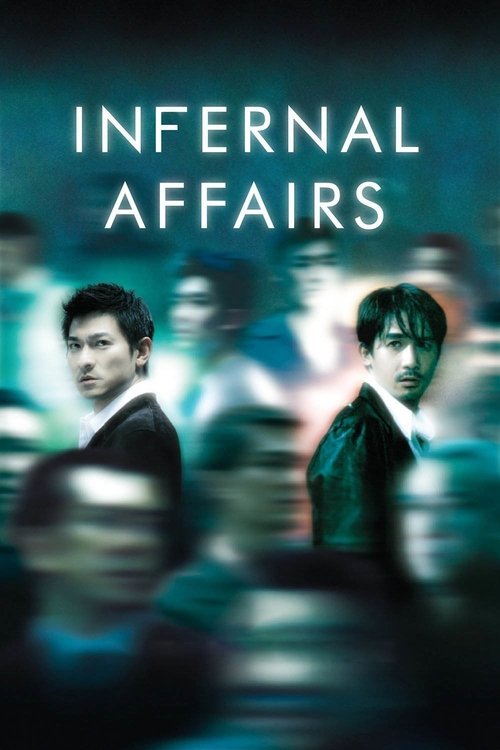
無間道
"Loyalty. Honor. Betrayal."
Infernal Affairs - Symbolism & Philosophy
Symbols & Motifs
Rooftops
Symbolizes limbo and moral clarity. It is the only place where the characters can 'see' the whole city and confront each other in the light, yet they are still pinned against a confined urban structure.
Used for the iconic final confrontation between Chan and Lau, and as a recurring meeting place for Chan and his handler, Superintendent Wong.
The Audio Store / 'Forgotten Time'
Represents lost innocence and a fleeting moment of shared humanity. The song 'Forgotten Time' by Tsai Chin evokes nostalgia for a simpler past before their identities were compromised.
The scene where Chan and Lau meet as strangers and bonded over high-end speakers, unaware of their adversarial roles.
Morse Code
Symbolizes the fragility of truth. Communication is reduced to rhythmic taps—a hidden language that is easily missed by the world but carries the weight of a person's life.
Chan uses Morse code on a window or a rhythmic finger-tap to transmit information to the police during a triad deal.
The Envelope
A physical manifestation of fate and identity. It contains the evidence that can either restore a soul or destroy a life.
The envelope containing Chan's file, which Lau discovers and later uses to manipulate or erase Chan's existence.
Philosophical Questions
Can a person truly change their nature through choice alone?
The film explores this through Lau, who desperately wants to be 'good' but finds that his previous 'bad' choices have created a momentum (Karma) that forces him into more evil acts to maintain his new persona.
What defines identity: our internal conviction or the world's perception?
Chan knows he is a cop, but without the file in the computer, the world sees him as a criminal. The film asks if an identity exists if there is no one left to witness or verify it.
Is death a punishment or a release?
By framing the story within the Buddhist Avici Hell, the film posits that 'longevity' (living on) is the ultimate hardship for the guilty, making death a form of mercy or escape.
Core Meaning
The core of Infernal Affairs lies in its exploration of the Buddhist concept of Avici Hell (the 'Continuous Hell'), the lowest level of suffering where life begins and ends in the same place without respite. The directors used this as an allegory for the psychological torment of the undercover life. The film suggests that the ultimate punishment is not death, but the survival of a fractured soul forced to live a lie for eternity, trapped by their own karma and the inability to reclaim a 'good' self.