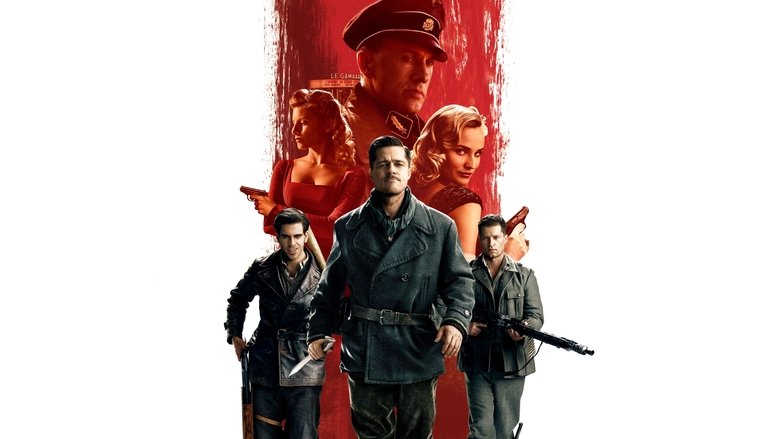

"Once upon a time in Nazi occupied France..."
Inglourious Basterds - Symbolism & Philosophy
Symbols & Motifs
Nitrate Film
Nitrate film symbolizes the immense, destructive, and transformative power of cinema. Historically known for being highly flammable, it becomes the literal weapon Shosanna uses to burn down the theater and the Nazi regime. It represents the idea that film can be more than just entertainment or propaganda; it can be an instrument of violent, cleansing fire and ultimate revenge.
Shosanna and her lover, Marcel, amass a large collection of nitrate films. In the film's climax, they use a massive pile of these film reels behind the screen as the fuel for their inferno, locking the doors and incinerating the Nazi audience during the premiere of "Nation's Pride."
The Swastika Carving
The swastika carved into the foreheads of surviving Nazis symbolizes an inescapable, permanent mark of shame and evil. It prevents them from simply shedding their uniforms and disappearing into civilian life after the war. Lt. Raine's act ensures their crimes are forever etched onto their bodies, a form of brutal, indelible justice. It represents the Basterds' refusal to let Nazis escape their identity and accountability.
This is the signature of the Basterds. When they choose to let a Nazi soldier live, Lt. Aldo Raine or one of his men uses a knife to carve a swastika into their forehead. The final scene of the film shows Raine carving one into Colonel Hans Landa's forehead, declaring it his "masterpiece."
Milk
Milk symbolizes dominance, hidden threat, and the facade of civility. In the opening scene, Colonel Landa requests a glass of milk from the French farmer, an act that seems innocuous but establishes his control and subtly asserts a sense of purity over the home he is violating. Later, he orders a glass of milk for Shosanna, triggering her memory of the trauma on her family's dairy farm and representing his predatory nature disguised beneath polite manners.
Colonel Landa drinks a glass of milk at Perrier LaPadite's dairy farm while interrogating him about the hidden Dreyfus family. Years later, when he meets Shosanna at a restaurant, he orders a strudel for her and a glass of milk for himself, a chilling callback to the earlier scene.
The Strudel Scene
The strudel, particularly the cream, symbolizes psychological torture and the assertion of power. Landa's insistence that Shosanna wait for the cream is a small but potent act of control. For Shosanna, the seemingly pleasant dessert becomes a source of extreme tension and fear, as she is forced to share a table with the man who murdered her family. The scene encapsulates Landa's method: using mundane pleasantries to inflict terror.
During his interrogation of Shosanna at the restaurant, Landa orders strudel for them both. He makes a point of ordering it with cream and insists she wait for it before eating. The entire interaction is laden with unspoken threat, despite the civilized setting and polite conversation.
Philosophical Questions
Is there a moral difference between 'justified' and 'unjustified' brutality?
The film directly confronts this question by contrasting the systematic, ideological cruelty of the Nazis with the passionate, retributive violence of the Basterds and Shosanna. The Basterds scalp their victims and beat them to death with baseball bats, acts that are graphically violent. However, because their targets are Nazis, the audience is positioned to view these acts as righteous. The film forces the viewer to consider if brutality can be 'heroic' and at what point the methods of fighting evil begin to mirror the evil itself. Does the context of fighting an unquestionable evil like Nazism provide a moral license for any and all acts of savagery?
Can art and storytelling rewrite the traumas of history?
"Inglourious Basterds" proposes that while history itself is fixed, its narrative is not. By creating a fictional timeline where Jewish avengers triumphantly kill Hitler, Tarantino offers a powerful cathartic fantasy. The film explores whether this kind of artistic revisionism serves a valuable purpose by providing a sense of justice and empowerment that was absent in reality. It asks if a fictional victory can, on a symbolic level, heal or address the powerlessness felt in the face of historical atrocities. The movie itself becomes an act of rebellion against the tyranny of historical fact.
Core Meaning
At its core, "Inglourious Basterds" is a film about the power of cinema and storytelling as weapons of war and tools for vengeance. Quentin Tarantino crafts a potent revenge fantasy, exploring themes of historical revisionism and justice. The film deliberately deviates from historical fact to offer a cathartic, fictionalized triumph over evil, suggesting that film can be a more powerful agent of change and retribution than reality itself. It questions the nature of heroism and villainy, blurring the lines between the brutal tactics of the "Basterds" and the calculated cruelty of the Nazis. Ultimately, the film serves as a wish-fulfillment narrative, using the language of cinema to symbolically right the wrongs of history and deliver a spectacular, albeit fictional, form of justice.