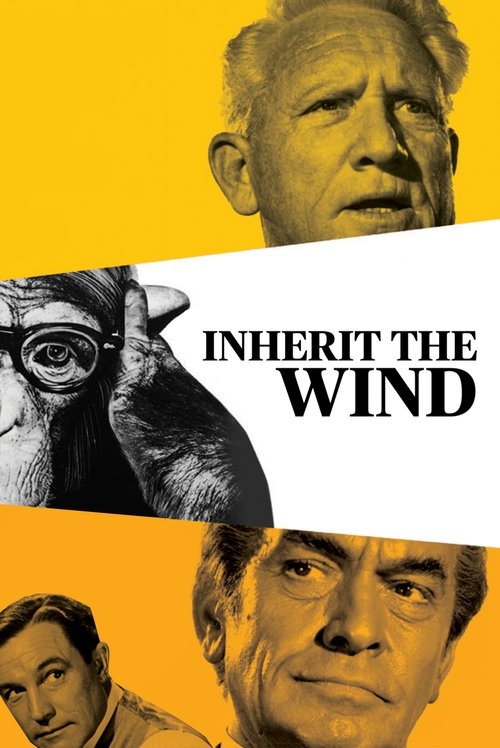
"It’s all about the fabulous “Monkey Trial” that rocked America!"
Inherit the Wind - Symbolism & Philosophy
Symbols & Motifs
Golden Dancer
Drummond's childhood rocking horse symbolizes the deceptive nature of surface-level perfection, illusions, and dogmas that look beautiful on the outside but are rotten and hollow on the inside.
Drummond tells Cates the story of a brightly painted rocking horse he received as a child, which split in two the first time he rode it. He uses it as a metaphor to encourage Cates to look past the "bright, shining, perfect-seeming" lies of society.
The Heat and Sweat
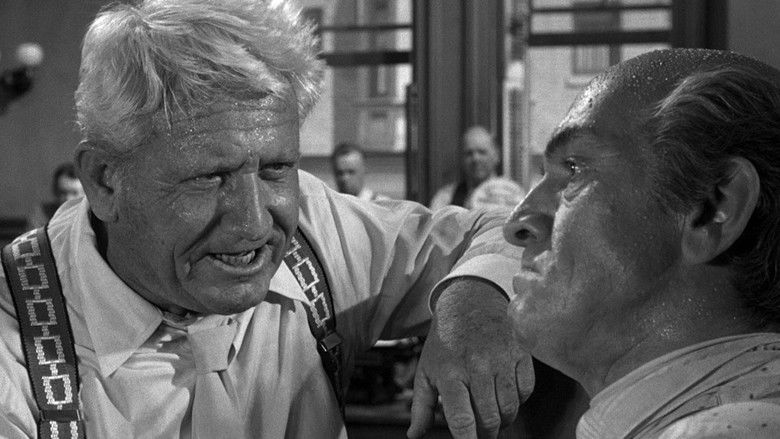
The oppressive physical atmosphere symbolizes the intense ideological fervor, claustrophobia, and the overwhelming pressure of public opinion bearing down on the characters.
Throughout the courtroom scenes, the temperature is frequently mentioned (reaching 97 degrees), and characters are constantly mopping their sweating faces, heightening the tension of the intellectual battle.
The Bible and The Origin of Species
These two books represent the two opposing ideologies of the trial: religious fundamentalism and scientific evolution. Their handling at the end symbolizes balance, coexistence, and intellectual tolerance.
In the final scene, Drummond picks up both Darwin's Origin of Species and the Bible. He weighs them in his hands, claps them together, and places both side-by-side into his briefcase before walking out.
The Title "Inherit the Wind"
Originating from Proverbs 11:29, it symbolizes the empty, destructive consequences of causing strife, intolerance, and driving away one's own people.
Brady quotes this to Reverend Brown when the Reverend damns his own daughter, Rachel, for supporting Cates. Ultimately, Brady himself "inherits the wind" by alienating his followers through his own rigid hubris.
Philosophical Questions
Does social stability require dogma?
The town of Hillsboro relies on absolute religious certainty to maintain its peaceful, cohesive community. The film asks whether introducing complex, challenging truths is worth the societal disruption and personal existential crises it causes.
Is it ever justified to suppress the truth to protect the vulnerable?
Reverend Brown believes he is saving souls from eternal damnation by banning evolutionary theory. The film challenges viewers to consider the moral boundary between protecting a community's values and violating individual intellectual freedom.
Can pure cynicism be as dangerous as blind fanaticism?
While the film condemns fundamentalism, it also critiques Hornbeck's soulless cynicism. By the end, Drummond defends the dead Brady against Hornbeck's mockery, raising the question of whether a life without belief or compassion is truly superior to one of misguided faith.
Core Meaning
While ostensibly about the 1925 Scopes "Monkey" Trial and the debate between evolution and creationism, Inherit the Wind serves as a profound allegory for McCarthyism and the anti-Communist hysteria of the 1950s. Director Stanley Kramer and the original playwrights utilized the historical event to mount a passionate defense of intellectual freedom, tolerance, and the right to dissent.
The central message is that the freedom to think, to question, and to hold unpopular beliefs is a sacred human right. Henry Drummond explicitly states that he is not fighting to destroy religion, but to protect the individual's right to think. The film warns against the dangers of mob mentality, anti-intellectualism, and the destructive nature of absolute dogma, suggesting that a society that suppresses ideas ultimately destroys itself.